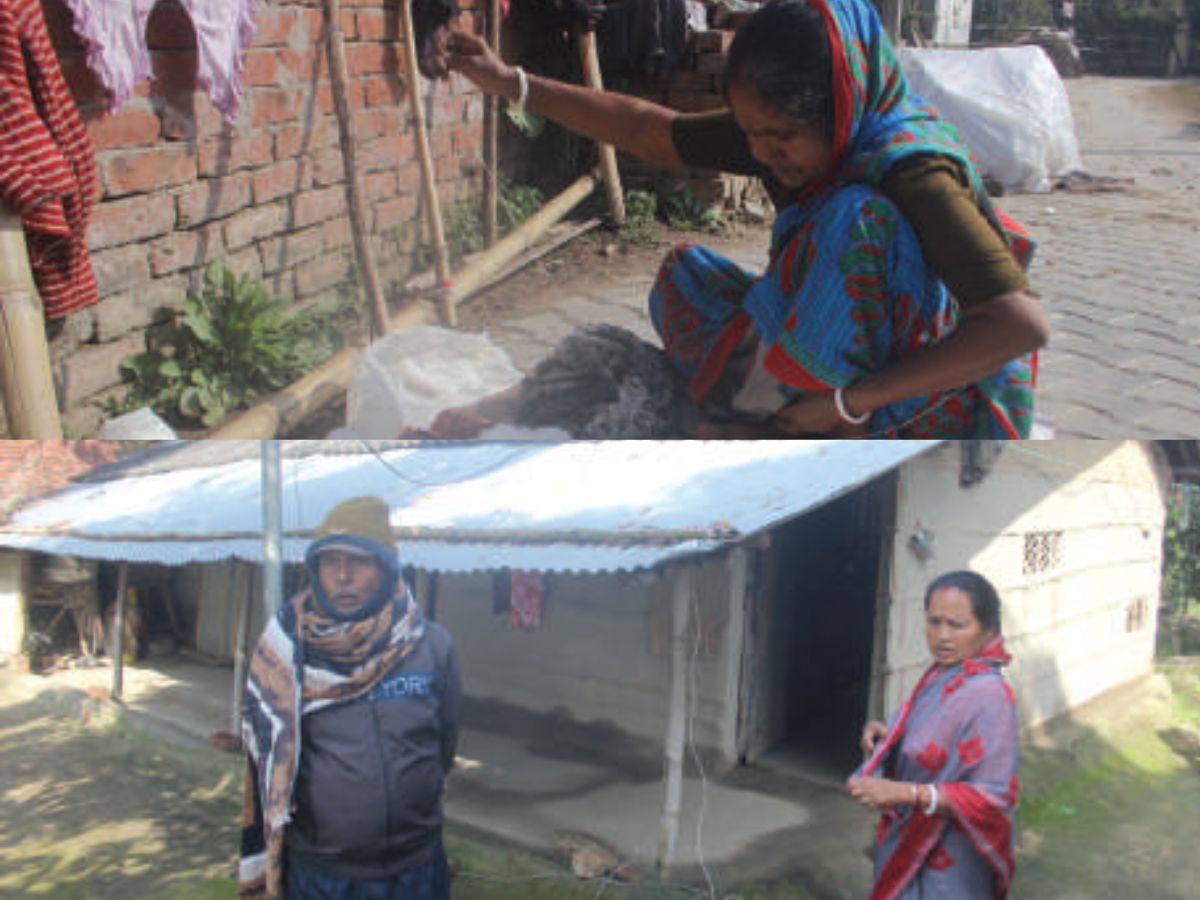
The refugees
In a major humanitarian move, the Uttar Pradesh government has approved an elaborate rehabilitation package for 99 Hindu Bengali families displaced from East Pakistan, now Bangladesh, who have been living in Meerut district for decades. The proposal received cabinet clearance earlier last week at a meeting chaired by Chief Minister Yogi Adityanath. Although residents stressed that land, housing, and employment are essential for survival, they urged the government to ensure rehabilitation within Meerut district rather than distant relocation.
The families, settled for years in temporary and unauthorised habitations at Nagla Gusai village in Mawana tehsil, will be relocated permanently to Rasulabad tehsil of Kanpur Dehat district. Officials said the relocation is intended to provide the families with secure housing while also addressing environmental issues arising from their prolonged stay in a lakefront area considered ecologically sensitive.
As per the plan, rehabilitation will be carried out on land belonging to the state’s Rehabilitation Department. Fifty families will be settled on 11.1375 hectares (27.5097 acres) in Bhainsa village, while the remaining 49 families will be accommodated on 10.530 hectares (26.009 acres) in Tajpur Tarsauli village. Each household will receive 0.50 acres of land under a long-term lease arrangement. Officials said the lease period will initially be for 30 years and may be extended twice, for 30 years each time, allowing a total tenure of up to 90 years. The land will be allotted either against payment of a premium or on lease rent, ensuring long-term residential stability for the beneficiaries.
A senior official said the cabinet decision seeks to strike a balance between humanitarian obligations and environmental protection. “These families have lived in uncertainty for decades. The decision will finally provide them with permanent housing and legal security,” the official said.
The announcement, however, has sparked apprehension among residents, many of whom have appealed to the government to ensure rehabilitation within Meerut district instead of shifting them to a distant location. Several families have stressed that access to adequate land, housing, and employment is crucial for survival and fear that relocation to Kanpur Dehat could disrupt their livelihoods and social ties.
Raman Dayal, 64, a resident of Nagla Gusai, told The Sunday Guardian that his family migrated to India before the formation of Bangladesh and has lived in the area for more than 45 years. He alleged that in 2021, the administration took over their paddy fields after declaring the land government property and issued eviction notices. “We were promised land and housing, but later offered only half an acre in Kanpur. That is insufficient for farming,” he said. Now surviving on daily wages of Rs 300-Rs 400, Dayal said relocation without adequate land and employment would leave his family vulnerable.
Rekha Rani, who has lived in the settlement for nearly four decades, expressed similar concerns. A former farmer now working as a daily wage labourer, she said half an acre of land would not support a family. “We lost fertile land and our livelihood. Without at least two acres, a house, and access to education, rehabilitation is meaningless,” she said, adding that no senior official has visited the settlement to assess their situation. “I once lived in peace. That peace is gone now,” she said.
Ramesh, who came to Nagla Gusai as a child nearly 46 years ago, said the village is the only home he has known. Now nearing 50, he fears that relocation will dismantle the community’s social fabric and livelihood networks. While acknowledging assurances from local leaders that rehabilitation would remain within the Hastinapur region, he urged the state government to reconsider relocating families far from Meerut. “Our children depend on daily wage work here. Repeated displacement will affect both income and education,” he said.
Sadan Mistry, a 27-year-old BA student who supports his family through farming, said the families have been informed that they will receive half an acre of land on a 30-year lease in Kanpur district. He expressed concern over the small land size and the lack of clarity regarding housing, education, healthcare, and other basic facilities. “We have only been told that we will be relocated. Nothing else is clear, and our future and education are being disrupted,” he said.
Balram, a 45-year-old daily-wage worker, said most families want rehabilitation within Meerut district, preferably in Hastinapur. He said relocating to Kanpur Dehat would be extremely challenging due to unfamiliarity with the region. “All our facilities are here. If we are to be resettled, it should be in our own district,” he said.
Another resident, Vishwajit, pointed out that the families had lived in the area for over 45 years and already possessed government-provided amenities such as electricity connections, solar panels, and houses valued at Rs 50,000-Rs 60,000. “These facilities were provided by the government long before the land was declared part of an NGT-protected wetland. Farmers here face no issue, yet we are being forced to leave,” he said.
Meerut District Magistrate Vijay Kumar Singh said the families were displaced from erstwhile East Pakistan and have largely been residing in the Mawana area. “The state government has made suitable arrangements for their rehabilitation. They will be shifted to Kanpur Dehat,” he said.
A senior Meerut district official, speaking on condition of anonymity, said all procedural formalities from Meerut’s side have been completed and details forwarded to Kanpur Dehat authorities. “We have prepared the list of all families and shared it with the concerned departments. Further rehabilitation work will now be handled by Kanpur Dehat officials,” the official said.
An Additional District Magistrate of Kanpur Dehat told The Sunday Guardian that around 200 plots have been identified in compliance with government directives. “So far, we have only been asked to identify land. Once instructions for allotment are received, the land will be allotted. Decisions regarding facilities and rehabilitation measures will be taken strictly as per government directions,” the official said.
However, the state government maintains that the rehabilitation initiative is a long-overdue corrective measure to address the plight of displaced communities. Officials said the move reflects the government’s commitment to structured rehabilitation, social justice, and sustainable development, even as affected families seek clearer assurances on land size, employment opportunities, and proximity to their current homes.
Officials said the resettlement process is expected to begin in the coming weeks. According to government records, several Bengali Hindu families migrated to Uttar Pradesh from East Pakistan in 1970. At the time, they were rehabilitated through employment at the Madan Cotton Mill in Hastinapur, Meerut. However, the mill’s closure on August 8, 1984, triggered a livelihood crisis for these families.
At present, a majority of them depend on fishing in the Ganga and sell fish in an unorganised market in Hastinapur.
Union Minister Giriraj Singh welcomed the decision, recalling earlier opposition to granting citizenship to Hindu refugees. “When Hindus who fled Pakistan were given citizenship, many objected. Even now, when Chief Minister Yogi Adityanath has taken this step, the question is—where else in the world can these Hindus find shelter?” Singh said.
BJP MP Praveen Khandelwal also supported the move, calling it a decision taken in the national interest. “If there is any country for Hindus, it is Hindustan. If Hindu refugees do not settle here, where will they go? From this perspective, the decision of the Yogi Adityanath government is welcome,” he said.
