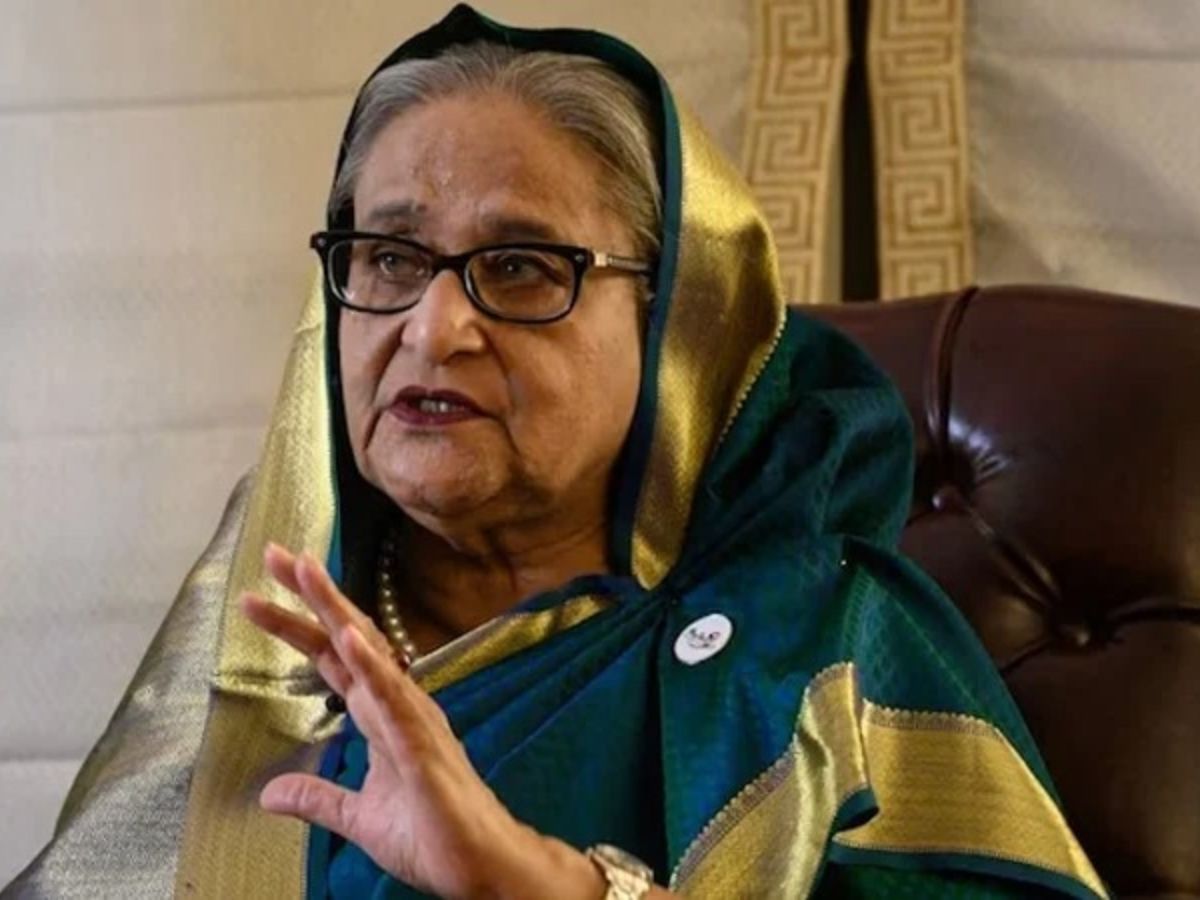
Sheikh Hasina (Image: File)
The February 12 elections in Bangladesh carry immense significance, coming at a time when the country has been without an elected government for nearly two years and has been administered by an interim regime. The prolonged absence of an elected leadership has intensified concerns over democratic legitimacy and governance.
In an exclusive interview with The Sunday Guardian and NewsX, former Bangladesh Prime Minister Sheikh Hasina strongly criticised the proposed electoral process, describing it as a “mockery of democracy.” She argued that any election which sidelines the country’s oldest political party—the Awami League, which she heads—and effectively disenfranchises millions of citizens cannot be regarded as democratic or inclusive.
Q: In the past few weeks, at least 15 Hindus have reportedly been killed—including Dipu Chandra Das in Mymensingh and Chanchal Bhowmik in Narsingdi. Do you believe the Yunus-led interim government has failed to protect minorities ahead of the February 12 election?
A: The killings of Dipu Chandra Das, Chanchal Bhowmik and others are not isolated incidents. They are the direct consequence of a government that has empowered extremists, released convicted terrorists from prison, and granted the perpetrators of horrific violence total immunity. A government’s most basic duty is to protect all its citizens equally. The Yunus administration has not merely failed in this responsibility; it has actively emboldened the persecution of the most vulnerable in our society. Today, human rights violations have become the norm, with Awami League members, minorities and women being mercilessly tortured and killed.
Extremists from proscribed organisations like Hizb ut-Tahrir have been elevated to positions of power, while members of Jamaat-e-Islami, whose leaders were convicted of war crimes and undermined our independence struggle, stand at the heart of a political alliance poised to shape our future.
During our years in government, we worked tirelessly to ensure people of all faiths could coexist peacefully. We protected minorities not as a matter of political convenience, but as a constitutional obligation. Today, that commitment has been abandoned, and Hindus, Buddhists, Christians and Ahmadi Muslims are paying the price with their lives.
Q: With your party Awami League barred from contesting and key political space restricted, do you see the upcoming elections under the interim government as genuinely democratic and inclusive?
A: These elections make a mockery of democracy. An unelected government, for which no Bangladeshi has ever cast a single vote, has given itself the authority to amend our country’s legislation and ban the party that has been elected nine times by the people. Any election that excludes the country’s oldest party and disenfranchises millions of its own people cannot be considered democratic or inclusive. Historically, when Bangladeshis cannot vote for the party of their choosing, they do not vote at all. This is not governance; it is the elimination of political opposition by decree.
It appears that genuine independent candidates have been barred from participating, while legitimate parties like the Workers Party have withdrawn in the face of political persecution. Police are arresting anyone who attempts to purchase nomination forms unless they belong to BNP or Jamaat-aligned groups, while ordinary voters are being intimidated on their doorsteps.
Yunus would rather ban us than face us at the ballot box because he knows that when Bangladeshis are given a genuine choice, they vote for us. Whatever government emerges from this exercise will face an immediate crisis of authority because it cannot claim to represent the people.
Q: The Yunus administration calls the recent violence “criminal incidents” rather than communal attacks. Do you think this reflects denial of a deeper crisis in Bangladesh?
A: The interim government’s refusal to acknowledge the religious motivations behind these attacks is not a semantic distinction. It is a deliberate strategy to avoid accountability. By denying the communal nature of the violence, Yunus shields the extremist groups he has empowered from scrutiny while their victims are denied justice.
Dipu Chandra Das was publicly lynched by his colleagues for alleged blasphemy, his body tied to a tree and his death celebrated by extremist groups. Calling this deplorable act “criminal” is an insult to the victim and a signal to the perpetrators that they face no consequences. Since unlawfully seizing power, Yunus has released convicted terrorists from prison and granted the perpetrators of revenge attacks total immunity, giving them a free rein to mercilessly hunt the Awami League and anyone who may disagree with them. Meanwhile, religious minorities live in fear of violence and watch on powerless as their businesses, homes and places of worship are routinely destroyed.
Bangladesh was founded as a secular republic where freedom of religion was sacrosanct. The current climate in which minorities are targeted with impunity while the government looks away represents a fundamental betrayal of those founding values.
Q: Bangladesh’s global image—from its economy to its cricketing and cultural diplomacy—is being watched closely. Do you believe the interim government’s policies have strengthened or weakened Bangladesh’s international standing? What would you have done differently at this moment?
A: During our time in government, our economy achieved remarkable growth of over seven per cent. We lifted millions out of poverty, quadrupled food production, empowered women, created jobs for the young, and attracted investment from home and abroad. We earned the respect and trust of our allies and partners across the world.
Today, that progress has been eroded and our once flourishing economy is now contracting. Investment has stalled, import and export operations have ground to a halt and employment opportunities have all but disappeared. Internationally, the goodwill Yunus once enjoyed is eroding rapidly. Human rights organisations have openly condemned his actions, while his own cabinet members have resigned in protest. Even the President of the United States has spoken critically of him. India, our closest ally, watches in alarm as minorities face persecution and decades of carefully built partnership unravels.
This is the inevitable consequence of governing without a mandate from the people. I was elected nine times by the Bangladeshi people, and I took my responsibility seriously. Throughout my time in office, we protected minorities and curbed the domestic terrorist units that are now persecuting them. We helped drive sustainable economic that transformed millions of lives rather than presiding over its destruction. Most importantly, I led with the knowledge that Bangladesh belongs to its people and not to extremists who have temporarily seized power.
