Internal assessment shows NDA’s cautious optimism as Nitish’s welfare scheme reshapes momentum.
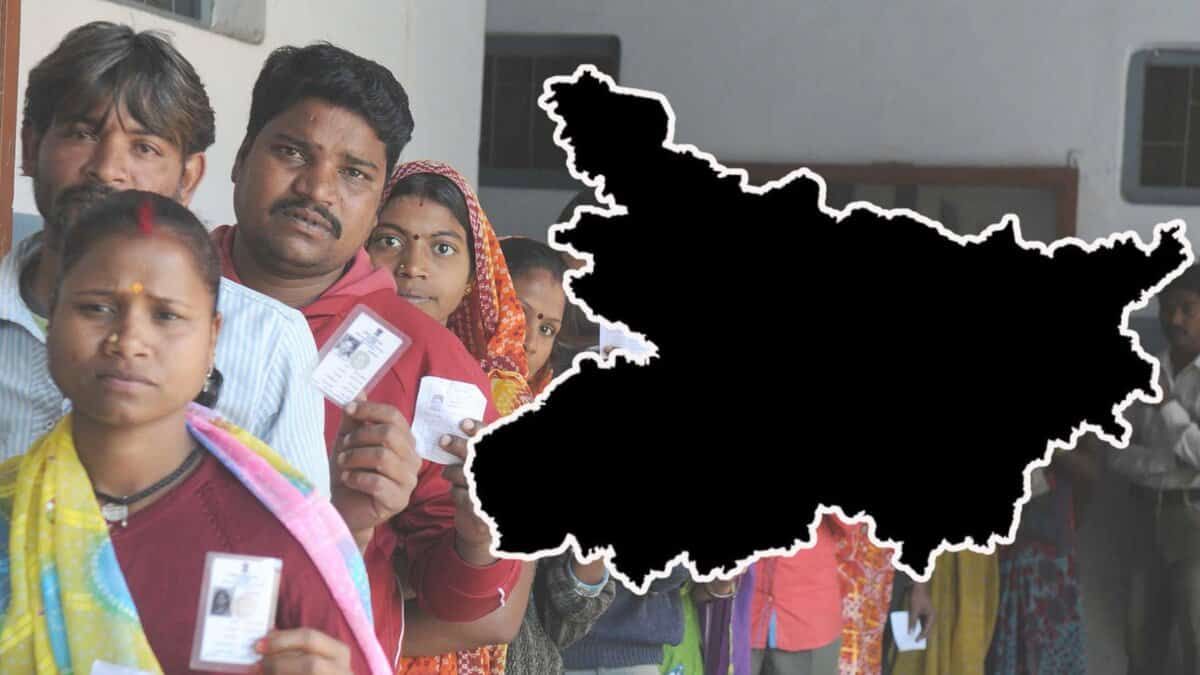
Bihar NDA strategists assess the impact of welfare schemes and leadership presence on first-phase polling, with women voters emerging as key beneficiaries (Photo: Pinterest)
NEW DELHI: An internal assessment carried out by the National Democratic Alliance (NDA) before polling began in Bihar had projected the combine to win around 117 of the state's 243 seats just short of the 122 required for a majority. The forecast, drawn from con stituency-level feedback gathered by BJP and JD(U) coordinators, re flected guarded optimism within the ruling alliance. It suggested that the NDA was positioned to return to power, but without a sweeping wave. The contest ap peared fragmented, shaped large ly by local equations, candidate strength, and micro-level issues rather than any unifying senti ment.
In the early campaign phase, alli ance managers described the elec tion as a seat-by-seat fight. Ground feedback pointed to uneven mo bilisation and limited enthusiasm among booth workers. Caste align ments, MLA reputations, and local grievances were influencing voters far more than larger narratives. In several constituencies —especially where sitting MLAs were dropped or candidates were perceived as outsiders—the organisational tempo was missing.
One key finding that has since proven accurate after the first phase is that the Lok Janshakti Party (Ram Vilas) was viewed internally as the alliance's weak link. The Chirag Paswan-led party fielded fourteen candidates in the first phase but lacked a strong base in many districts. "Symbolic, not strategic," is how one senior leader described its role.
The 117-seat projection was thus treated as a baseline attainable if campaign unity held and turnout management went smoothly. Yet the broad sense was that Bihar's verdict would rest on local arith metic rather than an emotional appeal. What resonated in Gaya didn't necessarily in Rohtas or Aurangabad.
That perception began to shift in the final fortnight before the first phase. The Rs 10,000 cash transfer to 1.21 crore women beneficiaries under the state gov ernment's welfare programm credited to Chief Minister Nitish Kumar's initiative—emerged as the defining moment of the cam paign. Timed just before polling, the direct benefit rollout is now seen by BJP and JD(U) leaders as the turning point that helped con solidate a scattered electorate. The payments, coupled with the loyal vote bank of Chief Minister Nitish Kumar and Prime Minis ter Narendra Modi, created what alliance strategists describe as a "universal strand" of support that had been missing earlier. The scheme appears to have softened anti-incumbency, particularly among women voters, who form a decisive bloc in Bihar. It also helped dampen resentment over ticket distribution, giving alliance workers a coherent message in the closing days of the campaign. The opposition attempted to la bel the payout as a last minute in ducement, but within the NDA, it is viewed as a well-timed welfare intervention that revived confi dence at the grassroots.
The LJP's contribution to the overall NDA performance, how ever, is still expected to remain marginal despite its presence on paper. The first phase, covering 121 constituencies across 18 districts, has therefore become a test of how far the NDA's welfare-driven narrative can compensate for ear lier organisational shortcomings.
Under the seat-sharing arrange ment, the JD(U) fielded 57 can didates, the BJP 48, the LJP (RV) 14, and the Rashtriya Lok Morcha two. Alliance planners now believe that if the welfare push and lead ership messaging sustain their current traction, the NDA could exceed its internal forecast and cross the majority mark. For now, the consensus within the coalition is that what began as a patchwork of local contests has, by the close of the first phase, be gun to resemble a more uniform verdict one shaped as much by material benefits as by the com bined presence of Nitish Kumar and Narendra Modi on the cam paign stage.
