Indian Army foils major terror infiltration in Uri; anti-terror ops, drones, and enhanced patrols strengthen LoC security amid Pakistan-backed threats.
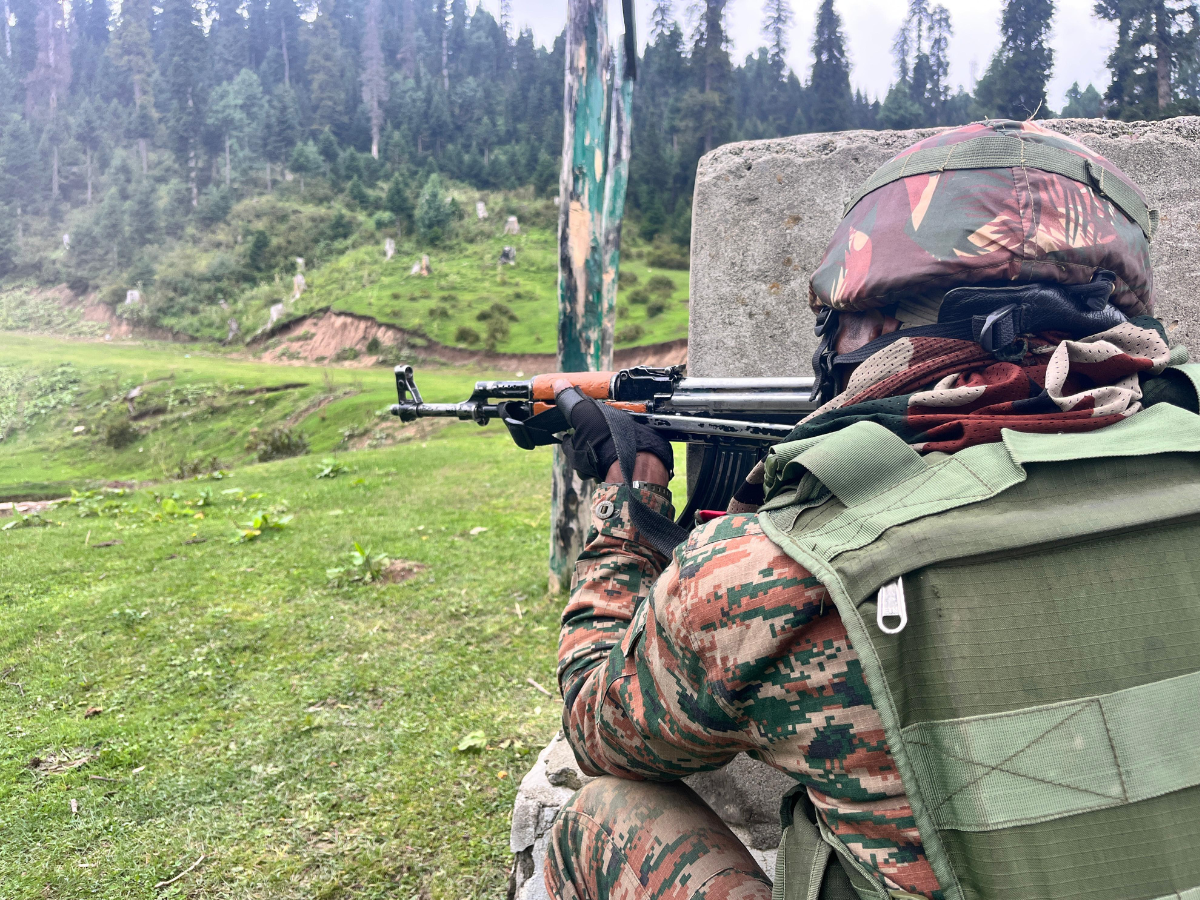
Indian Army thwarts cross-border infiltration in Uri; Trinetra drones and enhanced patrols bolster counter-terror operations along the LoC.
Srinagar: The Uri sector of Jammu and Kashmir has once again become a flashpoint for cross-border terrorism, with the Indian Army successfully foiling a major infiltration attempt made by terrorists. The recent surge in such activities is seen as a deliberate attempt by Pakistan to reignite terror activities in the Kashmir Valley, leveraging traditional infiltration routes that have reopened with the melting of snow on higher reaches.
In a fierce gunfight that erupted during the early hours, a group of terrorists attempted to sneak into Indian territory under the cover of darkness. Indian troops, maintaining a heightened state of alert, engaged the infiltrators, leading to a prolonged exchange of fire. While the infiltration attempt was thwarted, the nation mourns the loss of one brave soldier who made the supreme sacrifice in the line of duty.
Following the incident, a large-scale counter-infiltration operation, including combing the area, was launched to track any remaining infiltrators.
Military sources indicate the possibility of Border Action Team (BAT) involvement, a tactic often used by Pakistan to support cross-border incursions.
This latest incident comes just four months after a terror attack in Pahalgam, which intelligence agencies have attributed to Pakistan-backed outfits such as Lashkar-e-Taiba (LeT) and Jaish-e-Mohammed (JeM). The renewed push from across the LoC is being met with a firm and proactive response from the Indian Army.
As part of its strategy, the Army has initiated "Anti terror Operations," a specialized counter-infiltration initiative aimed at dismantling terrorist launch pads across the border. The operation involves enhanced troop deployment, aerial surveillance, and precision strikes to prevent incursions. Ahead of Independence Day, patrolling has been intensified across the LoC and the international border in Jammu and Kashmir, further tightening the security grid.
The Indian Army's counter-terrorism efforts are being carried out in tough and challenging conditions. Soldiers are equipped with a range of modern weaponry, including Russian-made AK-47s, US-made Sig 716 assault rifles, and the indigenously produced AK-203, which is being manufactured in India under an agreement with Russia signed in 2021.
Technological advancements are also playing a crucial role in these operations. The Army is utilizing "Trinetra" drones for patrolling along the LoC. These drones, aptly named "Third Eye," are equipped with advanced features such as GPS-based night flight capability, strobing lights in both visible and infrared wavelengths, and a dual-sensor payload. They also feature 3D scanning and mapping with adaptive scanning to create comprehensive, ultra-high-resolution 3D models of the terrain, providing an invaluable tactical advantage to the troops on the ground.
The Indian Army's unwavering resolve and successful operations underscore its commitment to maintaining peace and stability in the region. However, the continuous and relentless attempts by Pakistan-based terror groups highlight the persistent challenges along the LoC and the necessity for a sustained, zero-tolerance approach to terrorism.
Combing operations in the hinterlands are ongoing to ensure that any infiltrators who may have slipped through the initial grid are traced and neutralized.
