US-Venezuela tensions: President Trump warns Venezuela's acting president Delcy Rodríguez of a "big price" if she defies the U.S. after Maduro's capture. Read what happened and why it matters.
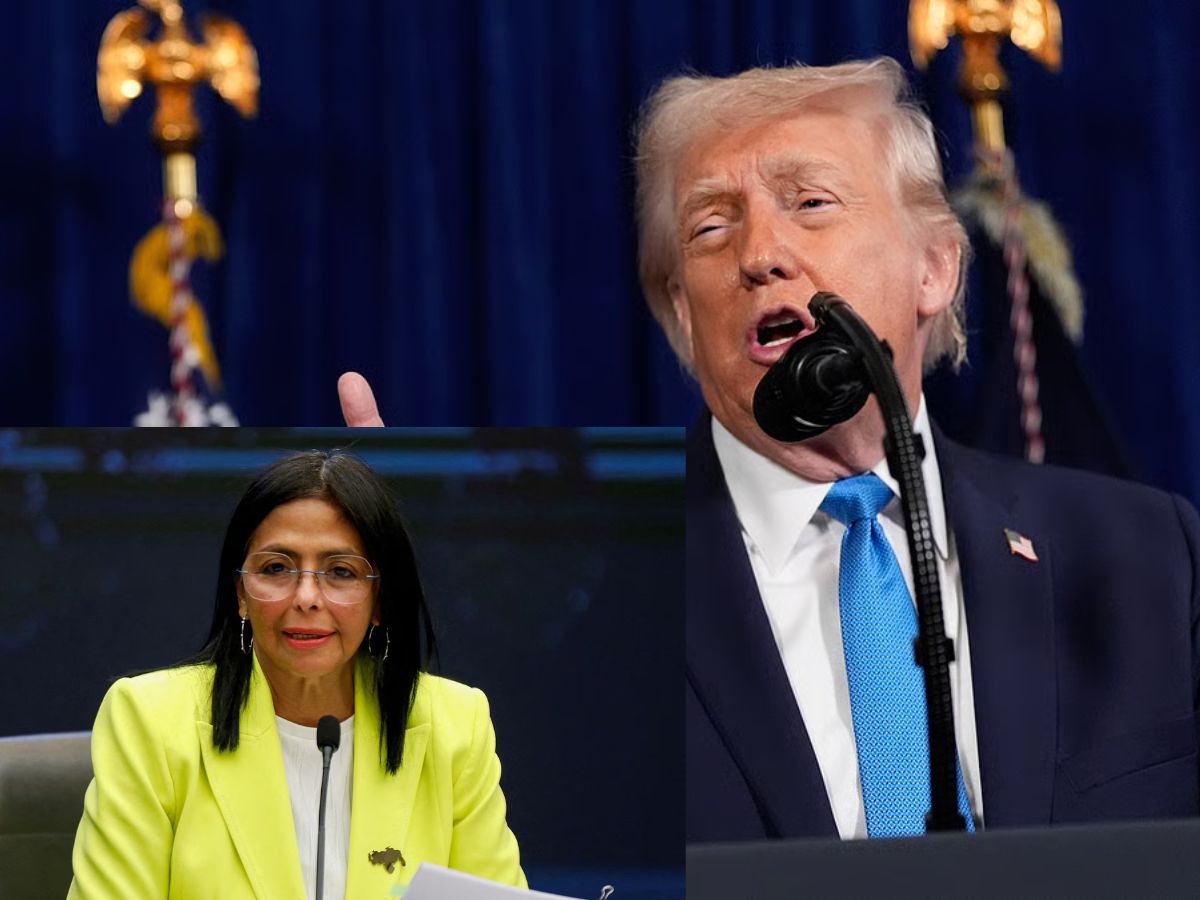
Trump's Venezuela Strategy: The "Donroe Doctrine" and the Threat to Acting President Delcy Rodríguez (Image: Reuters)
NEW DELHI, January 5 — U.S. President Donald Trump warned Venezuela's new acting president, Delcy Rodríguez, of severe consequences if she does not align with Washington's interests, following the U.S. military operation that captured former Venezuelan leader Nicolás Maduro.
In an interview with The Atlantic on Sunday, Trump said Rodríguez would "pay a very big price, probably bigger than Maduro" if she fails to "do what's right." He made these remarks from his golf club in West Palm Beach, sounding relaxed. Trump dismissed concerns from his own political base, openly supporting efforts he once criticized as "nation building" or "regime change" for Venezuela.
"You know, rebuilding there and regime change, anything you want to call it, is better than what you have right now," he said. "Can't get any worse."
The crisis escalated after U.S. forces attacked Caracas and captured Maduro and his wife, Cilia Flores. Following the operation, Trump told reporters that Rodríguez had privately signaled a willingness to cooperate with Washington. He stated the U.S. would temporarily "run" Venezuela.
However, Rodríguez publicly and immediately rejected Trump's account. In a televised address, she declared Venezuela was "ready to defend our natural resources" and demanded Maduro's return, asserting continued loyalty to him from the country's military leadership. "We shall never be a colony ever again," she said.
Trump's threat signals that U.S. intervention may not be over. On Saturday, he indicated readiness to authorize further military action if needed, calling Venezuela a "totally failed country." His approach is framed by what he calls the "Donroe Doctrine," a personal version of the Monroe Doctrine, which asserts U.S. dominance in the Western Hemisphere.
When asked about the doctrine on Sunday, Trump shifted focus from regional policy to individual nations. "It's not hemisphere," he said. "It's the country. It's individual countries." This suggests a continued, case-by-case strategy for direct intervention.
A: Following Nicolás Maduro's detention by the United States, Delcy Rodríguez took over as acting president of Venezuela. She has long been a supporter of Maduro and was formerly Venezuela's vice president.
A: Nicolás Maduro is currently detained in a jail in New York City.
A: The "Donroe Doctrine" is Trump's term for his foreign policy approach in the Americas. It is a reinterpretation of the 19th-century Monroe Doctrine, emphasizing unilateral U.S. action to counter influence from rivals like Russia and China and to shape political outcomes in the hemisphere.
A: The direct military capture of a sitting foreign leader on his home soil is an unprecedented modern action by the U.S. in Latin America.
