Despite foreign criticism, India's welfare policies remain essential and socially responsible.
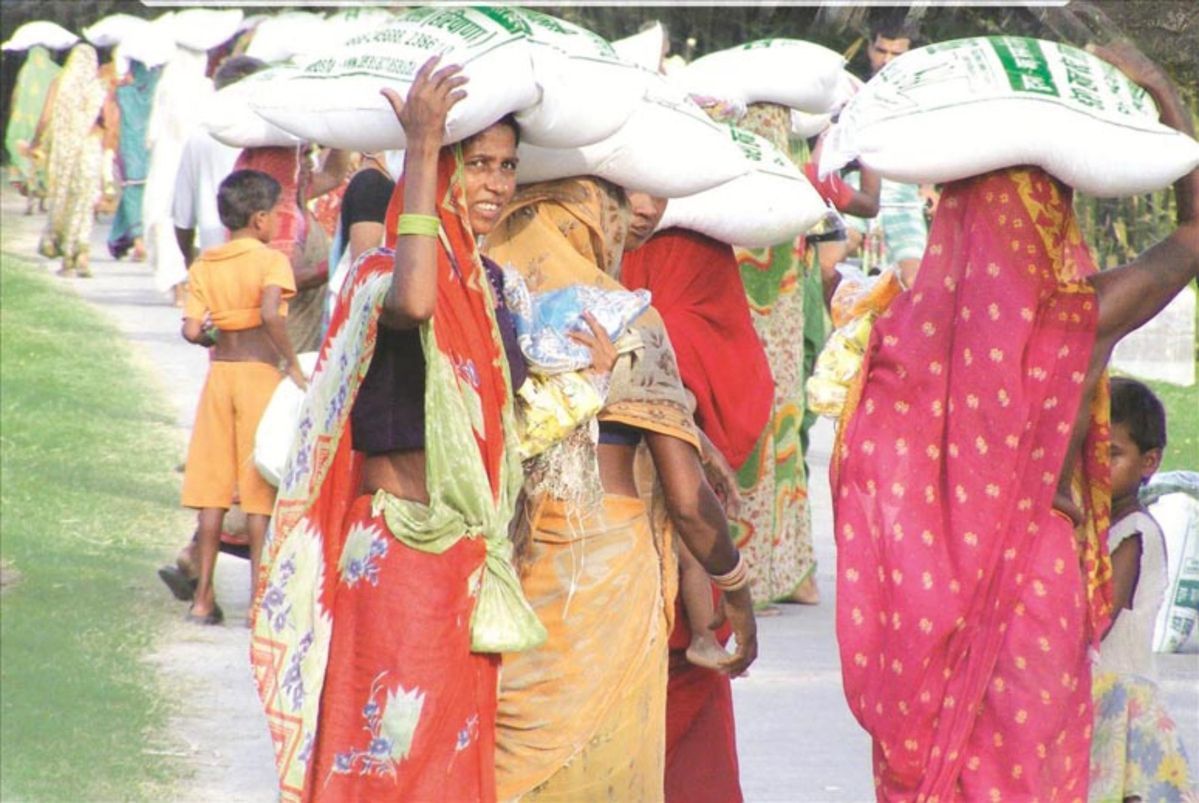
Residents receive subsidized essentials under Bihar’s welfare programs, highlighting government efforts to improve living standards (Photo: File)
NEW DELHI: Among experts widely respected for their insights on Indian politics and economic policy, Indian-American Ruchir Sharma stands out. His long experience with institutions such as Morgan Stanley, Rockefeller Capital Management, and Breakout Nations, combined with research-based analysis on India's socio-political landscape, has made him an influential commentator. Yet his reaction to the Bihar election results struck me as both inappropriate and disheartening. Sharma suggested that "Chief Minister Nitish Kumar shows no new thinking on economic progress, yet his victory is not a good sign. In many large democracies, people vote out governments in anger—but in India, that is not happening".
He went further, arguing that "getting trapped in prioritising welfare over growth is bad for India". He calls this the "welfare trap," where fundamental developmental processes slow down, and government focus narrows to grants, subsidies, and cash transfers.
Sharma is not alone. Many Indian analysts with Western perspectives also view providing subsidised food, housing, gas, or cash assistance to women as economically unwise. They often weigh India's socio-economic realities against Western standards, ignoring the local context. Sharma, like other "welfare critics," comments on the popularity of leaders such as Prime Minister Narendra Modi or Nitish Kumar, implying that public support for welfare is misplaced. Even after 75 years of independence, there remains a tendency in India to regard Western perspectives as inherently ideal or superior.
However, it is worth noting that in countries like Britain, which once ruled half the world, governments continue to build millions of homes for low-income citizens, provide monthly benefits to semi-literate populations, and offer free healthcare despite shortages of doctors and nurses. Single mothers receive up to 85 percent of childcare costs, while farmers benefit from subsidies and insurance. Similarly, in the United States, subsidies for crops like maize, wheat, soy, cotton, and rice are allocated, with billions of dollars approved every five years by Congress. Indian governments, both central and state, similarly tailor welfare programs to local needs.
Sharma observed that Bihar experienced a "decade of strong growth from 2005 to 2015, with improvements in roads, law and order, education, and administration leading to stable long-term growth". Yet, according to him, after 2015 the state entered a phase where development plateaued and political discourse shifted entirely to welfare. Curiously, he seems to have overlooked the visible progress from Patna to Karpuri Gram, Darbhanga, Gaya, Rajgir, Nalanda, and Bhagalpur roads, shops, schools, medical colleges, sports universities, Madhubani haats, and the growing popularity of Madhubani and Bhagalpuri textiles. The earnings of Bihar's hardworking people, whether at home or abroad, have visibly transformed towns and villages.
Experts like Sharma often emphasize welfare over broader economy. Sharma's claim that India's politics remains influenced by social identity and caste is partly correct. This is likely why Modi campaigns on a development-focused agenda rather than identity politics. By contrast, U.S. and European leaders often prioritize the interests of specific demographic groups, impose frequent immigration restrictions, or avoid supporting poorer nations at global summits. India, by contrast, only identifies illegal residents without extending privileges to economic criminals or terrorists, unlike in some Western contexts.
Sharma is also right that India's largest political challenge remains employment, which continues to influence elections. Yet, in Bihar, despite lofty promises of jobs by political rivals, educated youth are increasingly starting businesses or joining small enterprises instead of falling into unrealistic expectations. Expanding skill development programs, akin to China, remains a significant challenge across states, but the trajectory is positive.
