
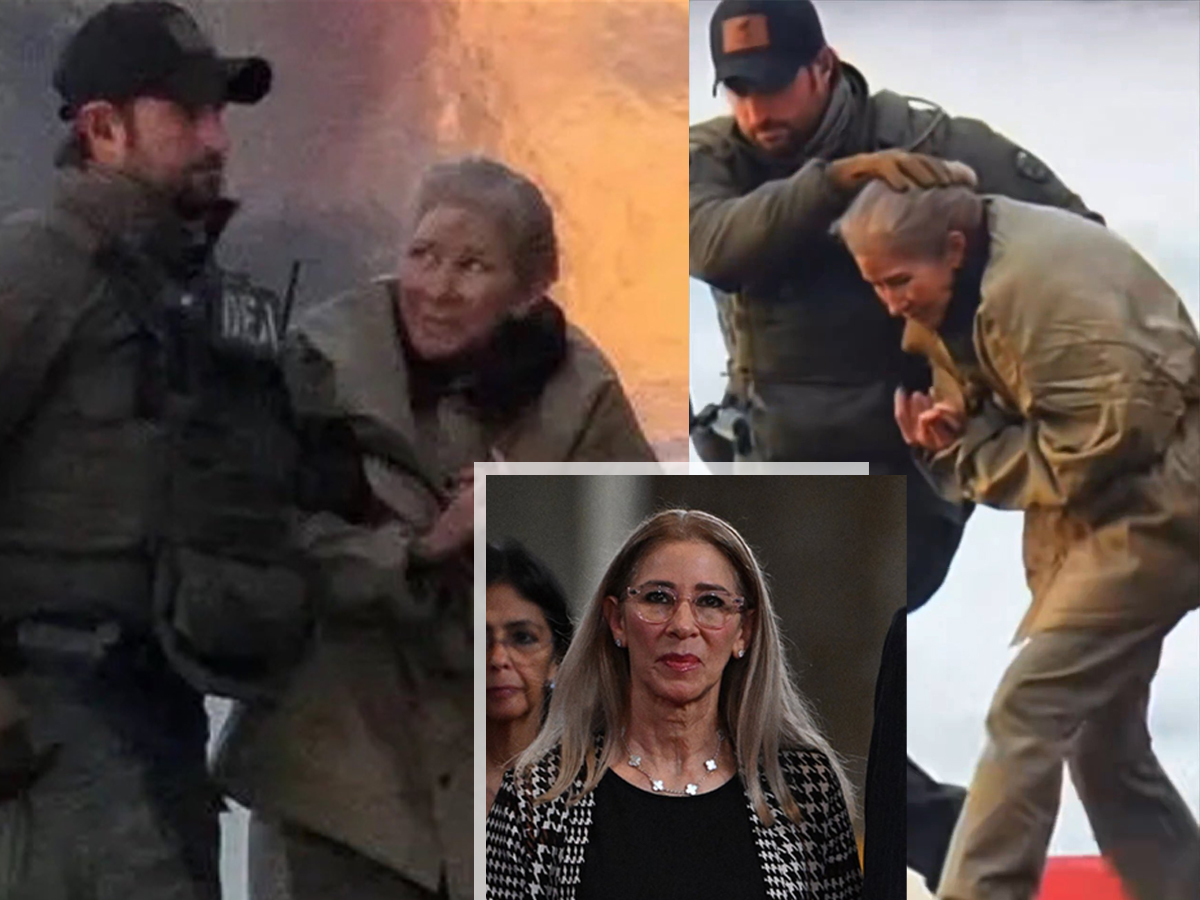
Cilia Flores, the wife of ousted Venezuelan President Nicolás Maduro, appeared in a New York federal courtroom on Monday with visible injuries, including bandages on her forehead and temple. Flores’ lawyer, Mark Donnelly, told the court that she sustained “significant injuries during her abduction” and may require medical evaluation and treatment, including for possible fractures or severe bruising on her ribs.
Her husband, Nicolás Maduro, also appeared in court alongside her, pleading not guilty to charges including cocaine importation and weapons offenses. Both defended themselves vigorously, with Maduro asserting, “I am innocent. I am not guilty of anything mentioned here. I am a decent man.” Flores echoed the claim through a translator, saying, “Not guilty, completely innocent.”
Was Cilia Flores Injured? Details of the Courtroom Appearance
During the hearing, Flores required assistance to sit at the defense table, while Maduro stood and spoke in Spanish, relayed by a court-appointed translator. The couple reportedly appeared physically strained. CNN legal analyst Laura Coates described both as having difficulty sitting and getting up from their chairs, with Maduro frequently glancing at his wife, and Flores appearing more “demure” and “withdrawn” than her husband.
Maduro, 63, and Flores, 69, were detained by U.S. military forces on January 3 in Venezuela, an action the couple maintains was unlawful. Their next court appearance is scheduled for March 17.
Lawyers Highlight Serious Health Concerns of Cilia Flores
Flores’s attorney emphasized the severity of her injuries, stating that she may have a fracture or severe bruising and will need a physical evaluation. Maduro’s lawyer, Barry Pollack, also mentioned that the former Venezuelan leader has “some health and medical issues that will require attention” without providing further details.
These statements have drawn international attention, raising questions about the conditions of their detention and the circumstances surrounding the U.S. military operation in Venezuela.
Impact of US Action on Venezuela’s Leadership
Back in Venezuela, Vice President Delcy Rodriguez has been sworn in as interim President, taking the oath “in the name of all Venezuelans.” Rodriguez signaled a willingness to cooperate with Washington, highlighting the political uncertainty following Maduro and Flores’ capture.
The U.S. operation has sparked widespread debate about sovereignty, legality, and human rights. Flores’ visible injuries in court have intensified concerns over how the operation was conducted and the care provided to detainees.
What This Means for International Observers
The courtroom images of Flores, along with statements from her lawyer, have created a focus on humanitarian and legal implications. Observers point out that the high-profile nature of the case could shape how international bodies monitor the treatment of political figures in detention.
The editorial question — “Was Cilia Flores injured during US capture?” — has become central to media coverage and public discussion. The bandages and visible discomfort suggest she experienced a physically traumatic detention, though official details remain limited.
Health and Legal Questions Take Center Stage
Beyond the political and legal drama, this case raises urgent questions about detainee treatment, international law, and medical oversight. Flores’ injuries have prompted human rights advocates to call for transparency, independent medical assessment, and careful monitoring of the couple’s health while in U.S. custody.
As the next court date approaches, global attention will likely focus not just on the charges against Maduro and Flores, but also on the conduct of the U.S. operation and the physical well-being of the detained couple.




