
NEW DELHI: There are still some organisations and leaders in India who labour under the misconception that democracy and press freedom in the United States and Britain are flawless and superior. Especially those institutions that receive heavy funding from Western countries, or leaders like Rahul Gandhi who seek applause by criticising India on foreign soil, along with a section of activist-style journalists and writers, attempt to mislead Indians by citing reports from foreign media.
The reality, however, is that India has more newspapers, magazines, television news channels and digital platforms than any other country in the world. Despite pressure and opposition, hundreds of journalists and writers—more in Hindi and Indian languages than in English—continue to expose shortcomings in governance as well as social and economic systems.
As Western countries publish annual reviews, their Indian followers should also be made to look at the West’s own mirror. It would then become clear that they do not need to lecture India; instead, they should focus on correcting their own declining standards.
According to the 2025 Press Freedom Index released by Reporters Without Borders, the United States ranks 57th out of 180 countries, with press freedom weakening compared to previous years. Key reasons cited include economic pressure, financial instability of news organisations, and a hostile environment for journalists.
Many media houses are struggling financially, resulting in suppression of dissenting voices. American media is also facing increasing political pressure, particularly when political groups and leaders openly attack critical reporting.
Concerns over press freedom are further compounded by recurring cuts in financial support and resources. A Pew Research Center survey indicates that ordinary Americans remain worried about press freedom, with many believing that news is no longer being reported independently.
A Reuters report highlighted that the US Pentagon instructed media organisations to seek permission before publishing sensitive information, raising serious questions about journalistic autonomy and access to information. Political and social groups have intensified criticism of the media, often branding it biased and untrustworthy.
Reporters Without Borders has warned that global press freedom is at its lowest level in history, with visible impact across many democratic nations, including the United States. In Britain, major changes have been introduced in the Prime Minister’s Office press lobby system, with traditional daily press briefings—where journalists question the government—either removed or severely curtailed.
Journalists have protested these moves, arguing that they weaken transparency and accountability. The BBC, often projected in India as an ideal institution, was itself embroiled in a major controversy in 2025, with allegations that some of its political reporting displayed bias.
This led to resignations at senior leadership levels and sparked a wider debate on editorial independence and press freedom within the organisation. In Britain, tensions between the government and media continue, particularly over the reporting of official narratives, rumours and sensitive social issues.
Globally, press freedom is under severe strain. Economic crises, political pressure and concentrated media ownership structures have created serious challenges for journalism. In nearly half the world’s countries, press freedom is critically weakened.
Freedom of expression worldwide has declined by nearly 10 per cent, alongside increased governmental and technological control. Regulation of digital platforms has also emerged as a major concern.
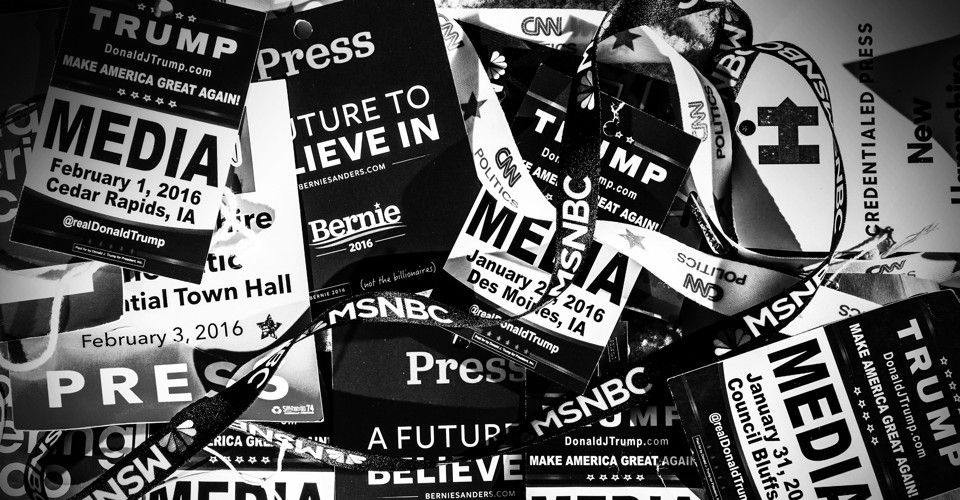
In American politics, friction between the media and those in power is not new, but in 2025 this confrontation resurfaced in a sharper and more aggressive form. Donald Trump—whether campaigning, facing court proceedings, or addressing supporters—has repeatedly targeted the American media, particularly CNN.
This conflict has gone beyond criticism, involving abusive language, direct attacks on media credibility and portraying journalists as enemies. Trump’s confrontation with the media dates back to his first presidential term from 2017 to 2021, when he frequently branded the press as fake news and the enemy of the people.
In 2025, this approach intensified due to deep political polarisation, the return of election politics to centre stage, and Trump projecting himself as a dominant leader. In this environment, national networks like CNN became political adversaries.
CNN has been repeatedly targeted because of its national and global reach and its investigative reporting on Trump’s policies, statements and legal troubles. The Trump lobby has accused the network of spreading lies, running an anti-America agenda and misleading the public.
Trump’s language has often been personal, sarcastic and insulting, reinforcing a narrative of us versus them, portraying the media as an elite establishment and himself as the sole voice of truth.
When leaders like Trump and Rahul Gandhi repeatedly label the media as dishonest, public trust erodes and the distinction between facts and opinion becomes blurred. Attacking the media also serves as a strategic tool to divert attention from legal troubles, policy failures and political criticism.
In 2025, the Trump lobby targeted not just CNN but the entire mainstream media, often singling out journalists personally and using provocative language before crowds. These attacks have gone beyond rhetoric, with journalists facing hostile environments at public events.
The First Amendment of the US Constitution guarantees press freedom, yet in 2025 a serious question has emerged: do sustained attacks by powerful political leaders weaken this freedom? Is the line between criticism and intimidation becoming increasingly blurred?
There is little doubt that such rhetoric increases economic and social pressure on media institutions. That is why the argument remains clear. India must protect its freedom and rights by developing its own ethical frameworks, traditions and laws.
Instead of clinging to colonial-era rules or adopting standards prescribed by Western powers, India should strengthen its own regulatory traditions, legal systems and democratic practices—and uphold them with confidence.




