
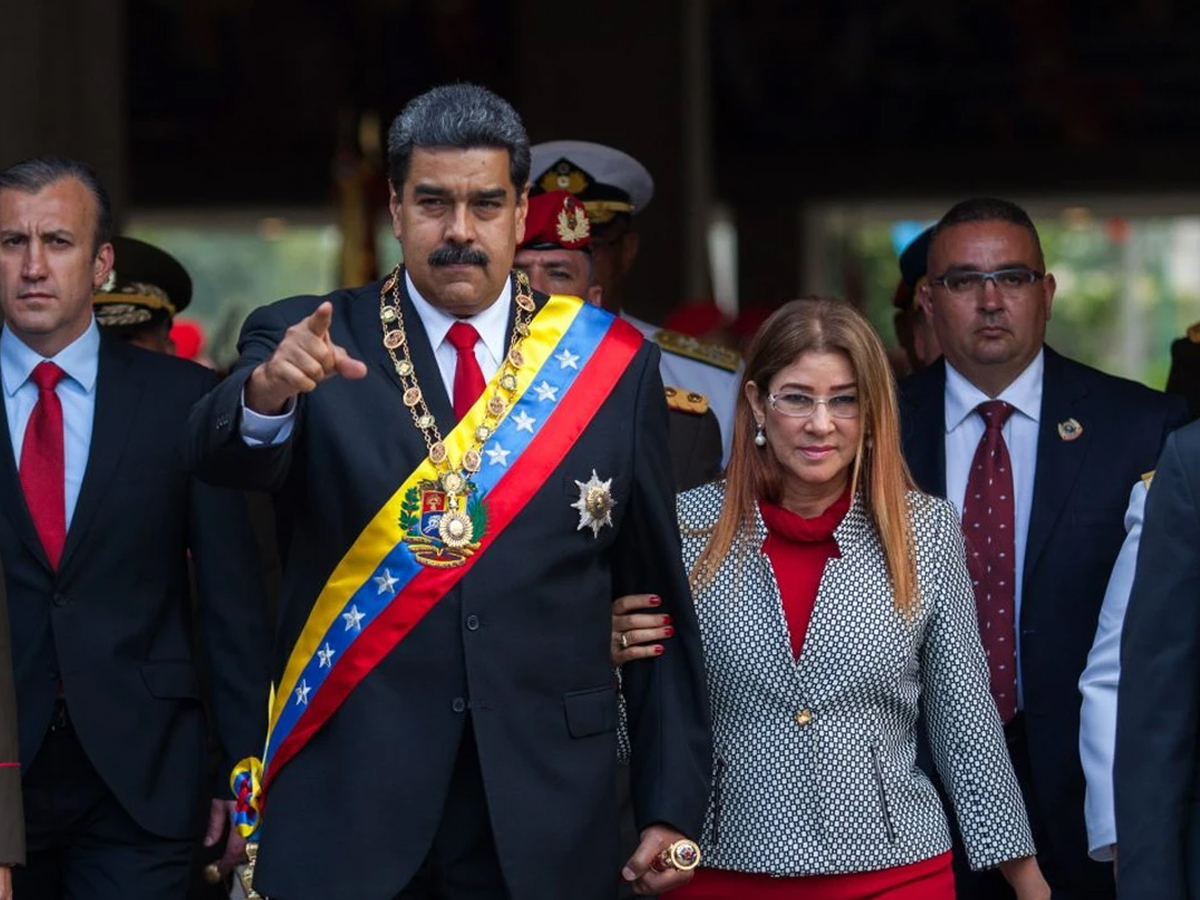
As reports swirl about US military operations in Venezuela and the alleged detention of President Nicolas Maduro, attention has rapidly shifted to a lesser-known but deeply influential figure, and wife of President Nicolas Maduro, Cilia Flores. Often described as far more than a president’s spouse, Flores has long occupied a central position in Venezuela’s power structure, blending legal authority, political control, and controversial allegations that stretch across borders.
Her role has become a focal point as US officials and intelligence sources link her name to corruption, drug trafficking investigations, and the inner workings of the Maduro regime.
Who Is Cilia Flores?
Cilia Flores is a Venezuelan lawyer, former legislator, and long-time political operator. She married Nicolás Maduro in 2013, shortly before he assumed the presidency following Hugo Chávez’s death.
Unlike traditional first ladies, Flores rejected the title entirely. She publicly insisted on being called “Primera Combatiente” (First Combatant), a label that reflected her political self-image. Observers say she functioned as a central decision-maker rather than a ceremonial figure.
Cilia Flores: Political Rise of Venezuelan ‘First Lady’
Flores entered Venezuela’s political elite long before Maduro’s presidency. She served as Hugo Chávez’s defense attorney, playing a key role in securing his release from prison in 1994 after his failed coup attempt.
She later became President of the National Assembly from 2006 to 2011, making history as the first woman to hold the post. During this period, Flores built deep institutional influence, especially within the judiciary and legislative branches.
Political analysts describe her relationship with Maduro as a long-running power exchange, where both traded authority across institutions while consolidating control.
Drug Trafficking Allegations on Cilia Flores and the 2015 DEA Case
The most damaging allegations involving Flores stem from a high-profile US federal case.
In 2015, Efrain Campo and Franqui Flores, her nephews whom she raised, were arrested by the US Drug Enforcement Administration in Haiti. They were later convicted in New York for attempting to smuggle 800 kilograms of cocaine into the United States.
During court proceedings, the defendants claimed that proceeds from the drug operation were intended to support Flores’s political activities. US prosecutors cited these statements as evidence linking her household to narcotics networks.
Flores has denied any wrongdoing. No US court has convicted her personally in connection with the case.
Why does the US sanction Cilia Flores?
In September 2018, the US Treasury Department imposed sanctions on Flores. Officials described her as a “key figure” in what they alleged was a broader corruption network involving Venezuela’s state institutions.
The sanctions marked a rare move against a sitting president’s spouse. US authorities claimed she used family ties to place relatives in influential government positions, including the judiciary and state-run oil company PDVSA.
Venezuelan officials rejected the sanctions, calling them politically motivated.
What Is the ‘Dual Presidency’ Theory?
Former intelligence officials and political analysts have described Venezuela’s governance as a “dual presidency”. Under this view, Maduro acted as the public leader, while Flores exercised quiet but decisive control over courts, appointments, and internal power structures.
Supporters of this theory argue that her influence explains how the regime maintained institutional loyalty despite economic collapse and international pressure.
Reports of Capture and International Reaction
Multiple media outlets, citing unnamed US officials, reported that US special forces detained Nicolás Maduro and Cilia Flores during recent military operations. US President Donald Trump later wrote that Maduro and Flores had been “captured and flown out of the country,” stating the operation involved US law enforcement.
“This operation was done in conjunction with US law enforcement,” Trump wrote.
Venezuela has not officially confirmed the reports.
International reaction was swift. Iran condemned what it described as an attack on Venezuelan sovereignty. Meanwhile, the US Embassy in Bogotá issued urgent travel advisories, warning Americans to avoid Venezuela.




