
The United States is preparing for a dramatic and controversial phase in Venezuela after the capture of long-time leader Nicolás Maduro, with President Donald Trump signalling that Washington will directly govern the country for now.
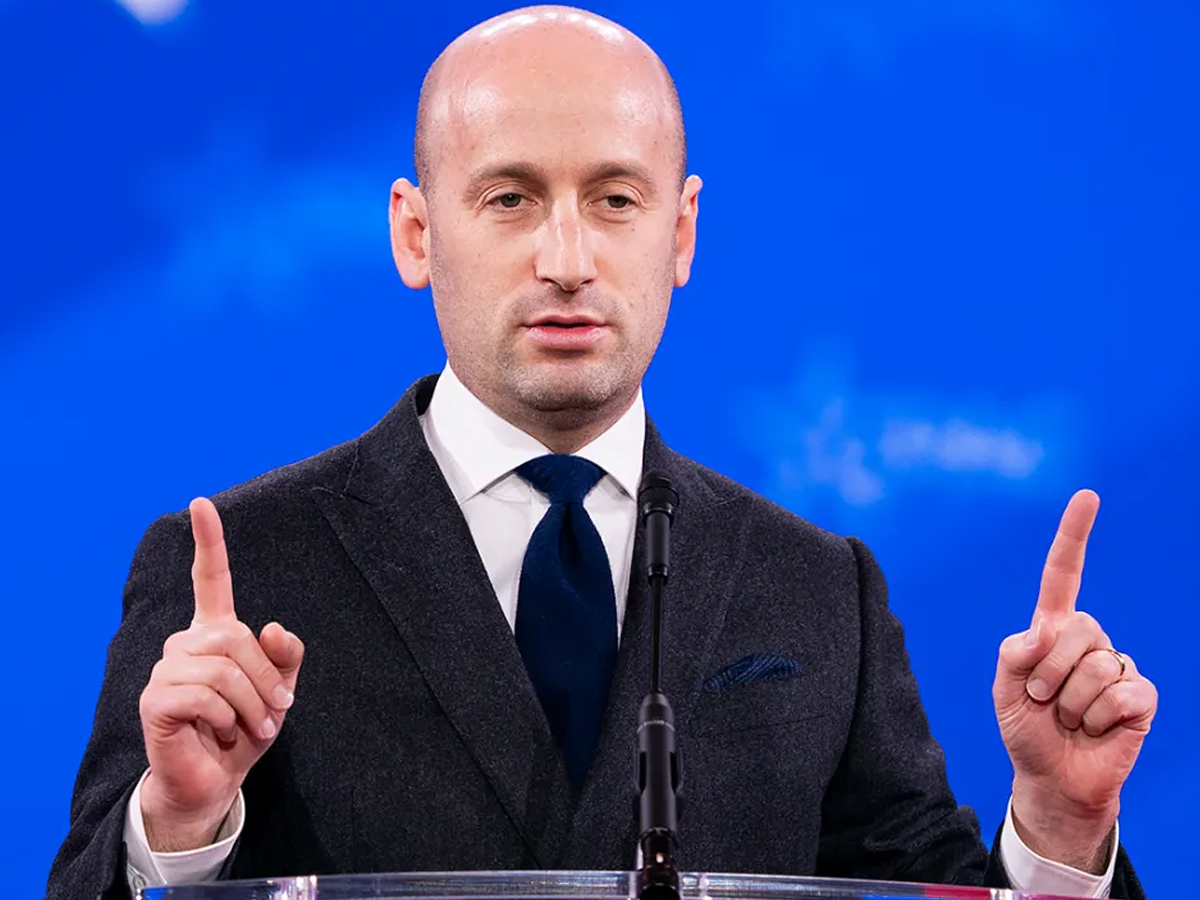
At the centre of these plans is Stephen Miller, Trump’s hardline deputy chief of staff, who the president is reportedly considering for a pivotal role in overseeing Venezuela’s political and economic transition.
Who Is Stephen Miller? Why Trump May Pick Him for Venezuela
Stephen Miller is one of Trump’s closest and most powerful advisers, known for shaping the administration’s toughest immigration, national security, and enforcement-first policies. As deputy chief of staff, Miller has played a central role in policy coordination across departments and is widely seen as a trusted enforcer of Trump’s worldview.
If Trump formally assigns Miller to oversee Venezuela, it would signal that the White House plans to manage the country with a firm, centralised approach focused on control, stability, and US strategic interests.
Trump Says US Will ‘Run’ Venezuela for Now
Trump has openly said the United States will take charge of Venezuela until conditions allow for a transition. Speaking about the next steps, he said, “We’re going to run the country until we can do a safe, proper, and judicious transition.”
The president offered few details on how the U.S. would govern a sovereign nation where institutions like the legislature, military, and vice presidency still exist and oppose American control. However, Trump made clear that economic reconstruction, especially oil, would be at the core of Washington’s plan.
No Elections Until Venezuela Is ‘Fixed,’ Trump Says
The Trump administration has ruled out holding elections in Venezuela in the near term. Trump explained his position in a television interview, saying, “We have to fix the country first. You can’t have an election. There’s no way the people could even vote.”
He added, “No, it’s going to take a period of time. We have, we have to nurse the country back to health.”
This stance marks a sharp break from international calls for quick elections and reinforces the White House’s argument that stability must come before democracy.
Oil at the Centre of US Strategy in Venezuela
Venezuela holds the world’s largest proven oil reserves, and Trump has made it clear that U.S. energy companies will play a major role in rebuilding the sector. He said American oil firms would spend billions repairing broken infrastructure and restarting production.
Trump claimed the project could be operational in less than 18 months, stating, “I think we can do it in less time than that, but it’ll be a lot of money.” He added, “A tremendous amount of money will have to be spent, and the oil companies will spend it, and then they’ll get reimbursed by us or through revenue.”
Despite these plans, Trump also said the U.S. embargo on Venezuelan oil remains in place and that American forces will stay on alert.
Stephen Miller Defends US Control Over Venezuela
Stephen Miller has publicly backed Trump’s claim that the U.S. is now running Venezuela. He said, “What the president said is true. The United States of America is running Venezuela. By definition, that’s true.”
Miller argued that global politics operates on power rather than formal rules, adding, “We live in a world… that is governed by strength, that is governed by force, that is governed by power.”
His comments suggest that if chosen to oversee Venezuela, Miller would prioritise control, enforcement, and strategic dominance over diplomatic caution.
Venezuela as a Test Case for Trump’s Global Strategy
Beyond oil and politics, Venezuela is shaping up to be a test case for Trump’s broader foreign policy — one that openly rejects traditional diplomacy in favour of direct intervention and economic leverage. With Stephen Miller potentially overseeing the effort, the White House appears ready to apply its toughest domestic playbook to an international stage.
What happens next in Venezuela could redefine how the U.S. uses power abroad — and how far Trump is willing to go to reshape nations in America’s image.




