In its worst case scenarios, Hamas would not have foreseen the response of the Israeli Defense Forces to its terror attack on October 7, 2023. Prime Minister Netanyahu remains in that job as long as he retains the support of those who voted for his coalition, and he has pressed forward with his mission of eliminating the military wing of that terror organisation. The condemnations from international bodies such as the International Criminal Court, which has labelled him a “war criminal” have not slowed down the Israeli Defense Forces in their mission against Hamas. Neither has the remainder of the Israeli hostages still in the custody of Hamas done so. The terror organisation believed that the innocent Israeli hostages it took during that terror attack would protect against any fierce counterattack by the IDF. It has not, although it is clear that the hostages are being treated very cruelly, or at least some of them. Relatives of the hostages are the most insistent on pressing for an immediate ceasefire to ensure the return of the hostages still alive. They do not appear to realise that releasing any more of the hostages at this stage of the battle between Hamas and the IDF is a remote possibility at best. The hostages are the only card that Hamas has left, and the leadership will not at this stage release them, for fear of an even fiercer counterattack by the IDF.
As for Israel, the October 7 attack revived memories of the Hitler Holocaust of the Jews, and that has been motivation enough for the IDF to press forward and for the majority of the Jewish people in Israel to support their mission of ridding the threat posed by the military wing of Hamas. Just as images from the Holocaust continue to be aired by the Jewish people, so do the images of the October 7 terror attack. Bleeding women hostages pushed into vehicles, the elderly mowed down, are among such visuals.
Although the fringe within the ruling coalition in Israel speak of doing away with Palestine in their quest for recovering Judea and Samaria, realists within the coalition know that accepting a Palestinian state within what they believe is the traditional homeland of the Jews may be inevitable. However, that state would comprise whatever territory it is safe to yield to the Palestinian authority, and would have to ensure that terror groups cease to operate within such a Palestine.
Given that even a handful of citizens of Israel have on occasion resorted to terror against their own country, a few individuals who remain committed to terror in order to try and recover lost land may still exist in what would constitute Palestine. Territory per se does not ensure economic and social progress, as relatively small countries (as compared to Brazil for example) such as Singapore and Taiwan demonstrate. The record shows that whenever the Palestinians have sought to recover territory through violence, including kinetic war, they have lost more land rather than gain any. A country, albeit small, where terror is absent could be a magnet for investment from not just fellow Arabs but others as well. Tourism, education, housing and healthcare could each approach a high standard.
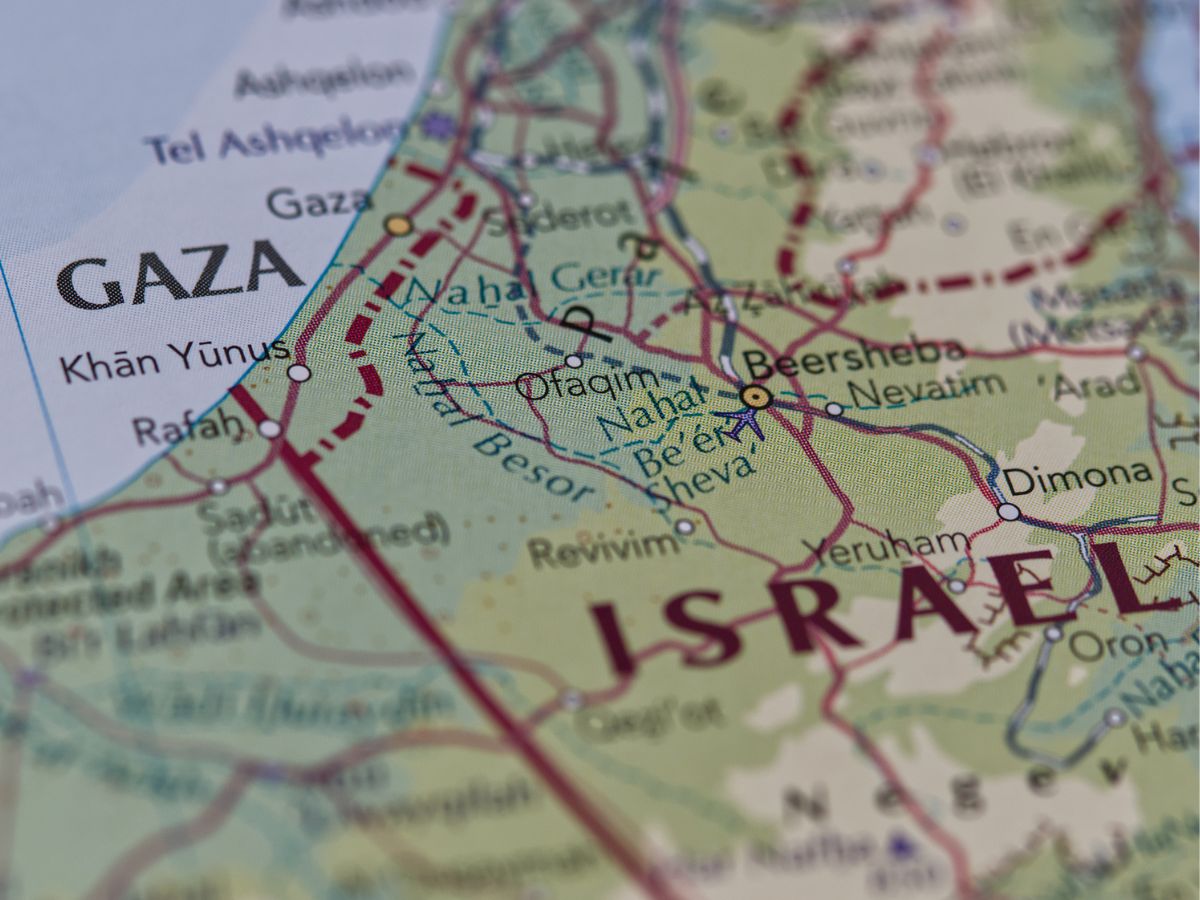
The alternative to abandoning the path of terror would be the Gaza of today, where the Gaza prior to the October 7 attack is unrecognizable. Swallowing the bitter medicine of territorial losses would be the only way to ensure a prosperous, peaceful Palestine, and may such a day come soon.
