Ancient temples, many rebuilt after being looted and destroyed centuries ago, are testament to the ancient civilisation of the world’s most populous country, with a recorded span going back millennia.
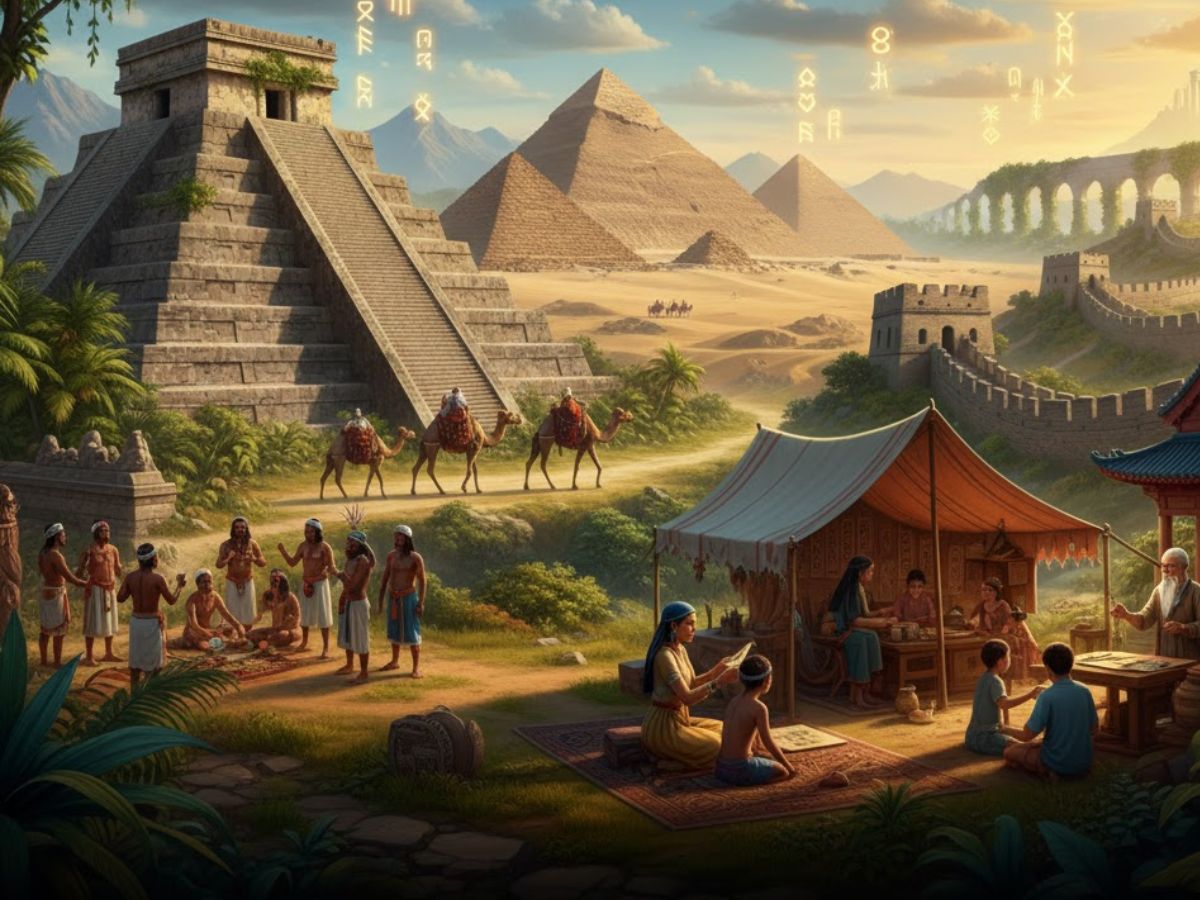
Ancient cultures that persist through millennia
India is a tapestry of cultures, each of which is kept alive through millennia. Different types of weather as well. Trivandrum is a world apart from Gurugram, which has been feeling the effects of an unexpectedly cold winter. In the capital city of Kerala state, the skies are bright with sunlight in the daytime, and there is no trace of the fog and smog that is blanketing Gurugram and its surrounding areas. Air conditioners are not needed, nature provides its own air conditioning that is far superior to the mechanical version. Small wonder that domestic tourism is flourishing. Folks from across the rest of India come with their families to enjoy the weather and the local cuisine. In different ways, in different seasons, several other parts of India are as attractive. From shikara rides in Kashmir to camel rides in Rajasthan, or to elephant and pony rides, all are available within the borders of India. Overall, the people of the country are welcoming and cordial to the visitor from abroad or from other parts of India. From the elephant processions in Mysore during the festive season to the pony rides of Lonavala, the range of options for the visitor to savour is immense. Ancient temples, many rebuilt after being looted and destroyed centuries ago, are testament to the ancient civilisation of the world’s most populous country, with a recorded span going back millennia.
During colonial rule by European powers, efforts were ceaseless to erase the ancient past of India. In effect, history was taught as though the civilisation of the country began with European rule, rather than seek to be effaced by the rulers from afar. Especially since 2014, vigorous steps have been taken to rebuild the ancient monuments destroyed by plunderers from farther afield. As these structures come up, it is impossible for any citizen of India not to be aware of the ancient history of the subcontinent, and a sense of pride in it. Steadily, school and college history curricula are being revised to reflect the ancient past of the land. In other parts of the world, ancient civilisations have been almost forgotten. It is a tribute to the resilience of the ancient civilisation of India that it survived centuries of suppression, in a manner almost no other civilisation has. It needs to be said that whether it be in Egypt in the west of southern Asia to Indonesia in the eastern part, efforts to efface mention and memory of ancient civilisations by zealots wedded to different culture streams have failed. Both Egypt and Indonesia take pride in showcasing the ancient nature of their civilisational roots, rather than turning away from them. Which is why both are friends of India, and will remain as such. Give them credit, several of the European countries have spent uncounted time and effort in showcasing their ancient civilisations. Ruins have been rebuilt and embedded into tours for visitors from abroad. The Greeks and the Romans, in particular, have left their civilisational imprint on several European countries. Showcasing civilisational links brings a dividend of infusing self-confidence even among ordinary citizens. And confidence in oneself is essential for attempting to change through developing new technologies and coming up with fresh ideas that are the seeds for future discoveries that could be of great service to humankind.
Awareness of self and respect for their own culture gave strength to persecuted members of the Jewish faith to leave intact their sense of confidence in their ability to come up with fresh innovation and ideas. Despite efforts by zealots to efface them from the earth, the Jewish people endured such pain and kept their confidence in themselves intact. Per capita, it would be a difficult task to beat the Jewish community in the contributions they have made to science, technology, the arts and culture. The pathological mass murderer, Adolf Hitler referred to the study of the atom as “Jewish science”, and neglected to pay attention to Nazi Germany developing an atom bomb until it was too late. He also gave scant attention to developing missile systems, remaining in the World War I world of the cannon. By the time he awoke to their potential by the close of 1944, the war had already been lost by the Nazis although Hitler kept the slaughter, now mostly on the German side, ongoing. The “Master Race” had been overcome by the “Inferior races” of Russia, aided by a plentiful supply of weapons flowing from the US and valuable intel on Nazi German plans by the British. The US under President Truman ended the war by dropping two atomic bombs, on Hiroshima and Nagasaki, respectively. The Japanese were given an assurance that Emperor Hirohito would not be harmed, although the Imperial dictatorship of Japan would be replaced by a democracy.
The Japanese took to democracy with alacrity, as indeed the Chinese will at some later date, when an authoritarian dictatorship run by the Chinese Communist Party will be replaced by democracy, a system never brought into operation in China throughout millennia of authoritarian rule by one emperor or the other, since 1949 by the Red Emperor, the all-powerful General Secretary of the CCP.
