
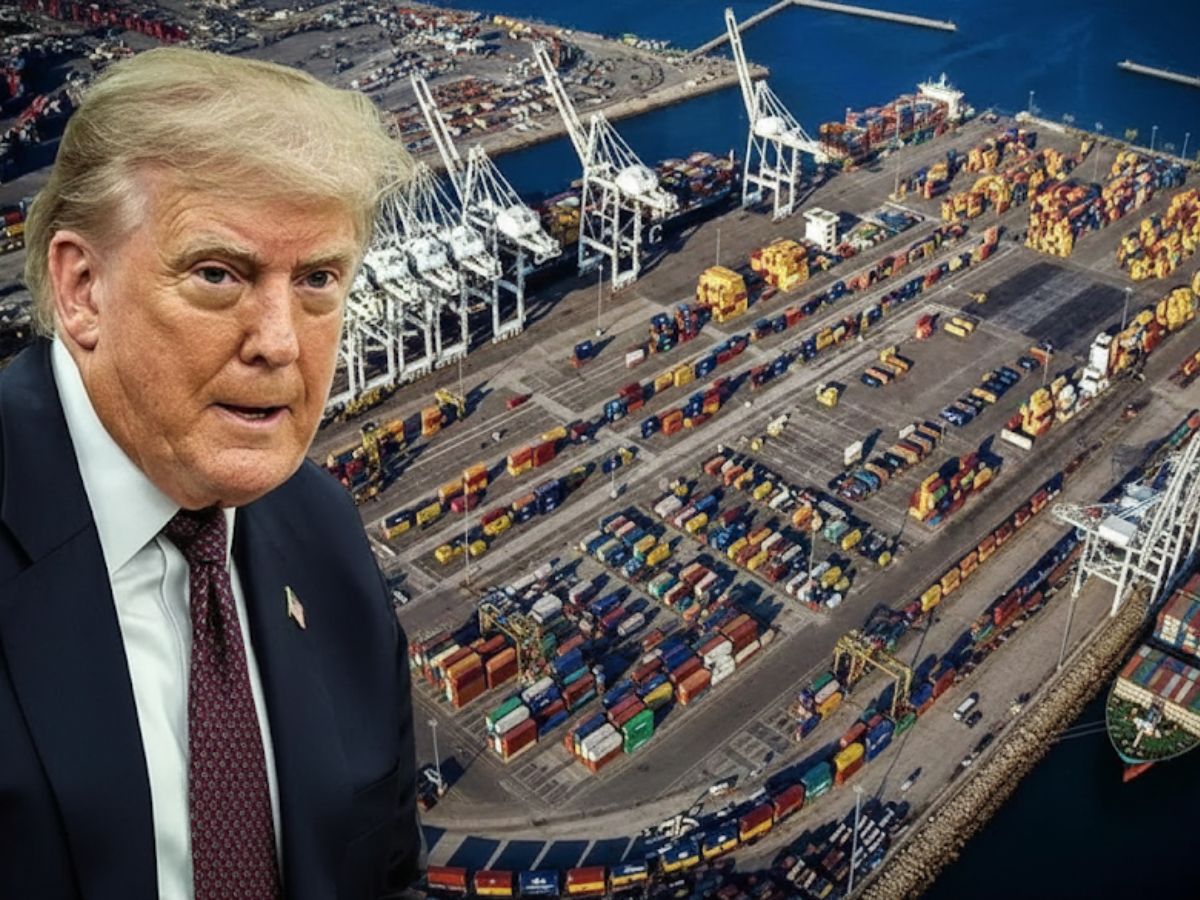
Why has the Trump Administration revoked a 2018 sanctions waiver on Iran’s Chabahar Port in 2025? Significantly, it was President Donald Trump during his first presidency who considered it important to provide a waiver on sanctions over development of Chabahar Port in Iran. It was again Donald Trump who had withdrawn in 2018 from the 2015 Joint Comprehensive Plan of Action that aimed at preventing Iran from developing nuclear weapons and reimposed sanctions on Iran. Trump 1.0 administration is qualitatively different in content and quality from the current Trump 2.0 administration.
India sought to develop the Chabahar Port in Iran as an alternative route to Afghanistan and Central Asia amidst US military presence in Afghanistan and China’s construction activities in Gwadar Port of Pakistan under the China-Pakistan Economic Project. It was a time when the first Trump Administration had launched an economic Cold War against China. It was also a time when the Indo-US strategic partnership was in place and Washinghton was aware that India’s development of the Chabahar Port would in no way help Iran acquire a nuclear weapon capability and India’s presence in a port closer to Chinese-built Gwadar Port could be of strategic importance.
President Trump’s geopolitical approach to West, South and East Asia in 2025 is a huge turnaround from that of 2018. President Trump’s foreign policy agenda is dominated by his desire to follow a policy of “America First” with little attention to its cost to the rest of the world. Currently, President Trump seems to be perceiving most of the countries to be America’s adversaries. He views the alliance partners and strategic partners as the ones who have been free riding on America or looting the US treasury through their trade policies. His tariff policies have caused enormous damage to Washington’s bilateral ties and threaten to disrupt the global political economy. He handles America’s traditional adversaries or rivals, such as Russia and China with velvet gloves and cares little to uphold and preserve alliance relationships and strategic partnerships.
India-US strategic partnership has been damagingly caught in Trump’s short sighted “America First” policy. In his ambitious drive towards claiming his right to be awarded the Nobel Prize, he repeatedly claims that he brokered the ceasefire between India and Pakistan during Operation Sindoor and seems to have felt offended when the Government of India stood by its assertion that it does not allow third party role in bilateral issues between India and Pakistan.
In his frustration over his inability to broker a ceasefire or a peace deal to end the Ukraine War, he has sanctioned India for buying Russian energy. When India repeatedly drew his attention that some European countries and China also buy Russian oil, he now accuses some NATO members and China of contributing to Russian war efforts in Ukraine. But he stays away from sanctioning them.
He seeks to generate as much revenue as possible to manage the huge trade deficit and even pushes big companies to share a portion of their profits with the government in very many ways. Nvidia, for example, has been asked to share its profits from doing chip business in China. He has threatened Apple with tariff if it sells its India-phones in the US. In that context, he is asking American companies that use the H1B visa program to hire foreign workers to pay a fee of about $100,000 as price. Trump’s goal may be to fill the treasury or to satisfy a section of his political supporters who wrongly think that foreign workers are replacing US citizens in attractive jobs. But its impact on thousands of Indian workers who have contributed a great deal to America’s growth story is brutally ignored.
Trump has revived alliance relationship with Pakistan apparently to counter anti-US terror networks, such as ISIS Khorasan. But as part of the deal, he maintains silence over the anti-India terror networks housed and backed by the Pakistani establishment.
More recently, he has revoked the 2018 sanctions waiver on Iran’s Chabahar Port development and argues that it is a measure to put maximum pressure on Iran to force it to abandon its perceived nuclear weapon ambition. But he is oblivious of its impact on India and has undermined the significance of connectivity initiatives that would benefit the land-locked countries of Central Asia and Afghanistan and promote regional peace and economic growth.
Chabahar Port is not a complete project yet; it is a work in progress. Iran conducts about 1% of its trade through this port. By threatening to sanction individuals, companies or countries involved in development or operation of this port, the Trump White House may be able to delay the project. But for how long? How is it going to pressurize Iran, which has been under heavy sanctions since 1979? But the adverse effect of this Trumpian decision on US-India relationship is not difficult to take note of.
There is growing and intense perception among the Indian masses that Trump’s policies, such as secondary sanctions on Russian oil purchase, H1B visa fee hike, revocation of sanctions waiver on Chabahar Port, encouraging Pakistan to sustain its anti-India activities through restoration of alliance type ties, amount to a systematic containment of India.
The government’s tolerance and measured response to Trump’s policies that are unfavourably affecting India are discernible. Instead of taking counter measures, India is patiently seeking negotiations. But President Trump appears to be pushing India to a corner, and this would severely harm a strategic partnership that took quarter of a century to build. Policies that are history-blind or short-sighted impose a heavy opportunity cost on all the parties and also damage regional peace and stability.
Chintamani Mahapatra is Founder Chairperson, KIIPS and Editor, India Quarterly.




