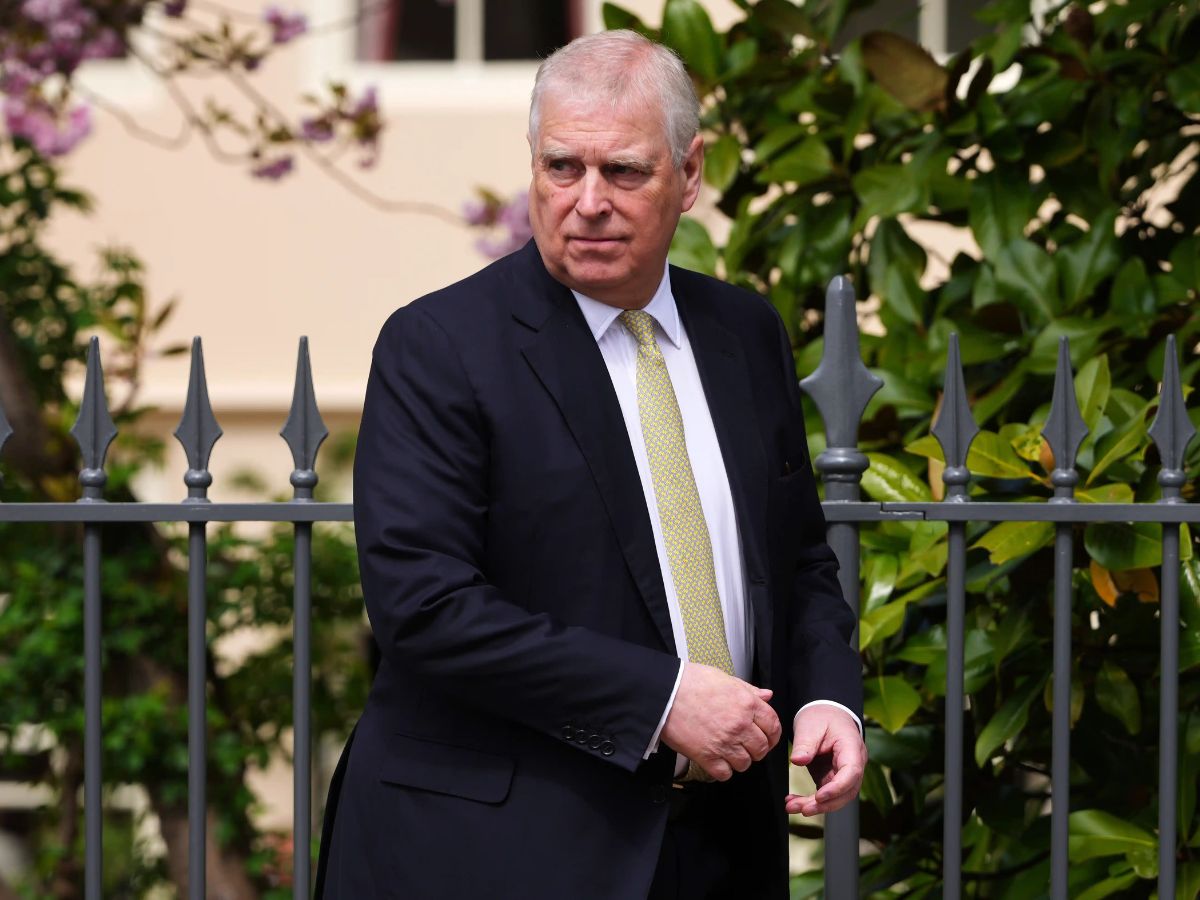
Prince Andrew (Image: X)
The arrest and subsequent release of Andrew Mountbatten Windsor, brother of King Charles, may have dominated headlines throughout the world while underlining his connections with convicted sex offender Jeffrey Epstein. However, it has also demonstrated that true democracy exists in the United Kingdom. There are scores of countries which claim to have democratically elected governments, but most of them cannot provide examples where in the case of important persons, the law is allowed to take its own course without being influenced in some way or the other. Britain and some of its European neighbours allow the principles which are essential for any working democracy to be upheld in any kind of situations or circumstances.
The kind of freedom that exists in Great Britain and nations such as France and Germany, is difficult to replicate anywhere else including the United States. Andrew’s arrest is an example that there is no one who is above the law. Being the King’s brother and son of the former Monarch did not come in the way of legal proceedings being initiated against him in the wake of allegations of misconduct while holding a public office. There is every possibility that Andrew may walk free once the investigations are over and the charges against him do not get established in a court of law. But by arresting him on his 66th birthday, the government of that country has shown to the world that anyone who is accused of breaking the law would not be spared.
The King has also distanced himself from his brother and while declaring that his family would continue to serve the people, has stated that the law must take its own course. The reason why this example is very important to us in India is that we have based our democratic set-up on the Westminster model but have somehow faltered in observing the highest traditions which go with democratic practices.
It really would be unbelievable to even imagine that someone with the kind of social standing which Andrew once enjoyed could be brought to book. On a daily basis, there are reports how a minister’s son or relative had managed to subvert law in order to escape prosecution. Law is said to be blind because it treats everyone equally and in the case of Andrew, the British government, which over the years, has had immense respect for the royal family, did not wince, while proceeding against the former Prince, eighth in line of succession to the British throne, when his name cropped up for conduct not consistent with the position he held, as a representative of the country in a specific area.
Yes, it is true that Andrew has been accused of many indiscretions in the past as well and thus was made to suffer when his own family stripped him of royal privileges which were the outcome of his deviation from the exacting standards expected of him in the public domain.
Democracy and democratic practices have to be viewed from the prism of comparative analysis as they exist in different parts of the globe. Any visitor to the Hyde Park on a Sunday would find an open exhibition of dissidence by those who have been provided shelter and welfare measures by the State. The government allows people to give vent to their feelings. However, it does not imply that any violent action which infringes law would ever be tolerated. This is in sharp contrast to America, a great country otherwise, but where dissent can be interpreted as anti-national and could lead to the arrest of those who express it, particularly while being critical of government actions. In the past as well, Britain has shown how it considers its commitment to probity in public life paramount. There may not be too many people who may remember that the government of Harold Macmillan collapsed in 1963, when John Profumo, the secretary of state for war was found to be having an extramarital affair with Christine Keeler, then a 19-year-old model. The accusation was that Keeler had a relationship with Profumo and also the Russian military attaché Eugene Ivanov. The sex scandal which rocked the country also featured Dr Stephen Ward, an osteopath and a socialite playing a major role. Keeler and her friend Mandy Rice-Davies were used by Ward and he was found to be living off their earning. The name of Prince Phillip too had cropped up for attending the wild parties but charges against him were never established, with the Buckingham Palace denying the allegations outright.
Dr Ward was unable to cope with the pressure and allegedly committed suicide. But by then the Conservative government fell, though Macmillan gave his own ill health as the reason for his resignation. In the eyes of the world, national security was perhaps compromised.
In India, there have been many scandals as well but they have been brushed under the carpet, primarily because the system somehow was manipulated to suit the situation. Soon after Rajiv Gandhi took over as the Prime Minister, the Coomar Narain spy scandal had broken out leading to the resignation of his principal secretary Dr P.C. Alexander, in whose office, many of the accused worked.
In neighbouring Pakistan, the debauchery of Yahya Khan was publicly known. But no action was ever initiated against him. Questions were also raised when Arusa Alam, a Pakistani lived at the official residence of then Chief Minister Amarinder Singh. There are lessons to be learnt from the Andrew episode. Between us.
