PM Modi pursues peace with China while boosting India's defence and global alliances, shaping Modi 3.0's legacy ahead of the 2029 elections.
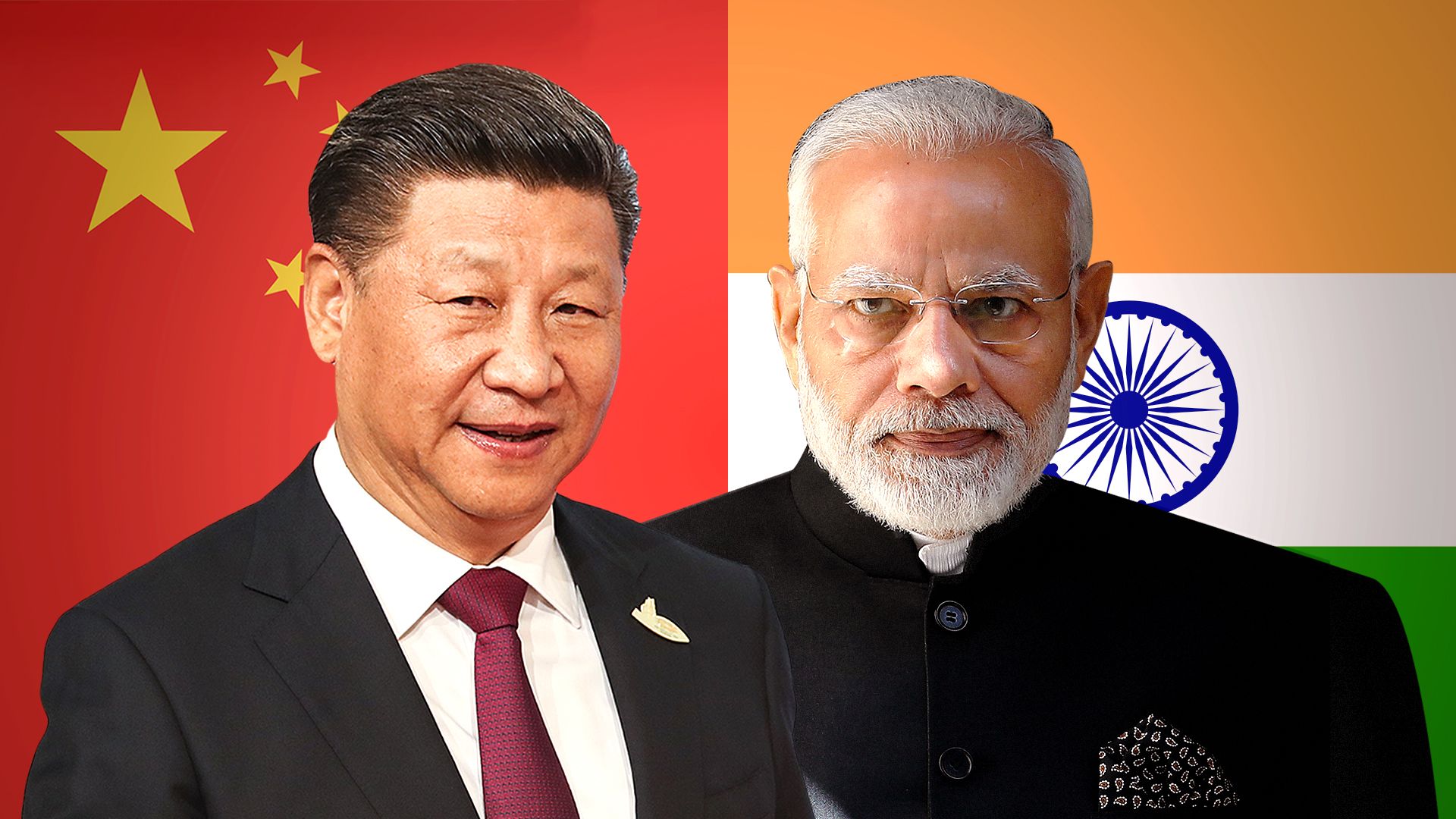
Whatever critics have said about him, the consistency of his actions shows that Prime Minister Narendra Modi is sincere when he talks of peace. In Op Sindoor, India halted the offensive when GHQ Rawalpindi, backed by the PRC, had been thrown on the ropes. Delivering a knockout blow by the armed forces of the Republic of India was held back, thereby giving the Pakistan military another chance at understanding that its obsession with destroying the integrity of India was instead an existential threat to itself.
Given past experiences, such wisdom is beyond the reasoning capabilities of GHQ Rawalpindi. In addition, there is the China factor, for it suits the design of the CCP to have India constantly distracted by the misadventures GHQ Rawalpindi in order not to concentrate on the much greater threat posed by the PLA. In full public view, Prime Minister Modi has sternly warned that the next time around, the armed forces of India will not hold back, but will ensure that the threat posed by GHQ Rawalpindi gets eliminated for good. Judging by the lessons of history since the leadership of the country accepted the partition of India in 1947, there will almost certainly be a next time. The generals in GHQ Rawalpindi (now GHQ Islamabad) are so consumed by hatred of India and the progress the country has been making that they will try once again to derail such progress.
Such an effort is likely before the next Lok Sabha elections due in 2029, in the expectation that such an attack and its consequences would assist in fulfilling the objective of denying yet another term to Prime Minister Modi. Based on input received from friends in several locations, this columnist had long before the 2024 Lok Sabha polls forecast that the effort of the Anyone but Modi (as PM) ABM group would be to limit the Lok Sabha tally of the BJP to 220 seats or less. They failed by twenty seats to fulfil that objective, and Modi 3.0 was the consequence. The same highly reliable sources say that the effort by the global AMB lobby in the coming Lok Sabha polls would be to restrict the BJP seat tally to 150 or less.
It is evident by the flurry of actions being taken across various fronts by the Central government that this time around as well, the intentions are to ensure that the BJP returns to a fourth term in office, again with Prime Minister Modi at the helm of affairs. Since 2014, silently but methodically, the India-US defence relationship in particular is being strengthened to a degree not seen earlier. At the same time, a traditional ally, Russia, has not been neglected. Relationships with the Global South have improved with vigour, while simultaneously, indigenous capability is being built up and dependence on substantively hostile countries for critical needs such as rare earths is sought to be reduced. In 2029, voters will be given an opportunity to judge the results, and the expectation is that the NDA will not lose its position as the ruling alliance but get a bigger majority than was the case in 2024.
Predictably, the Congress Party as well as other parties opposed to the BJP in particular will intensify efforts at dislodging the Central government from power in the next Lok Sabha polls. In countering such moves, the building up of narratives and the creation of perception counts. Parliament would be an excellent forum for carrying forward such a process, and rather than get stalled time after time, the people expect the duel of competing narratives to get played out in full view of the television cameras. In such a context, coming to China, the visit just days back of External Affairs Minister S. Jaishankar to Beijing has once again shown the world the obvious. Which is that PM Modi has again demonstrated his desire for peace rather than war. It is clear that PM Modi would like to see a reset in the relationship between Beijing and Delhi. Whether there will be any substantive, as distinct from verbal, signs of that on the other side remains a matter of conjecture.
The substantive proof of a similar desire for a reset on the part of China would be for the PLA to withdraw from the areas it has illegally occupied, including since its misadventure in Galwan on June 17, 2020. As yet, no sign of any such intention is visible on the Chinese side. What is more likely is that in course of time, efforts at nibbling away more territory would once more resume. Thankfully, over the past few years, under the direction of PM Modi, intensive effort has gone into boosting the indigenous capabilities of the Indian defence forces. As a consequence, the PLA is likely to come off the loser in such a standoff.
In Minister Jaishankar, the country has a very able and articulate Minister for External Affairs. By the visit of the EAM to Beijing, preceded by that of National Security Advisor Ajit Doval, India has shown it is proffering the hand of peace. If that were to be spurned, the onus would be on the other side. Not that such a demonstration of good intent would result in a flood of backers for India, were another conflict to arise. However, that would be of scant consequence were India to prevail in a clash of arms with its adversary, as is likely to be the case in view of the reforms and improvements introduced in the immensely capable armed forces of the Republic of India. What is needed, and what is being done, is to build up not just defence capabilities within the armed forces but further development of domestic capability both in the broader economic sphere as well as in defence capability.
Extensive reforms designed to boost the capacity of the country to attract investment steadily moving away from China into India are called for, and must be on the anvil. The 2025 Quad Summit in India is anticipated by many to be a forthright declaration of the group becoming a full-fledged mutual security alliance. As circumstances and the international climate of risks and opportunities change, so must the policies of India. Under the leadership of Prime Minister Narendra Modi, there has been a complete reset in not just domestic but foreign policy. Efforts will intensify, especially in the approaching session of Parliament, to belittle such efforts.
Walking back from their own policies towards China while they were in power, efforts at a reset in relations will come under fire. Apart from public diplomacy, what is needed is for quiet diplomacy as well, not just with foes but with friends as well. Elements in civil society respected in other countries need to join the efforts at strengthening alliances, thereby giving India a greater chance at a favourable outcome once a kinetic conflict comes, which it will, given the nature of the situation. The outcomes taking place in domestic and foreign policy during Modi 3.0 will shape the future trajectory of India for a long time.
Decisions taken now will impact generations to come. A heavy responsibility rests on the shoulders of the national leadership to ensure favourable outcomes during the crucial years of Modi 3.0. Every effort needs to be made to ensure success in achieving objectives by those in power, for it is we in civil society who will be affected by such an outcome, the entire population of India. As for the attempt at a reset at relations between India and China, the years ahead concluding in the 2029 Lok Sabha polls would show whether the move is finally a success. It must not be forgotten that while the olive branch is being extended by PM Modi, he has also been working at speed to improve defensive and offensive capacities should the need arise, The world is changing and India is changing along with it.
