
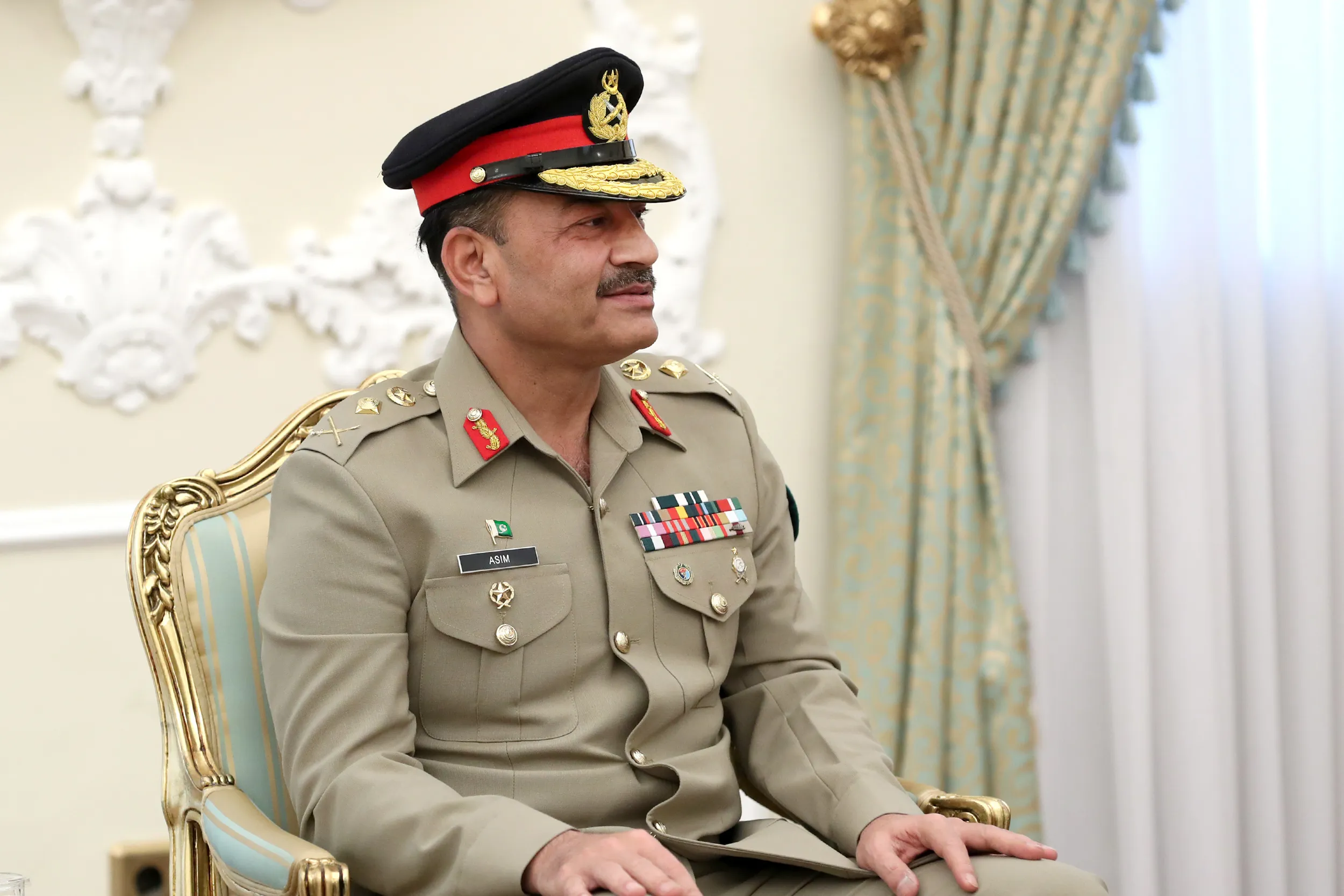
Experts in psychological operations and body language highlight the difference between the calm and measured confidence of Prime Minister Narendra Modi and the shrill tones of the Pakistan army chief and his de facto subordinate, Pakistan Prime Minister Shehbaz Sharif.
Army chief Asim Munir warned that Pakistan would lay waste half the world (yes, you read that correctly, half the entire world) were there to be an “existential threat” to the military-run country. By saying such, he implicitly concedes that India has the capability of delivering an existential blow to Pakistan, which the bigger country certainly does. It would have been rational were the army chief to have spoken of devastating India, even though the reality is that the Pakistan military lacks the capability to do so. Instead, he conflated his threat to take in “half the world”.
In the first place, the volume of radioactive fallout that had the capacity to lay waste half the world would have spread to the rest of the world, thereby extinguishing the human species. It was the recognition of the awesome power of the atom bomb that led US patriots such as J. Robert Oppenheimer (the prime mover behind the development of the atom bomb), to warn that such a technology and capability needed to be viewed not with elation but with caution.
By his fear-filled, irresponsible utterances, Munir has shown that he is unaware of even elementary information on nuclear weapons, which adds strength to the view among a section of experts that Pakistan lacks a nuclear weapon as such, and only has a nuclear device, sometimes called a “dirty bomb”. Such a device does indeed kill, but not in the hundreds of thousands that a genuine nuclear weapon would. The jury is out on this theory, but Operation Sindoor Phase 1 showed that PM Modi was unafraid of the presumed nuclear capabilities of Pakistan when he went ahead with inflicting a devastating strike on military targets in Pakistan.
In the manner of Balakot, albeit on a much bigger scale, the nuclear bluff of Pakistan was called. When asked to make a comment on what Asim Munir had said on US territory, about laying waste half the world, the US spokesperson deflected the query by saying that it should be directed at Pakistan. The reckless irresponsibility of the threats of Munir to “half the world” reinforces the view held by a section of strategists that a coalition of the willing among the nuclear weapons states needs to take out what nuclear capabilities there are in Pakistan. The sooner such a coalition gets formed and acts, the better.
There is still a chance that President Trump would snap back from the tangent he appears to have entered weeks ago, and rather than have Munir over for dinner, join in ensuring that the risk to the international community that a military-ruled Pakistan represents gets eliminated. Such a snapback would be best, most of all, for President Trump himself. Despite his many admirable traits, it was under President Reagan that the US looked the other way with Pakistan (which since the 1952 Sino-Indian border war, has been close to China).
President Clinton had several illusions, and among them was the belief that by looking the other way when the Pakistan army accumulated nuclear materiel, he could pressure India into giving up its growing nuclear capability by volunteering to denuclearize Pakistan in exchange for India giving up its nuclear capability. As was pointed out by a commentator in his edit page article “The thumb of Ekalavya”, India was not going to repeat the example of Ekalavya, who bested the princes being taught archery by Dronacharya by watching as the lessons were imparted.
Ekalavya was made to cut his thumb off for his impertinence in challenging and besting the princes. India now has a robust nuclear and space capability, and the Pakistan army would do well to heed the warning of Prime Minister Modi not to provoke fresh retaliation by carrying out yet another terror attack on India.




