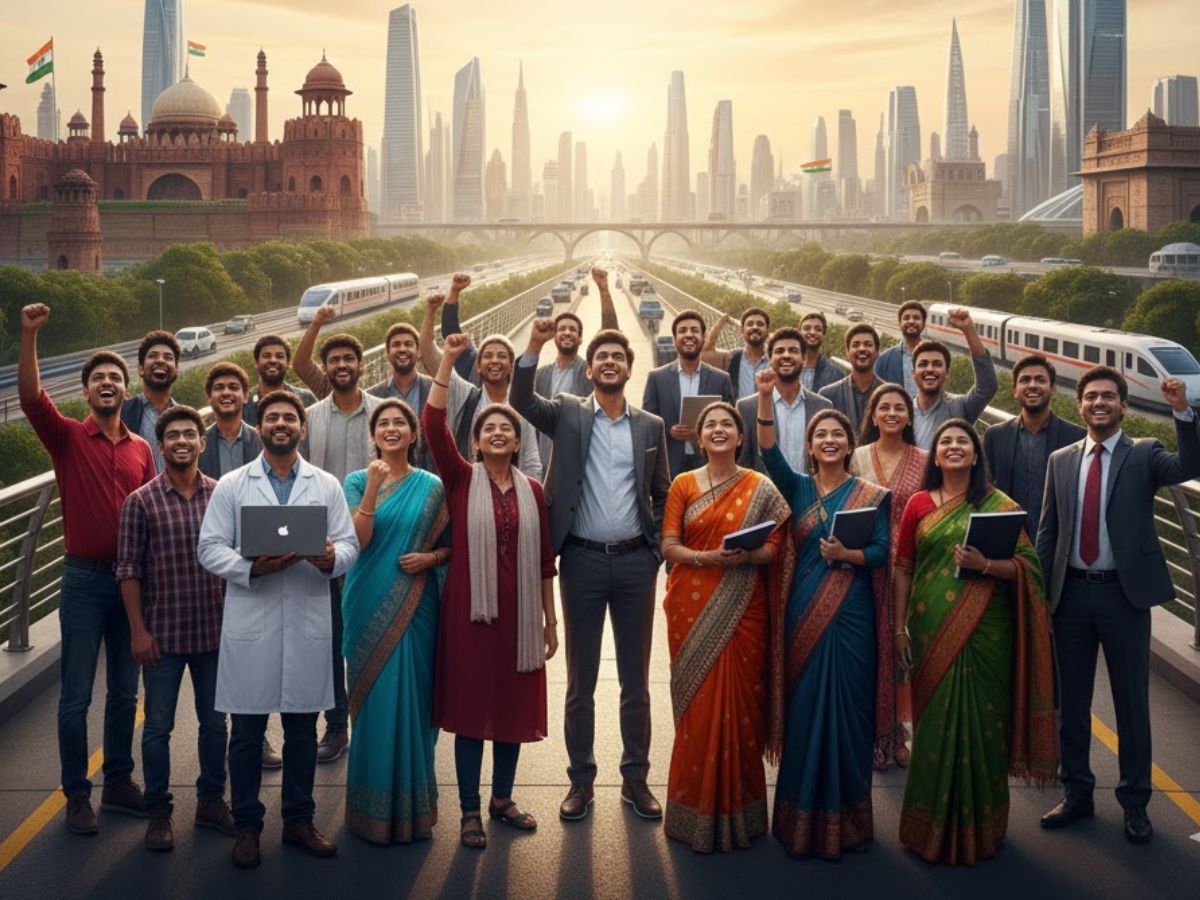
Bharat i.e. India will Succeed
When Prime Minister Narendra Modi first took the oath of office on 26 May 2014, he unveiled a “Neighbourhood First” policy. Bharat i.e. India would devote primary attention to its immediate neighbourhood, or in other words, South Asia. He was as good as his word, focusing intently on its neighbours, not excluding Pakistan. To raised eyebrows, among the VIPs present was Nawaz Sharif, then the Prime Minister of Pakistan. Sharif claimed he carried a “message of peace” from across the border, a message that was lost in translation by the military in Pakistan which continued on its aggressive policy towards India, the promise of their Prime Minister notwithstanding. Not exactly the best friend of India where his policies were concerned, Nepal Prime Minister Pushpa Kumar Dahal, commonly known as Prachanda, also attended. As did Mahinda Rajapaksa, President of Sri Lanka, Sheikh Hasina Wajed, President of Bangladesh. There was an overflow of optimism, and what followed subsequently was that India worked hard to be a good neighbour and no longer the “Big Brother” bully. There was no corresponding response from several other leaders from the neighbouring countries. Policies hostile to India were continued, even while honeyed words flowed from their lips. The tempests in the periphery of the world’s biggest democracy continued, even while Bharat i.e. India held on to a steady course under Prime Minister Modi. Eleven years on, economically and socially, the country is very different from what it was in 2014 after two terms in office by the UPA government formally under the leadership of Prime Minister Manmohan Singh. Meanwhile, what has happened to Bharat i.e. India’s neighbours? Bangladesh saw the ouster of Sheikh Hasina 15 years after she remained as Prime Minister, while Nepal suffered the same convulsion of regime change through street violence in August 2024. That same year, the Janata Vimukthi Peramuna, a one-time force prone to violence, assumed power in Sri Lanka. Calmly, Captain Modi steered the ship of state, getting on well with the new leaders of Nepal and Sri Lanka, even while Bangladesh fell under the influence of parties that had opposed the liberation of the country in 1971. As for the Pakistan army, it is facing the anger of the people of Balochistan and Khyber Pakhtunkhwa, and its hold on power is visibly getting shakier.
Efforts at dislodging the Modi government were made in Bharat i.e. India as well, but each of them failed. In 2024, Modi retained his status as Prime Minister despite efforts at reducing the NDA to a minority. The nightmare of the anti-Modi forces is that the 2029 Lok Sabha polls will witness a similar result. Thus far, their level of success has been close to zero. Should 2029 see the same result—and the same leadership—as 2014, 2019 and 2024, the transformation of Bharat i.e. India would become so thoroughgoing that a reversal of the direction would be almost completely impossible. Given the panoply of forces inimical to PM Modi at home and abroad, it would occasion scant surprise were efforts to be made once again to secure regime change through street violence, on the Bangladesh and Nepal models. Earlier efforts at creation of chaos resulted in the Government of Bharat i.e. India and its leadership getting stronger rather than weaker, and there is no call to believe that there will be any difference in the next round of regime change efforts. Gen Z has been a prominent factor in protests elsewhere that resulted in regime change, and it is essential to ensure that Gen Z in India is provided with good education, housing, healthcare and employment. At the same time, attention needs to be paid to regulatory and monetary policy such that not billions but trillions of dollars look to Bharat i.e. India as the inevitable Plus One in all cases of China plus one. Lower rates of taxation, including GST, would raise and not reduce revenue, for countless millions now keeping outside the tax net will voluntarily enter. The stick, to be effective, should always be seen but be infrequently applied to get optimal results. The coming years are perhaps the most crucial since Bharat i.e. India secured its freedom from colonial rule. It is on the shoulders of Prime Minister Modi that such a gargantuan task falls, but they are resilient shoulders, and success is very likely. Whether it be a state of peace or war, progress must be made and will be made.
