Buddhism becomes the language through which India speaks gently but confidently to Asia. A monastery restoration in Tawang says more to the Himalayan world than a diplomatic note.
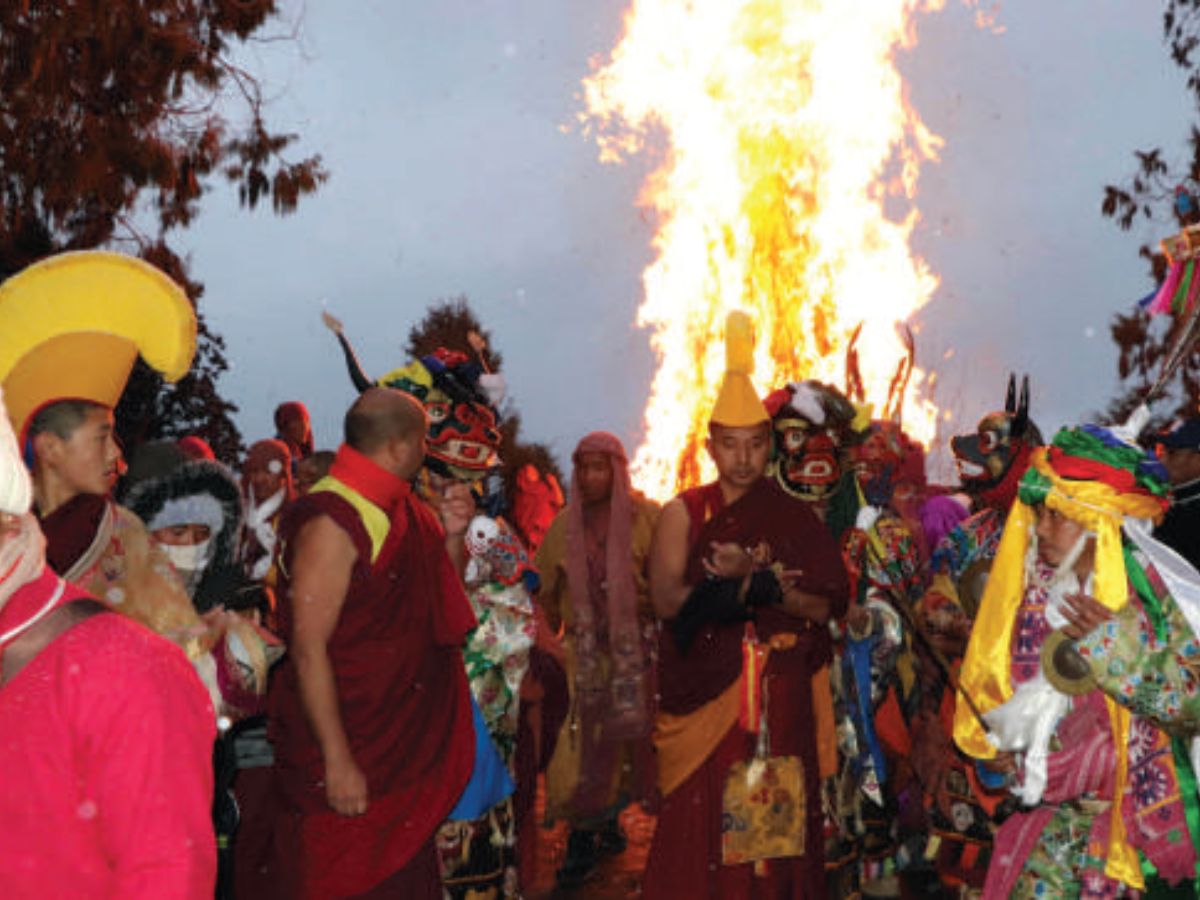
Representational Image: At the Tawang monastery in Arunachal Pradesh. ANI
For decades, Indian governments have spoken of the Northeast as a frontier. But Prime Minister Narendra Modi’s government has transformed that thinking. The Northeast has finally become a bridge. The recent Union Budget’s announcement of a Buddhist Circuit across Arunachal Pradesh, Sikkim, Assam, Manipur, Mizoram and Tripura is therefore not a routine tourism proposal. It is a statement about how New Delhi now understands the region’s place in India’s civilisational map and diplomatic imagination. Monasteries, pilgrimage interpretation centres, trained guides, digital documentation, and improved connectivity are being woven into a single design that treats the Northeast not as a distant periphery but as the historical passage through which India once conversed with Asia.
This shift is not cosmetic. It corrects a long-standing strategic blindness. The Northeast has always been the corridor through which ideas, monks, traders and artistic traditions moved between the Brahmaputra valley, the Himalayan world, and Southeast Asia. Mahayana and Vajrayana traditions took deep root in Arunachal’s highlands. Sikkim evolved into a sacred landscape shaped by the itineraries of Padmasambhava. The Brahmaputra’s riverine routes connected Assam to monastic networks that stretched toward Myanmar. Tripura and Manipur absorbed Theravada and Mahayana influences across porous cultural borders. These were not isolated religious developments; they were markers of a civilisational highway that functioned long before modern diplomacy gave names to regions.
Yet, for much of independent India’s history, this geography was viewed primarily through the lens of insurgency and control. The most painful memory of that mindset remains the March 1966 aerial bombing of Aizawl during Indira Gandhi’s premiership, when the Indian state turned air power inward on its own frontier. For many in the region, Delhi’s presence was defined less by cultural recognition and more by coercive visibility. The Northeast was administered, yet rarely understood and acknowledged.
That memory lingers, and perhaps that is why the present approach is politically and psychologically significant. Under PM Narendra Modi, the Northeast has been steadily drawn into the Act East Policy. Highways, bridges, railways, inland waterways, border trade points, digital connectivity, eco-tourism trails, and heritage circuits now treat the region as India’s eastern gateway rather than its troubled edge. The Buddhist Circuit proposal fits seamlessly into this larger architecture. It recognises that terrain once used by monks and pilgrims can today anchor India’s soft-power outreach to Nepal, Bhutan, Sri Lanka, Thailand, Myanmar and Vietnam without sounding strategic or confrontational.
Buddhism becomes the language through which India speaks gently but confidently to Asia. A monastery restoration in Tawang says more to the Himalayan world than a diplomatic note. Renewed attention to Rumtek and Pemayangtse revives the sacred geography that binds Sikkim to Bhutan and Tibet in shared memory. Recalling archaeological and textual evidence in Assam evokes a time when the Brahmaputra valley was part of a scholarly network noted even by the Chinese pilgrim Xuanzang. Recognising Buddhist traces in Manipur and Tripura acknowledges cultural currents that predate modern borders. This is cultural diplomacy grounded in terrain, not theory.
What distinguishes this initiative from earlier heritage announcements is the ecosystem being built around it. The plan to train thousands of guides, create a National Destination Digital Knowledge Grid, upgrade hospitality education, and improve pilgrim amenities indicates that this is not symbolism without scaffolding. Heritage is being linked to employment, research, storytelling, and local enterprise. The people of the region are not mere spectators to this project; they are intended participants.
There is also a quiet strategic elegance here. At a time when the Himalayas are marked by heightened geopolitical tensions, India’s answer in the Northeast is not rhetorical escalation but civilisational affirmation. It is far harder for any neighbour to object to the preservation of a monastery than to infrastructure with obvious military implications. Yet the effect on presence, connectivity and regional engagement is no less real.
This inclusiveness is not rhetorical. In recent years, India hosted the Global Buddhist Summit in New Delhi, bringing together monastic leaders and scholars from across Asia, and sent sacred Buddha relics on public exhibitions to Sri Lanka, Thailand, and Mongolia, drawing millions of devotees and generating extraordinary public goodwill. These were calibrated acts of cultural diplomacy that resonated with ordinary people rather than with foreign ministries. Strengthening the Buddhist geography of the Northeast complements these outward gestures by reinforcing the source landscape of a heritage India increasingly uses to engage the East.
Previous governments spoke often of the Northeast’s potential and acknowledged its cultural richness. But these acknowledgements rarely translated into a coherent attempt to position the region inside India’s foreign policy narrative. The Northeast remained administratively important yet diplomatically invisible. That invisibility is now being reversed. The Buddhist Circuit must be read alongside the steady expansion of connectivity projects, tourism promotion, and economic integration in the region. It signals that the government sees the Northeast as a civilisational asset capable of shaping India’s engagement with Asia, rather than merely a security responsibility to be managed.
Buddhism is a way of life that is so relevant to the contemporary problems India faces and the world faces. It renders the most viable solutions where human beings have to take responsibility for the choices and hence all of are facing the consequences due to the greed of a few. Buddhism is a way of life In an age obsessed with image and identity, the Buddha’s message—to let go of the self—is more relevant than ever. Buddhism offers not just spiritual insight but a framework for societal transformation. Rediscovering Buddhist thought could help address contemporary crises of ego, inequality, and disconnection
For the region, the gains are tangible, not symbolic. The livelihoods through tourism, pride through preservation, access through infrastructure, and global visibility through digital documentation. For India, the gain is reputational: a credible claim to be the custodian of a heritage that shaped Asia’s moral and philosophical vocabulary. The contrast with the past is stark. There was a time when Delhi’s presence in the Northeast was remembered for the sound of aircraft overhead. Today, it is increasingly associated with the restoration of monasteries, the training of guides, the mapping of sacred sites, and the invitation to pilgrims and scholars from across Asia. A frontier is something to be guarded. A bridge is something to be crossed. By choosing to invest in the Buddhist heritage of the Northeast, the Modi government makes clear which metaphor it prefers and his government is more inclusive than all those before.
Prof Santishree Dhulipudi Pandit is the Vice Chancellor of JNU.
