Trump’s relationship with Pakistan is driven primarily by transactional diplomacy.
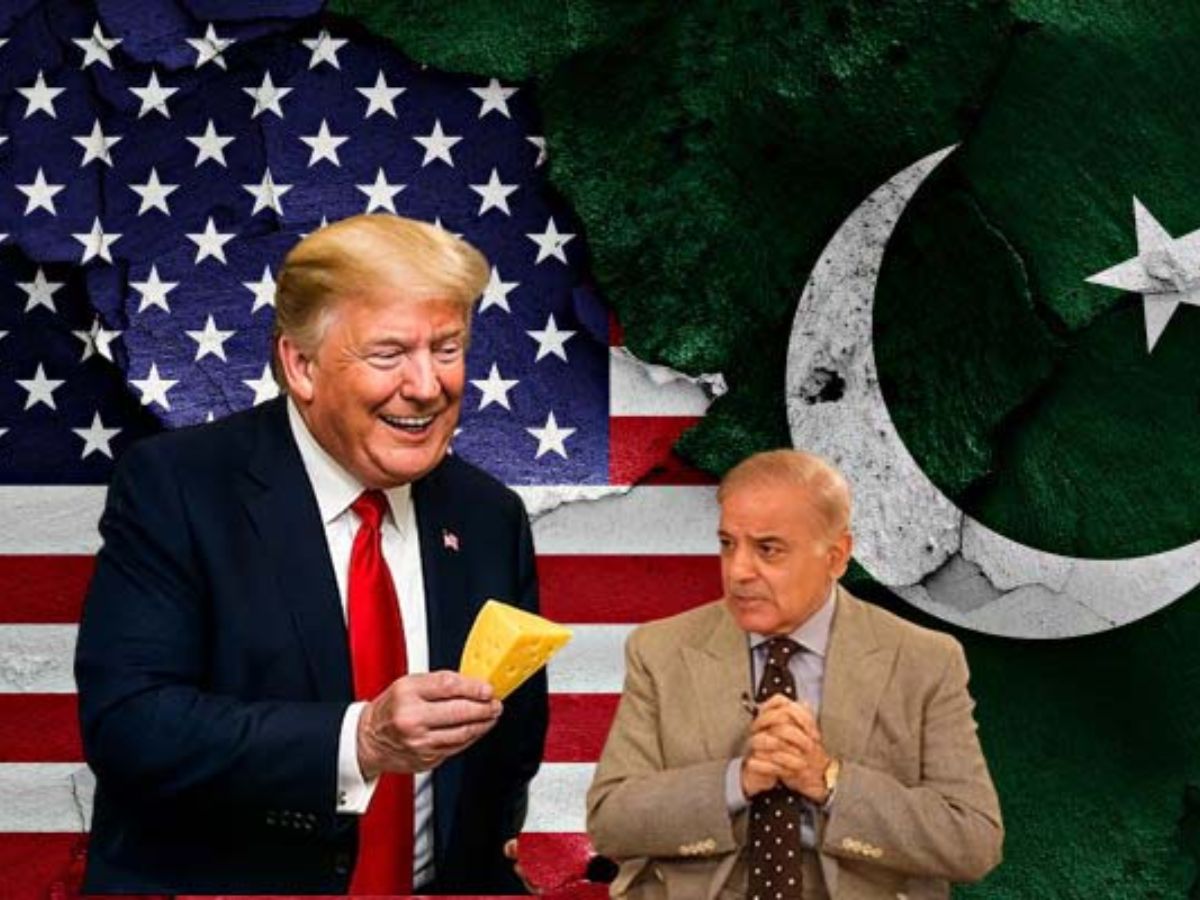
During his first term as President, Donald Trump had tweeted on January 1, 2018 that the US had “foolishly given Pakistan more than $33 billion in aid over the last 15 years, and they have given us nothing but lies & deceit”. He had accused Pakistan of providing “safe haven to the terrorists we hunt in Afghanistan”.
In his second term, Trump has changed his opinion and is singing a different tune. He has engaged with Pakistan through a series of high-level meetings and economic and military agreements, signalling a significant warming of relations. The change in posture is centred on economic incentives and has led to renewed diplomatic engagement and military aid.
This shift was recently cemented by a recent high-profile meeting at the White House on September 25, 2025, where Trump met with Pakistani Prime Minister Shehbaz Sharif and Army Chief Asim Munir. Trump praised both Munir and Prime Minister Sharif as “great guys” before their meeting, which was unusual for its secrecy, with no press access, official visuals, or public statements from the White House. Some reports highlighted that Trump kept the Pakistani delegation waiting for about 30 minutes while he completed other engagements, though Sharif and Munir didn’t seem to have taken it as a diplomatic slight.
Trump’s personal business interests are certainly playing a pivotal role in shaping his changed policy towards Pakistan. These interests primarily involve ventures related to cryptocurrency and potential deals for rare earth mineral exploration. Trump’s business dealings have raised questions about potential conflicts of interest concerning his foreign policy, particularly towards India and Pakistan.
A finance platform called World Liberty Financial (WLF) is reportedly 60% owned by Donald Trump’s sons, Eric Trump and Donald Trump Jr., along with his son-in-law, Jared Kushner. In April 2025, WLF signed a “Letter of Intent” with the newly formed Pakistan Crypto Council (PCC) to accelerate blockchain innovation and the integration of decentralized finance. The deal-making was reportedly attended by high-profile Pakistani officials, including Prime Minister Shehbaz Sharif and Army Chief, General Asim Munir.
In January 2025, Gentry Beach, a Texas hedge fund manager described as a Trump ally, met with Pakistani Prime Minister Shehbaz Sharif to discuss billions in investments. The planned investments include real estate, mining, energy, and AI. In addition, reports have surfaced about potential negotiations between the Trump Organization and a Pakistani tycoon to develop a Trump Tower in Islamabad. There has been speculation on social media that Pakistan may offer a site for a Trump Tower in Islamabad’s Diplomatic Enclave. The project, inspired by Trump properties in Dubai and Istanbul, aims to cater to high-end clientele, potentially reshaping the capital’s skyline with global luxury standards. Though still in its infancy, the deal hints at major foreign investment and a bold branding move in South Asia.
The confluence of these personal business interests and diplomatic overtures has drawn scrutiny as well as criticism in the US. Trump’s critics argue that this may represent a conflict of interest that influences foreign policy decisions, particularly concerning US-India relations. Former National Security Advisor Jake Sullivan has noted that Trump’s renewed interest in Pakistan coincided with these business deals, heightening concerns about conflicts of interest.
On its part, Pakistan has left no stone unturned for improving relations with the United States. Pakistan has engaged in a diplomatic charm offensive that has been widely described by analysts as amounting to flattery. Following a ceasefire with India in May 2025, Pakistan nominated Donald Trump for the Nobel Peace Prize. This nomination reportedly capitalized on Trump’s long-standing desire to win the award. In his September 2025 speech at the United Nations General Assembly, Pakistani Prime Minister Shehbaz Sharif praised Trump as a “man of peace” and claimed that Trump’s decisive leadership helped avert a “catastrophe”.
Pakistan has hired multiple lobbying firms in the United States, particularly since 2024, to influence policy and strengthen ties, especially in anticipation of a new US administration. Two firms, namely Javelin Advisors and Sorial Strategies with close ties to Donald Trump, were reportedly hired in 2025 to boost relations with the US. Javelin Advisors is run by Keith Schiller, Trump’s former bodyguard, and Sorial Strategies is run by George Sorial, the former compliance chief for the Trump Organization. Gunster Strategies Worldwide was hired by Pakistan’s Ministry of Interior in early 2025. It is led by Republican strategist Gerry Gunster. This approach has yielded positive results for Pakistan, with a shift in US policy and rhetoric that contrasts sharply with Trump’s hostile stance toward Islamabad during his first term.
In this regard, Asim Munir’s June 18, 2025 private luncheon meeting with Trump at the White House was highly significant and signalled a major reset and shift in US-Pakistan relations. It gave Munir the opportunity to discuss with Trump the possible deals relating to Pakistan’s natural resources. It was the first time in 15 years that a sitting US president had hosted a Pakistani army chief at the White House. By engaging directly with Pakistan’s military leadership, Washington signalled a renewed interest in re-establishing military and economic cooperation even though this approach would be tantamount to undermining democratic consolidation in Pakistan.
Following the meeting, the Trump administration announced its intention to help Pakistan develop its untapped oil and mineral reserves. This was later followed by a $500 million US investment in Pakistan’s critical minerals sector, positioning Pakistan as a new strategic resource supplier for the US. In July 2025, Trump claimed on Truth Social that the US would help Pakistan develop its “massive oil reserves”. The US and Pakistan finalized trade agreements that reduced tariffs on Pakistani goods and paved the way for US investment in Pakistan’s oil, mineral, and IT industries. The economic cooperation has been described as a “strategic handshake,” reflecting a mutual benefit: the US secures resources and trade, while Pakistan receives a much-needed economic boost.
The diplomatic thaw with the US has already boosted Pakistan’s economy, with the Pakistan stock exchange hitting a new all-time high. The US military has described its counterterrorism partnership with Pakistan as “phenomenal” during the first months of the new Trump administration.
Asim Munir paid a second visit to the US in August 2025. A primary reason for the visit was Munir’s attendance at the retirement ceremony of CENTCOM Commander General Michael E. Kurilla and the change of command ceremony for the new commander, Admiral Brad Cooper, in Tampa, Florida. The trip followed Kurilla’s praise for Pakistan’s counter-terrorism cooperation. Munir met with top American military leadership, including Chairman of the Joint Chiefs of Staff General Dan Caine, to discuss areas of “mutual professional interest,” such as counter-terrorism, regional security, and intelligence coordination.
A significant development occurred in August 2025 when the US designated the Balochistan Liberation Army as a foreign terrorist organization. Pakistan, which perceives the BLA as a national security threat, viewed this as a positive development. A month later, however, the US along with France and UK opposed a Pakistan-China proposal to blacklist the BLA at the United Nations. They placed a “technical hold” on the proposal, citing insufficient evidence to link the BLA to Al-Qaeda or ISIL, which is a requirement for designation under the 1267 sanctions list. The US hold on the UN listing could also be a nuanced message to Pakistan. While the US recognizes Pakistan’s security concerns by designating the BLA and the Majeed Brigade as FTOs, it is also signaling that it will not fully align with Pakistan’s interests at the UN, especially when partnered with China. Thus, Pakistan’s strong ties with China present an impediment to its relationship with the United States.
The warming of ties between Donald Trump and Pakistan are undoubtedly causing concerns in India. Potential shifts in US foreign policy could undermine India’s strategic interests. India fears a rehyphenation of US foreign policy towards India and Pakistan, a renewed US security focus on Pakistan, and the possible legitimization of Pakistan’s military-led government. Washington’s engagement with Islamabad could adversely affect New Delhi’s security interests and challenge its standing in the region.
Can the US-Pak bonhomie last? The current US-Pakistan warmth is driven by temporary, interest-based opportunities rather than a fundamental strategic alignment. The US’s primary motivations appear tactical and transactional, while Pakistan is seeking economic and diplomatic breathing room. For the relationship to become truly durable, Pakistan would need to achieve sustained political and economic stability, address structural issues, and navigate its ties with China without alienating the US.
Summing up, as compared to his first term, Donald Trump’s current relationship with Pakistan is undergoing a significant reset, driven primarily by transactional diplomacy centred on economic opportunities and geopolitical recalibration. The renewed engagement is driven by Trump’s own interests and Islamabad’s need for international legitimacy and economic support, but structural factors and deep-seated mistrust limit its potential for a lasting strategic alliance. The deep-seated distrust and historical tensions that have traditionally strained the relationship could remain a significant obstacle to a lasting partnership. The current upswing is driven by temporary convergences and is likely to prove fragile and dependent on short-term developments rather than a permanent, deep-seated alignment of interests.
Prabhu Dayal is a retired ambassador of India.
