Attacks on US projects would be a way for militants to express grievances and pressure the Pakistani government.
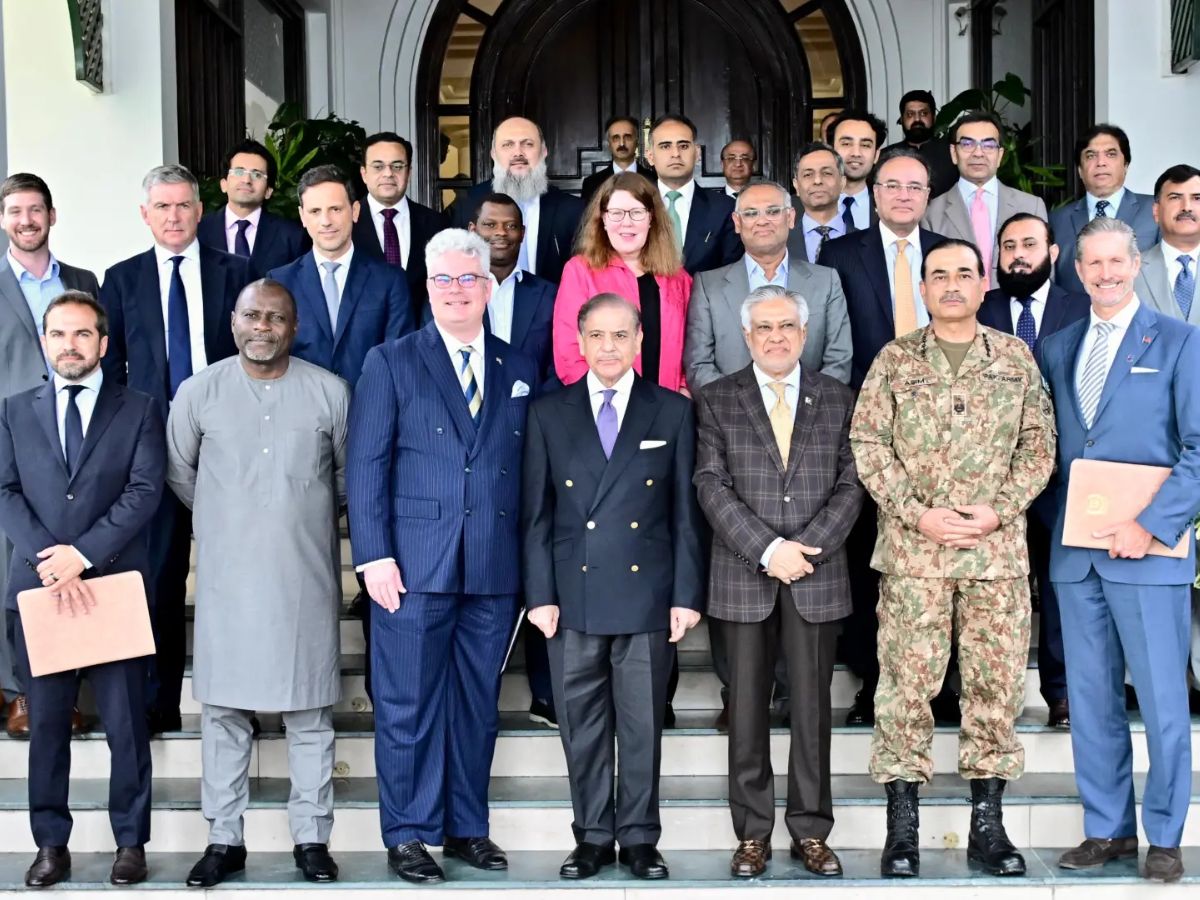
The US-Pakistan partnership on rare earth minerals under Trump’s 2025 presidency is designed to reduce dependence on China while providing Pakistan with foreign investment. (Image: Al Jazeera)
Donald Trump’s return to US presidency in 2025 has witnessed increased high-level engagement with Pakistan and economic deals focused on the latter’s natural resources. The United States has become involved in Pakistan’s mineral sector through a major investment and partnership deal. The deal is designed to help the US diversify its supply of critical minerals known as rare earth elements (REEs) away from China while providing Pakistan with the much-needed foreign investment and technology transfer. The shift represents a significant change from the preceding Biden administration, which had largely sidelined Pakistan.
Pakistan has used its mineral potential to appeal to Trump’s business-oriented mindset and to reframe its relationship with the US toward economic and resource cooperation. In September 2025, Pakistan’s Frontier Works Organisation (FWO) signed a $500 million Memorandum of Understanding (MoU) with Missouri-based US Strategic Metals (USSM). The Frontier Works Organisation (FWO) is a military-engineering organization of the Pakistan Army which constructs infrastructure projects like highways and tunnels.
The agreement is planned in three phases: Phase 1 (2025-2026): Exporting readily available minerals to US markets to generate revenue. Phase 2 (2026-2028): Establishing mineral processing plants and refineries in Pakistan, including technology transfer for refining REEs. Phase 3 (2028 and beyond): Conducting large-scale exploration and exploitation, including developing 5-10 mining projects in areas with high potential for REEs.
Pakistan has already shipped its first batch of minerals, which includes rare earth elements like neodymium and praseodymium, to USSM. Neodymium is essential for creating powerful permanent magnets used in electric vehicles and wind turbines, while praseodymium is also a component of high-strength magnets. Antimony and copper concentrate were explicitly mentioned in the first shipment, highlighting their importance in the new supply chain. The agreement also includes other critical minerals.
Pakistan’s main opposition party, Pakistan Tehreek-e-Insaf (PTI), has condemned the agreement, labelling it a “secret deal” and demanding that the government disclose the full details. The involvement of FWO has been a major source of controversy. Some commentators see its central role in the deal as an indication of the Pakistan military’s deep entrenchment in what is essentially the civilian government’s responsibility. Opposition political groups have criticised secretive mineral deals with the US, warning that such agreements could “inflame the already volatile situation.”
The implementation of this agreement will face significant challenges. Firstly, while Pakistan claims trillions of dollars in mineral wealth, including REEs, these are largely unproven commercially. The frequently cited figures of $6-$8 trillion are aspirational, unsubstantiated estimates that often surface in promotional materials rather than credible, peer-reviewed geological assessments.
Secondly, while Pakistan claims that huge deposits of REEs are located in Balochistan, Khyber Pakhtunkhwa and Gilgit-Baltistan, critical infrastructure such as road networks, power, and water supply is underdeveloped in these areas. This is due to decades of government neglect, geographic isolation, resource exploitation and political instability. This presents a major obstacle to the reliable and cost-effective extraction and processing of rare earths.
Above all, US companies entering Pakistan’s rare earths and minerals sector must factor in significant security risks, especially in resource-rich areas like Balochistan and Khyber Pakhtunkhwa. The potential for militant activity to disrupt rare earth extraction in Pakistan is a serious concern. Militant and separatist groups, such as the Baloch Liberation Army (BLA) and the Tehreek-e-Taliban Pakistan (TTP), have a strong presence in Balochistan and Khyber Pakhtunkhwa, respectively, where most of Pakistan’s mineral reserves are located. These groups have demonstrated the intent and capability to disrupt mining projects through hijackings and bombings.
Mining projects are viewed by many local communities in Balochistan as exploitative, leading to civil unrest and protests that can block key transportation routes. Insurgent attacks on infrastructure like pipelines and highways blocked in Balochistan in March 2025, can cause major disruptions to supply chains. Beyond physical attacks, cyberattacks targeting critical infrastructure, including Pakistan’s energy and resource sectors, have been reported. These attacks can disrupt operations at key facilities like refineries and mines.
Recent BLA (Balochistan Liberation Army) attacks in Balochistan province include the March 2025 Jaffar Express train hijacking, where militants held over 300 passengers hostage, and a surge in attacks claimed in May 2025 at 39 locations targeting police stations, military convoys, and infrastructure. BLA also claimed suicide attacks in Karachi and near the Gwadar Port in 2024.
The Balochistan Liberation Army (BLA) has also targeted Chinese nationals and Chinese-funded projects in Pakistan for years, with a notable increase in attacks since 2018. The BLA claims these projects, particularly those under the China-Pakistan Economic Corridor (CPEC), exploit the natural resources of the Balochistan province without benefiting local communities. The BLA justifies its attacks by arguing that Chinese investments in Balochistan are an exploitative project, draining the region’s resources without providing benefits to the local Baloch people. Experts note that BLA attacks have become more sophisticated in recent years, with the group adopting tactics like suicide bombings and recruiting women.
In October 2025, four Chinese nationals and nine security personnel were killed in Balochistan province when the BLA targeted a convoy of engineers working on the Gwadar Port. In February 2025, two Chinese citizens were killed and others injured in a bombing near the airport in Karachi. The BLA claimed responsibility, stating the attack targeted a convoy of Chinese engineers. In August 2024, BLA militants attacked a convoy of Chinese nationals in Gwadar, though no Chinese casualties were reported. In April 2022, three Chinese teachers and their Pakistani driver were killed in a suicide bombing at the University of Karachi. The BLA claimed responsibility, and the bomber was identified as a female graduate student. In November 2018, the BLA attacked the Chinese consulate in Karachi, killing four people, including two police officers.
The province of Khyber Pakhtunkhwa (KP) has also seen a major resurgence of violence from militant groups, primarily the Tehrik-i-Taliban Pakistan (TTP). The TTP primarily targets Pakistani security forces but has also increased attacks on civilians affiliated with the state. Western and especially US interests have historically been, and remain, high-value targets.
The TTP operates from safe havens across the Afghan border and regularly launches attacks in Khyber Pakhtunkhwa against state interests, security forces, and infrastructure. The TTP has a history of targeting foreign nationals and has claimed responsibility for attacks on natural gas and oil production facilities in the region. Due to the severe risk of terrorism, assassination, and kidnapping, the US Department of State has issued a Level 4 “Do Not Travel” advisory for the entire province of Khyber Pakhtunkhwa.
Thus, it is highly likely that US companies operating in Balochistan and Khyber Pakhtunkhwa would face a significant risk of militant attacks. Security experts and government travel advisories confirm the high threat level in these regions, citing numerous active militant and separatist groups. As US assets, these companies would become symbolic and high-profile targets for groups with anti-Western and extremist ideologies. Attacks on US projects would be a way for militants to express grievances and pressure the Pakistani government.
Despite the risks, the US is pursuing rare earth collaboration with Pakistan as part of its strategy to reduce reliance on Chinese supplies. Summing up, the US-Pakistan critical minerals partnership is a high-risk, high-reward endeavour. While the initial shipment and investment framework signal a serious commitment, sustained success will depend on Pakistan’s ability to create a secure, stable, and transparent investment climate. For the US, the payoff is a less China-dependent mineral supply chain, but it comes with the risk of being drawn into Pakistan’s internal political struggles. The partnership has laid a foundation, but its long-term viability remains uncertain.
Prabhu Dayal is a retired ambassador of India.
