
One of the defining strengths of India’s democratic system is its commitment to openness, accountability, and institutional transparency. Under the Modi government, this commitment has been repeatedly reinforced through regulatory reform, procedural streamlining, and a strong emphasis on citizen welfare. India today benefits from a governance model that does not shy away from scrutiny, whether of the state itself or of powerful private actors operating in critical sectors. Yet, precisely because India is open and rule-based, it also faces new forms of disruption. These disruptions do not always emerge through overt political confrontation. Increasingly, they surface through administrative stress points, corporate non-compliance, information overload, and crises that appear coincidental, but produce disproportionately destabilising effects. In such moments, the real test of governance lies not in denial, but in response. The timing has been extremely suspicious to embarrass a extremely popular leader of the world’s largest and oldest democracy.
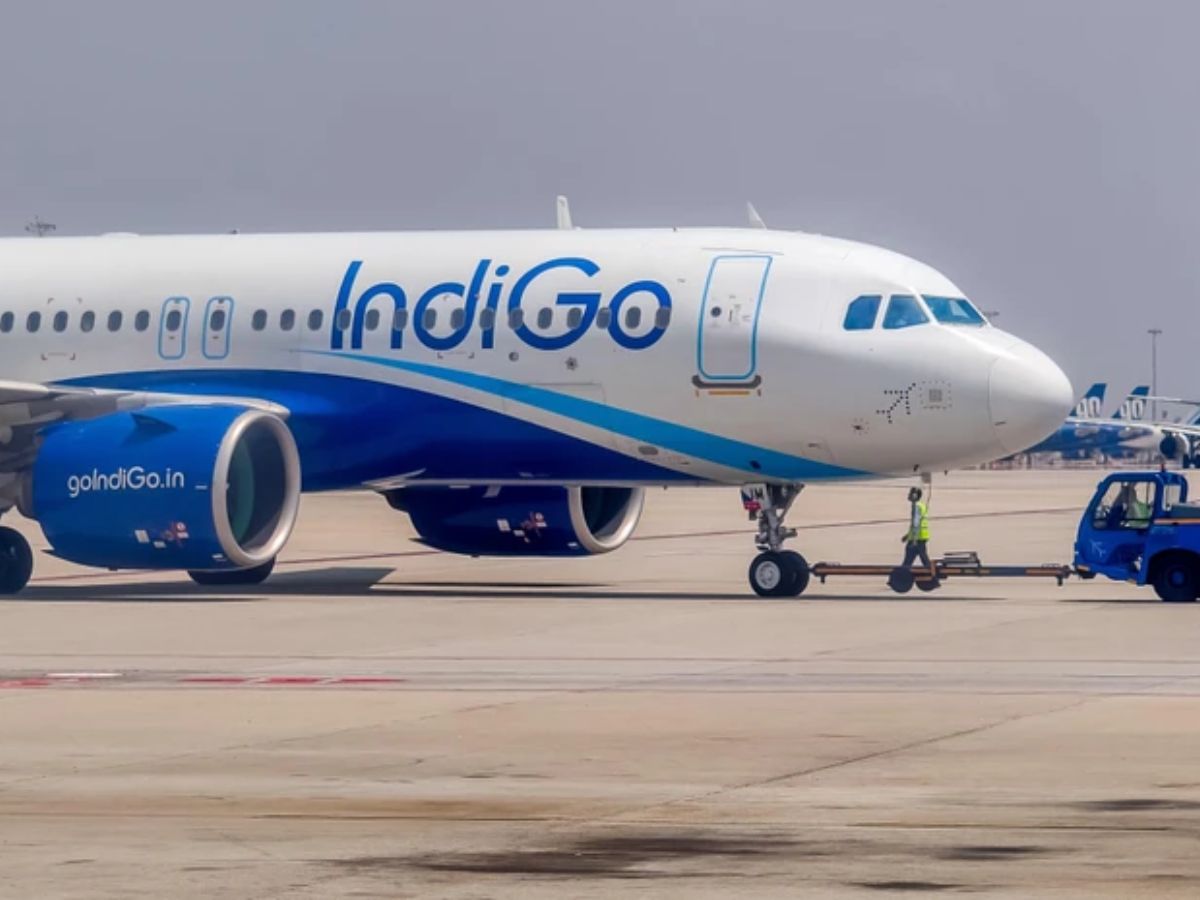
The aviation disruption that coincided with Russian President Vladimir Putin’s high-profile visit on 5 December must be viewed through this lens. The visit was diplomatically significant, occurring at a time of intense global realignment and sustained Western unease over Russia’s international posture. India’s strategic autonomy and its refusal to be pressured into binary alliances have been cornerstones of Modi-era foreign policy. That alone ensures that India’s diplomatic engagements attract heightened global attention. Against this backdrop, the unprecedented disruption in domestic aviation was both unfortunate and consequential. Beginning around 1 December, nearly 2,100 flights were cancelled, with the epicentre of the crisis traced to IndiGo, the country’s largest airline. Airports saw chaos, passengers were stranded, and public frustration mounted. The timing ensured that global attention drifted from diplomacy to dysfunction. The CEO’s connections to the NATO Chief and three European ambassadors writing an article criticising Russia on the Ukraine war.It is more than dysfunction it is disruption done on purpose.The proximate trigger was the strict enforcement of Flight Duty Time Limitation (FDTL) norms by the Directorate General of Civil Aviation (DGCA). These norms are neither arbitrary nor novel. They were introduced after due consultation, aligned with international best practices, and notified well in advance to ensure the protection of pilot health and passenger safety. Most airlines adapted responsibly, by hiring additional crew, rationalising schedules, and slowing expansion where required. What stands out is that IndiGo appears to have expanded aggressively for over eighteen months while failing to adequately align staffing and rostering practices with these safety norms. When enforcement finally became non-negotiable, the system buckled. This was not a regulatory ambush; it was the delayed consequence of prolonged non-compliance. It also calls for Indigo ‘s ownership with strong Turkish links, a state that always supported Pakistan during Operation Sindoor with drones against India.
The Modi government’s response at this juncture is instructive. Faced with mounting public hardship, the Civil Aviation Ministry intervened decisively, not to protect corporate interests, but to protect citizens. The temporary relaxation of FDTL norms was a calibrated, compassionate measure to stabilise flight schedules and ease passenger distress. Far from being a retreat from reform, it reflected a governance philosophy that prioritises public convenience over bureaucratic inflexibility. Predictably, critics rushed to frame this as a weakness. In reality, it was a matter of administrative maturity. Strong governments are not those that refuse to adapt under pressure, but those that can distinguish between long-term reform and immediate humanitarian relief. Crucially, this temporary relief was accompanied by firm instructions to review IndiGo’s compliance history and to examine regulatory lapses, including accountability within the DGCA’s oversight mechanisms.
What deepens concern is the selective nature of the disruption. IndiGo’s domestic network collapsed, yet its international code-sharing operations, particularly those involving Turkish Airlines, remained largely unaffected. This asymmetry raises legitimate questions about operational prioritisation during crisis management. These are questions for regulators and Parliament to examine, not conclusions to be prematurely drawn. Attention has also centred on IndiGo’s CEO, Pieter Elbers, who was reportedly abroad during the peak of the crisis. Elbers brings with him a history shaped by intense corporate-political battles in Europe during his tenure at KLM, where issues of national interest, airline autonomy, and state intervention were deeply intertwined. That history is relevant not as an accusation, but as context. Leadership culture matters, especially in sectors with public impact.
What cannot be ignored is the broader pattern in which major disruptions have coincided with high-level diplomatic engagements involving India. The Delhi riots during President Donald Trump’s visit in February 2020, the Pahalgam terror attack during the visit of U.S. Vice President JD Vance in April 2025, and the bomb blast that led to the cancellation of the Israeli Prime Minister’s visit in November 2025 are not identical events, but they share a common outcome: the overshadowing of India’s diplomatic objectives. Individually, each incident can be explained. Collectively, they underline a persistent vulnerability, where crises, whether engineered, exploited, or merely opportunistic, are quickly weaponised to attack India’s governance narrative. It is here that the Modi government’s role deserves emphasis. Unlike past regimes that often responded defensively or reactively, the present government has consistently chosen institutional routes: investigation, reform, and accountability.
The aviation episode underscores the need for Parliament to take decisive action. This is not merely an administrative matter; it is a question of public safety, national infrastructure, and corporate responsibility. Parliamentary scrutiny must examine how such large-scale disruption was allowed to occur, whether existing penalties for non-compliance are sufficient, and whether safety norms, such as FDTL, should be given statutory backing rather than remaining subordinate legislation. Equally important is the issue of market concentration. No private airline, regardless of size, should be in a position where its internal failures can paralyse national mobility. Parliament must debate competition, regulatory teeth, foreign partnerships, and ownership transparency in strategic sectors such as aviation. These are precisely the kinds of structural reforms that the Modi government has not shied away from in other domains, such as banking and telecom.
This episode also highlights a broader truth about modern governance: subversion and sabotage are no longer the exclusive domain of traditional adversaries. They can occur through corporate negligence, regulatory arbitrage, or the quiet leveraging of public inconvenience. The answer is not suspicion, but scrutiny, lawful, institutional, and transparent. India’s infrastructure transformation under the Modi government, including airports, highways, and digital systems, rarely attracts sustained media attention during periods of stability. Yet, when disruption occurs, political opportunists are quick to declare systemic collapse. This selective outrage ignores the scale of reform and the complexity of managing a country of India’s size.
Ultimately, the strength of the Modi government lies not in the absence of crises, but in its willingness to confront them without paralysis. Compassion for citizens, firmness toward corporate defiance, and openness to parliamentary oversight are not contradictions but hallmarks of confident governance. The facts surrounding this aviation crisis will emerge through investigation and debate. Until then, what is clear is this: Indian democracy did not fail in this moment. It responded, adapted, and opened itself to scrutiny. That is not a weakness. That is a strength.




