
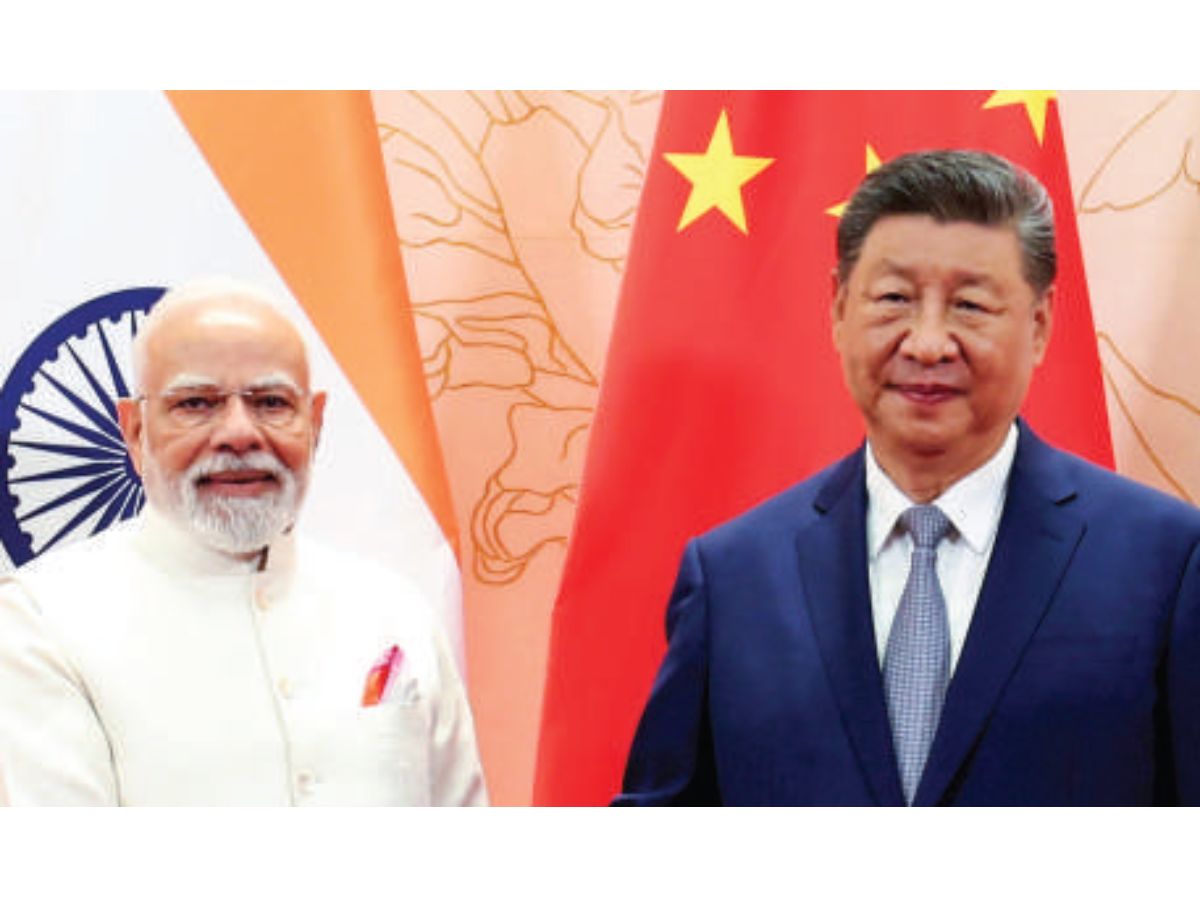
The idea of a harmonious Sino-Indian future is a diplomatic mirage—an illusion sustained by wishful thinking and strategic ambiguity.
Beneath the veneer of summits and handshakes lies a deep, historical antagonism that renders genuine coexistence nearly impossible.
China’s recent efforts to exploit tensions between India and the United States are not anomalies; they are the logical extension of a long-standing strategy rooted in civilizational rivalry, territorial ambition, and ideological divergence.
The seeds of mistrust were sown long before the 1962 war, when China’s annexation of Tibet in 1951 shattered the Himalayan buffer that had historically separated the two Asian giants. For India, Tibet was not merely a neighbour—it was a spiritual and strategic shield. Its fall marked the beginning of China’s encroachment into India’s sphere of influence, culminating in the brutal border war of 1962 and recurring skirmishes in Ladakh and Arunachal Pradesh.
Even today, China refuses to acknowledge India’s sovereignty over key territories, while aggressively building infrastructure along disputed borders. These are not isolated provocations—they are manifestations of Beijing’s belief that India must remain strategically constrained and regionally subordinate.
Both India and China view themselves as civilizational states, but their visions for Asia’s future are fundamentally incompatible. India’s pluralistic democracy and strategic openness contrast sharply with China’s authoritarian model and hegemonic ambitions. Beijing’s Belt and Road Initiative, its militarization of the Indo-Pacific, and its support for Pakistan’s anti-India posture all point to a broader design: to encircle, isolate, and diminish India’s regional standing.
China’s latest gambit is subtler but no less dangerous—exploiting friction between India and the United States to weaken their strategic partnership. As tensions rise under President Trump’s tariff-heavy trade policies, Beijing is amplifying narratives that portray India as a pawn of Western interests and the US as an unreliable ally. Chinese media has even suggested that India’s outreach to Washington has failed, hoping to lure New Delhi into a false sense of rapprochement.
This is not diplomacy—it’s psychological warfare. By sowing doubt and discord, China aims to fracture the Quad alliance and dilute India’s role as a counterweight in the Indo-Pacific. The goal is clear: to prevent the emergence of a unified front that could challenge Beijing’s dominance.
India must resist the temptation of tactical engagement with China that ignores historical precedent. The notion that economic interdependence or summit diplomacy can override decades of mistrust is naïve. Strategic clarity demands that India deepen its ties with the United States—not out of blind allegiance, but as a pragmatic response to the structural realities of Asian geopolitics.
The US-India partnership, though imperfect, remains the most potent bulwark against Chinese expansionism. It is a relationship built not on sentiment, but on shared interests: freedom of navigation, technological collaboration, and the preservation of a multipolar Asia.
To forget history is to invite repetition. China’s actions—from its annexation of Tibet to its border provocations and wedge tactics—are not aberrations. They are the logical outcome of a worldview that sees India not as a partner, but as a rival to be contained. Harmony, in this context, is not a possibility—it is a trap.
India must remember that its sovereignty, its strategic autonomy, and its civilizational dignity depend not on appeasement, but on resolve. And the world must recognize that the future of Asia hinges on whether India chooses clarity over illusion.
The Dalai Lama’s nephew, Khedroob Thondup, is a geopolitical analyst.




