
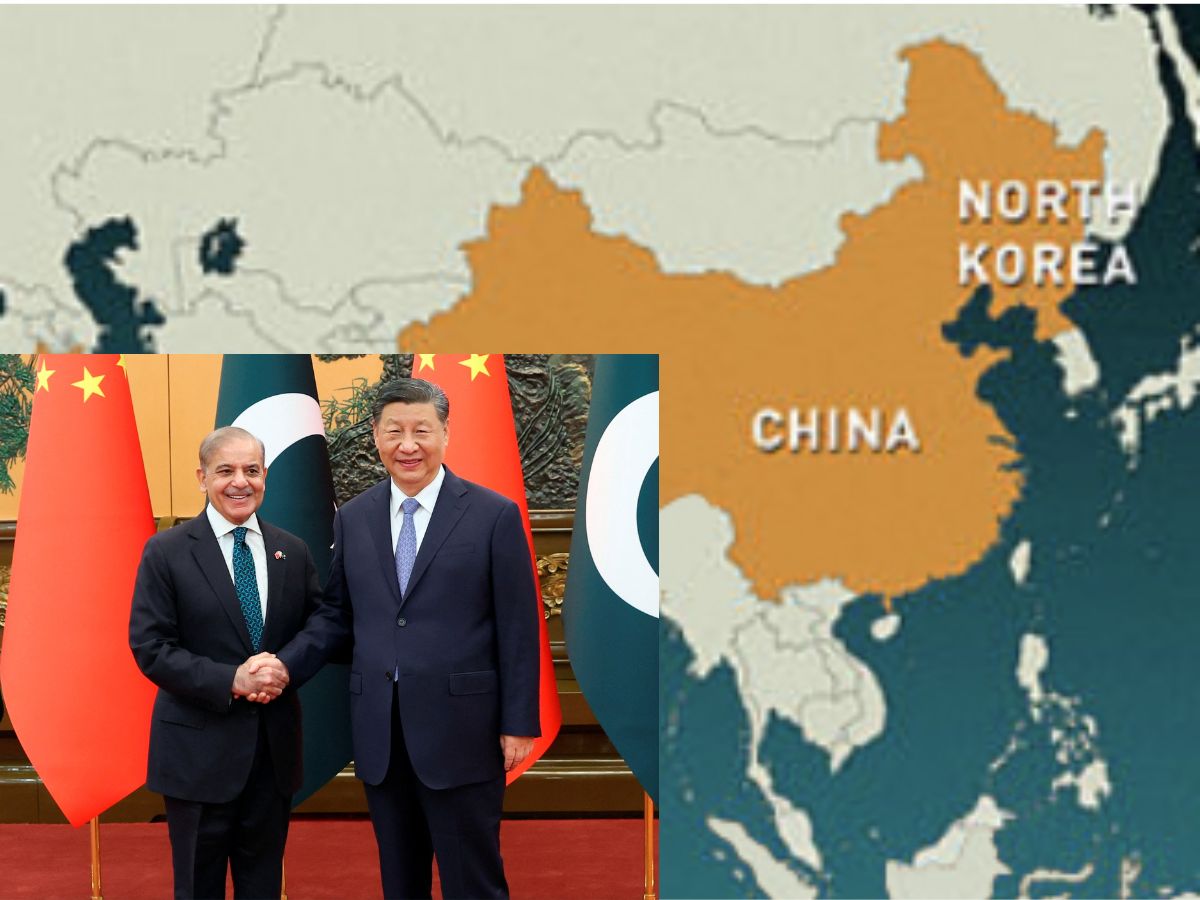
In the shifting tectonics of global security, few threats loom larger than the clandestine spread of nuclear weapons. While the world’s attention often fixates on the overt provocations of Iran and North Korea, the deeper story lies in the quiet complicity of their enablers—China and Pakistan—whose strategic calculus and historical entanglements have helped shape the nuclear trajectories of these rogue states.
Pakistan’s nuclear journey, born out of its rivalry with India, has morphed into a template for proliferation. The infamous A.Q. Khan network, which trafficked nuclear technology to Iran, North Korea, and Libya, was not a rogue operation in isolation—it thrived under the protective shadow of Pakistan’s military-intelligence complex. Khan’s centrifuge designs and uranium enrichment know-how became the backbone of Iran’s early nuclear efforts and North Korea’s uranium-based program.
Pakistan’s ties with North Korea deepened in the 1990s, when Islamabad sought ballistic missile technology to complement its nuclear arsenal. With US pressure limiting access to Western systems, Pakistan turned to Pyongyang, exchanging nuclear expertise for missile delivery systems. This barter not only strengthened Pakistan’s deterrence but also accelerated North Korea’s nuclear ambitions.
China’s role is more nuanced but no less consequential. As a permanent member of the UN Security Council, Beijing publicly supports non-proliferation. Yet its actions often betray its rhetoric. China supplied Pakistan with M-11 missiles in the early 1990s, violating the Missile Technology Control Regime (MTCR). These transfers laid the groundwork for Pakistan’s missile capabilities, which were later shared with North Korea.
Beijing’s strategic embrace of Iran is similarly double-edged. While officially backing the Joint Comprehensive Plan of Action (JCPOA), China has continued to deepen its economic and military ties with Tehran. Its investments in Iranian infrastructure and energy sectors provide Tehran with the financial breathing room to resist Western pressure. More critically, Chinese dual-use technologies—those with both civilian and military applications—have found their way into Iran’s nuclear and missile programs.
Iran’s nuclear program, though framed as peaceful by its allies, has long flirted with weapons capability. Pakistan’s support for Iran’s “right to peaceful nuclear development” is couched in diplomatic language, but it masks a history of covert cooperation. Iran’s enrichment capabilities, missile development, and scientific training all bear the fingerprints of foreign assistance—much of it traceable to Pakistan and China.
North Korea, meanwhile, has evolved into a nuclear state with intercontinental reach. Its rapid progress owes much to the foundational support received from Pakistan and the strategic cover provided by China. Beijing’s reluctance to enforce sanctions and its shielding of Pyongyang from international isolation have allowed North Korea to defy global norms with impunity.
This shadow network of nuclear cooperation undermines decades of non-proliferation efforts. It emboldens authoritarian regimes, destabilizes regions, and threatens the fragile balance of deterrence. The West must confront not just the symptoms—Iran’s enrichment and North Korea’s missile tests—but the systemic enablers behind them.
Accountability must extend beyond Tehran and Pyongyang. It must reach Islamabad and Beijing, whose strategic choices have made the world more dangerous. Silence is complicity. And complicity, in the nuclear age, is a peril we can no longer afford.
Nephew of the Dalai Lama, Khedroob Thondup is a geopolitical analyst.




