China’s success in high-tech industries can be largely attributed to its long-term strategic planning, particularly the ‘Made in China 2025’ initiative launched by Xi Jinping in 2015.
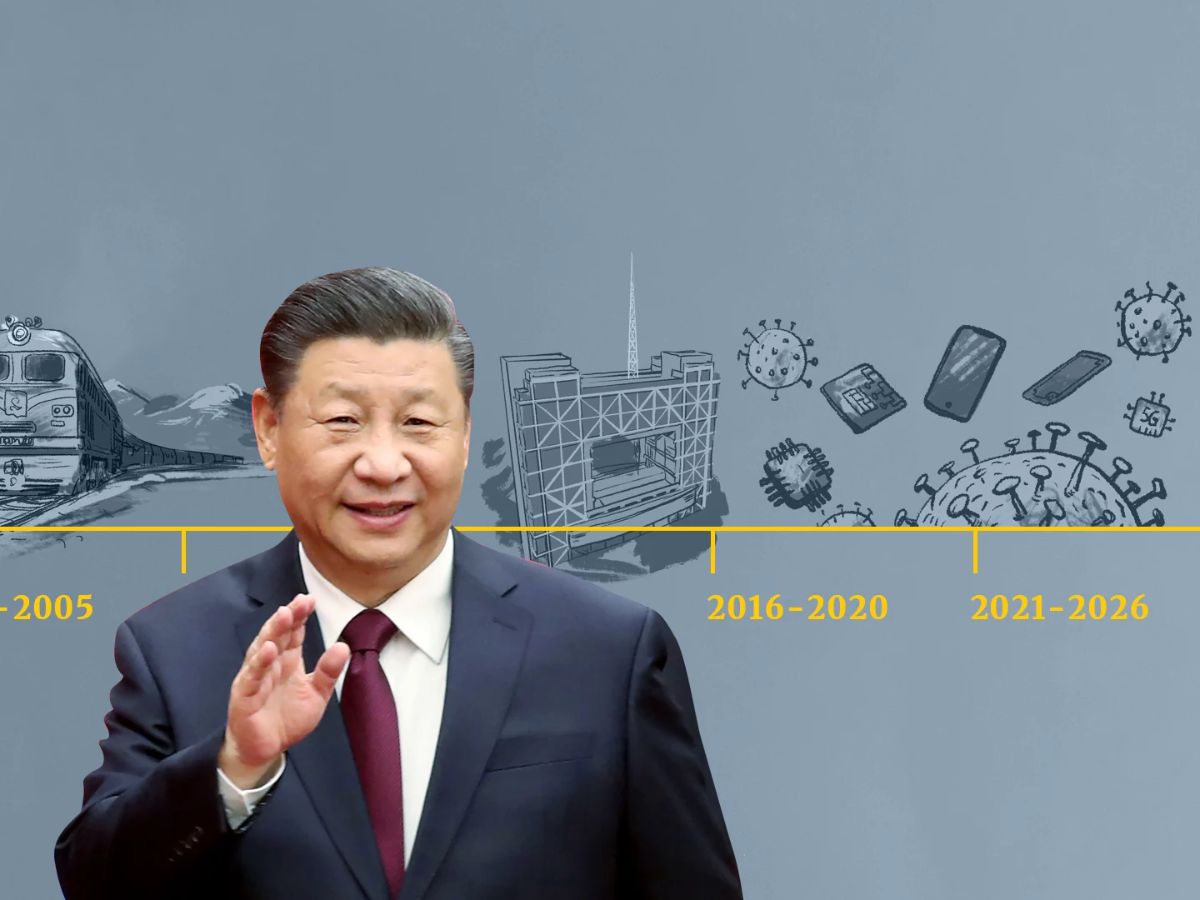
China’s success in high-tech industries can be largely attributed to its long-term strategic planning, particularly the “Made in China 2025” initiative launched by Xi Jinping in 2015. (Image: South China Morning Post)
The Fourth Plenary Session of the 20th Central Committee of the Communist Party of China (CPC), which concluded on October 23, 2025, reviewed the work report delivered by Xi Jinping on behalf of the Political Bureau of the Central Committee and adopted the “Proposals of the Central Committee of the Communist Party of China on Formulating the Fifteenth Five-Year Plan for National Economic and Social Development.”
According to the communique issued at the close of the session, the period of the 14th Five-Year Plan (2021-2025) was characterized as a momentous and exceptional phase in China’s developmental trajectory, while the forthcoming 15th Five-Year Plan period (2026-2030) was identified as a critical stage for realizing the goal of socialist modernization by 2035.
The session reaffirmed Xi Jinping’s position as the core of the Party’s leadership and emphasized the guiding role of “Xi Jinping Thought on Socialism with Chinese Characteristics for a New Era.” It underscored the significance of the “two affirmations” and the “two safeguards,” which were incorporated into the Party Constitution during the 20th National Congress, as the institutional foundation for maintaining unified Party authority.
This reaffirmation consolidates Xi’s central role in the Party-led governance system and links the concept of “self-revolution”—manifested through anti-corruption campaigns, disciplinary rectitude, and internal cohesion—to the broader objective of national modernization. This linkage is exemplified by the appointment of Zhang Shengmin as Vice Chairman of the Central Military Commission (CMC) of the CPC, alongside the purging of several senior military officials, including He Weidong, Miao Hua, He Hongjun, Wang Xiubin, Lin Xiangyang, Qin Shutong, Yuan Huazhi, Wang Chunning, and Zhang Fengzhong.
The objectives outlined for the 15th Five-Year Plan period emphasize significant progress in achieving “high-quality development”, substantial enhancement of scientific and technological self-reliance and strength, and new breakthroughs in the comprehensive deepening of reform. The plan also envisions marked advances in cultural and ethical development, continued improvements in the quality of life, major achievements under the “Beautiful China Initiative”, and further strengthening of the national security framework.
These goals are articulated within the overarching framework of “Chinese-style modernization,” which seeks to integrate economic growth with social equity, ecological sustainability, and cultural confidence, thereby sustaining China’s so-called “two miracles” of rapid development and long-term stability.
Assessing the performance of China’s economy in the first half of 2025, it demonstrated notable resilience and vitality despite the pressures of sluggish global growth and continued US tariff measures, achieving a GDP growth rate of 5.3%. According to data released by Sheng Laiyun, director of the National Bureau of Statistics, the contribution of the service sector to economic expansion has continued to rise. In the first half of the year, the value-added output of the service sector accounted for 59.1% of GDP, contributing over 60% to overall GDP growth.
Sheng also noted that the consumer market, previously identified as a source of concern, “became increasingly active” during this period. Total retail sales of consumer goods reached 24.55 trillion yuan, representing a year-on-year increase of 5%. Consumption contributed 52% to total economic growth in the first half and is expected to maintain a strong momentum in the latter half of the year. Meanwhile, imports and exports recorded a 2.9% increase, “a remarkable achievement,” in Sheng’s assessment given the significant external headwinds faced during the second quarter.
Years of pursuing “high-quality development” in China have fostered broad policy consensus, cultivated new drivers of growth, facilitated economic rebalancing, and strengthened the foundations of sustainability. The leadership envisions that advancements in clean technologies will offset the limitations of the earlier investment- and export-driven growth model. China has emerged as the world’s largest producer of solar panels, wind turbines, and lithium-ion batteries, accounting for approximately 80%, 60%, and 60% of global production capacity, respectively.
According to data from Guangdong Hydro and New Energy Enterprise, the clean energy contributed about 11.4 trillion yuan (USD 1.6 trillion) to China’s economy in 2023, marking a year-on-year increase of 30%. Furthermore, a report by the Centre for Research on Clean Energy and Clean Air noted that in 2024, the sector contributed more than 10% to China’s overall economic growth for the first time, with combined sales and investments reaching 13.6 trillion yuan (USD 1.9 trillion).
New energy vehicles (NEVs) have emerged as one of the key drivers of China’s economic growth. Over the past decade, China’s automotive industry has undergone a profound transformation, positioning itself as a global leader and innovation hub in the transition toward electrification and intelligent mobility. According to recent reports on China’s NEV market, in 2024, out of a total of 27.56 million passenger cars sold, more than 12 million were NEVs, accounting for nearly 44% of total passenger vehicle sales and representing approximately two-thirds of global electric car sales.
This rapid expansion has been facilitated by state-led initiatives, including programmes that encourage the replacement of old vehicles with NEVs and large-scale investment in supporting infrastructure. Data from the China National Energy Administration indicate that by the end of March 2025, the number of charging units nationwide had reached 13.7 million, marking a 47.6% year-on-year increase.
China has emerged as a leading force in green technology, prompting concerns among Western countries regarding potential unfair competition. In response, these nations have imposed tariffs on Chinese electric vehicles, which could complicate China’s exports to the US and EU. Nevertheless, China’s efforts to diversify its trade partners and markets may mitigate some of these challenges. Consequently, despite significant pressures in the property sector and domestic demand, China’s manufacturing industry remains resilient, supported by a trade surplus exceeding $992 billion.
China’s success in high-tech industries can be largely attributed to its long-term strategic planning, particularly the “Made in China 2025” initiative launched by Xi Jinping in 2015. The initiative represents a deliberate effort to enhance national competitiveness and reduce reliance on foreign technology by targeting self-sufficiency in critical components and materials.
Its most ambitious goal has been to achieve 40% self-sufficiency by 2020 and 70% by 2025 and spans multiple strategic sectors, including advanced information technologies such as artificial intelligence and quantum computing; automated machine tools and robotics; aerospace and aeronautical equipment; maritime equipment and high-tech shipping; modern rail transport; autonomous and new-energy vehicles; power and agricultural equipment; new materials; and biopharmaceuticals and advanced medical products. By systematically developing these industries, China aims not only to secure domestic technological autonomy but also to position itself as a dominant player in the global high-tech landscape, thereby reshaping international competitive dynamics.
