Why PM Modi did not attend China’s parade.
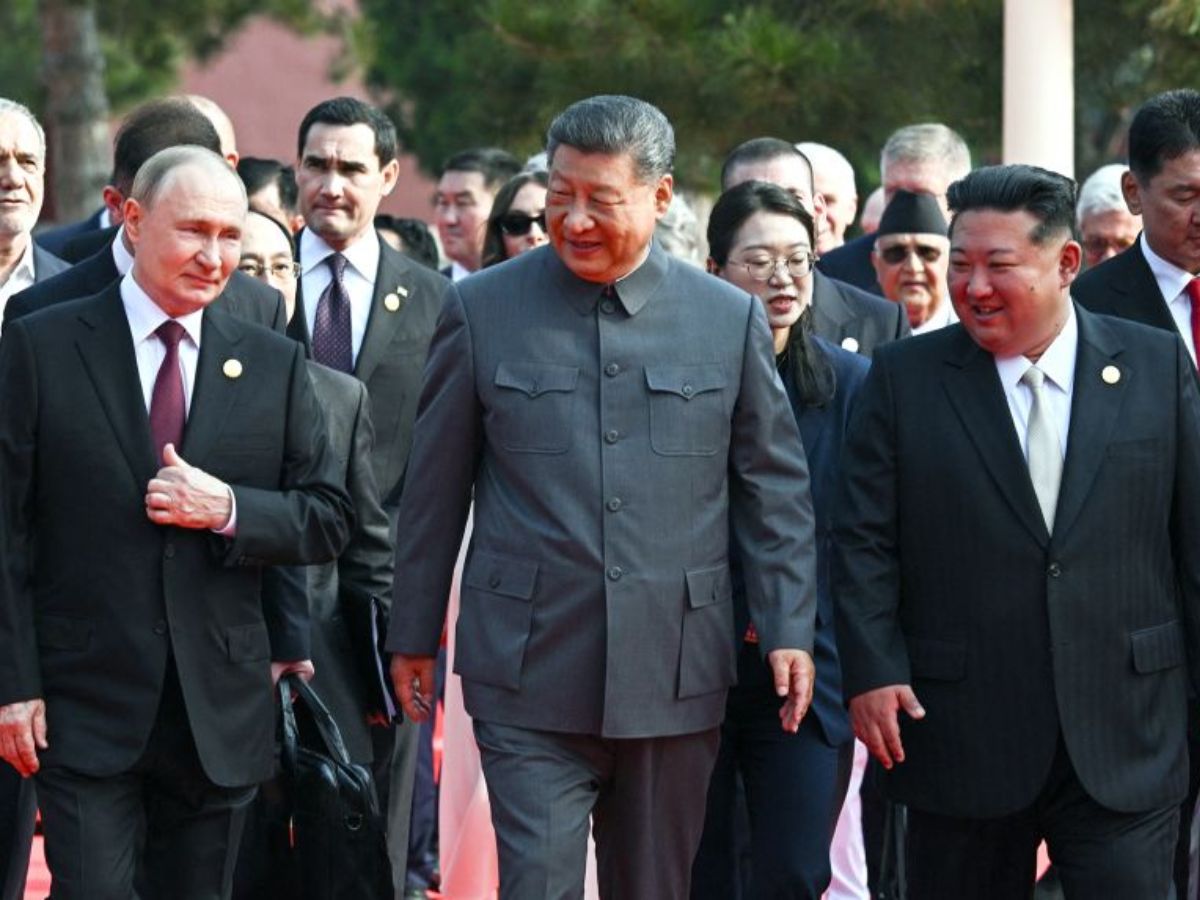
When Chinese President Xi Jinping stood flanked by Vladimir Putin and Kim Jong Un at Beijing’s Victory Day parade last Wednesday, the choreography was unmistakable: a show of defiance, unity, and revisionist ambition. Yet one absence loomed large amid the missile-laden spectacle—Indian Prime Minister Narendra Modi, who had just attended the Shanghai Cooperation Organisation (SCO) summit in Tianjin but quietly departed before the parade began. His conspicuous absence was not a scheduling oversight. It was a strategic signal, and a sobering reminder of the limits to any China-India rapprochement.
The metaphor of the “dragon and elephant dancing together” has long been used to describe the aspirational relationship between India and China—two ancient civilizations with modern ambitions. But as last week’s events revealed, they are not moving to the same rhythm.
Modi’s decision to skip the parade, despite Xi’s invitation, underscores India’s discomfort with China’s increasingly militarized nationalism and its embrace of authoritarian allies. The parade commemorated 80 years since Japan’s defeat in World War II, but its subtext was unmistakably contemporary: a celebration of China’s growing strategic alignment with Russia and North Korea, and a rebuke to the liberal international order.
India, which counts Japan as a close strategic partner and a fellow member of the Quad, could not afford to be seen endorsing a spectacle that implicitly vilified Tokyo and glorified Beijing’s military might. Nor could it ignore the optics of standing alongside Putin and Kim—leaders whose actions have drawn global condemnation.
At the SCO summit, Modi and Xi reportedly discussed border tensions and trade cooperation. The tone was cordial, the optics hopeful. But the parade revealed the deeper fault lines. India’s strategic calculus remains rooted in multipolarity, not authoritarian solidarity. While Beijing seeks to build an “Axis of Upheaval” with Moscow and Pyongyang, New Delhi is hedging—engaging with China where necessary, but aligning more closely with democratic partners in the Indo-Pacific.
Modi’s absence was thus a diplomatic manoeuvre: a refusal to legitimise China’s narrative of global realignment, and a quiet assertion of India’s strategic autonomy. It was also a message to Washington, Tokyo, and Canberra—that India remains committed to a rules-based order, even as it navigates the complexities of regional diplomacy.
Victory Day parades are not just commemorations—they are performances of power. Xi’s unveiling of hypersonic missiles and nuclear-capable Dong Feng systems was a theatrical assertion of China’s military reach. Modi’s absence, by contrast, was a symbolic assertion of India’s sovereignty—its refusal to be cast in a script it did not write.
In a world increasingly divided between spheres of influence, India is choosing its own choreography. The dragon and elephant may share the stage, but they are dancing to different tunes.
Nephew of the Dalai Lama, Khedroop Thondup is a geopolitical analyst.
