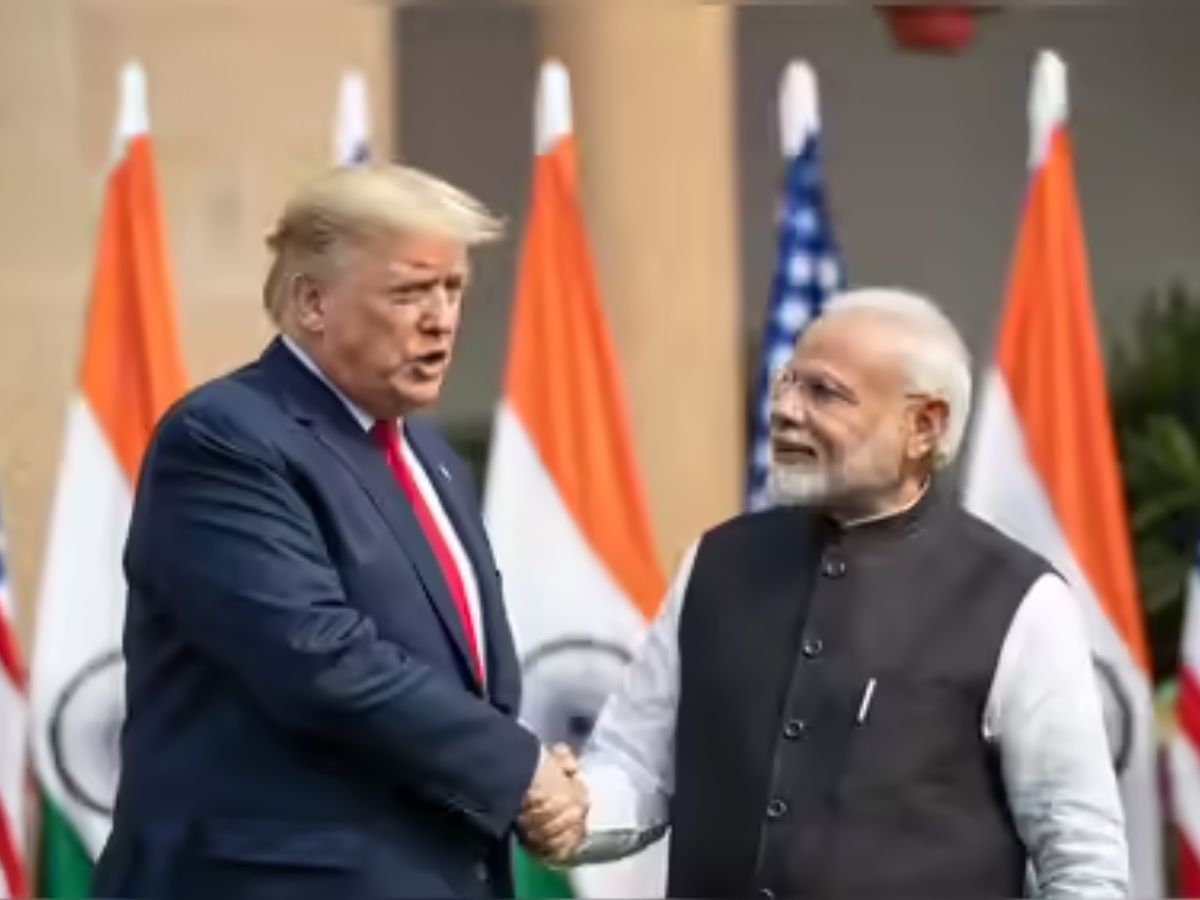
Factors that led to India-US framework agreement (Image: X)
On February 2, late evening, the US ambassador to India, Sergio Gor tweeted that US President Donald Trump had just finished a detailed phone conversation with Prime Minister Narendra Modi. After a short while, President Trump broke the news on his Truth Social that out of friendship and respect for Modi and as requested by him, they had agreed for a trade deal with immediate effect, whereby the US would charge a reduced reciprocal tariff of 18%. Minutes later, Modi thanked his dear friend Trump effusively for reducing the tariff on Indian goods to 18%. Gor reiterated: Trump considers PM Modi “a great friend”; the deal couldn’t have been possible but for their personal chemistry. He feels, India-US relationship has limitless potential.
This sudden announcement after the rude comments by the US Commerce Secretary Howard Lutnick (January 6) that Modi didn’t call Trump so the deal didn’t happen and Treasury Secretary Scott Bessent’s criticism of India-EU FTA (Davos Economic Forum January 20) took TV anchors, journalists and government officials by surprise. Business, industry and the Sensex reacted positively, while trade analysts are trying to read between the lines. Some have hailed it as a landmark breakthrough while others have cautioned against the euphoria—the devil is always in the details.
Evidently, Modi didn’t phone, it was Trump who phoned and broke the news. After Lutnick’s bombast and USA’s disapproving reaction to India-EU FTA, who could have persuaded the mercurial DJT (he had called India a tariff king and Indian economy as a dead economy) to phone Modi? This was made possible by Trump’s trusted man in Delhi: Sergio Gor. And for a change, DJT was most charming in his message, calling Modi, “one of my greatest friends and, a powerful and respected leader of his country.”
In September last year, Trump did call Modi to wish him on his birthday; it was a much appreciated, positive gesture; ever since till the end of December, the two leaders have spoken on phone four times. Obviously, away from the media gaze and headlines, serious diplomacy was conducted through phone calls. It should be evident to all diehard AI aficionados that there is still no substitute to direct, heart to heart phone conversation between leaders for achieving diplomatic objectives.
Commerce and Industry Minister Piyush Goyal considers it a “historic and forward-looking trade agreement” that “strengthens India’s position in global economy” and “will benefit many sectors including MSME, textiles, gems and jewellery, leather good and marine products.” He also asserted in Parliament that India’s agriculture and dairy sectors would not be adversely impacted.
Goyal has cleared the fog surrounding the phrases: “with immediate effect”. He explained, “the first tranche of the bilateral trade agreement is almost ready. We hope to sign a joint statement in the next 4-5 days. After the joint statement, there will be a formal agreement which will be signed around mid-March. After the Joint Statement, the US will issue an executive order to reduce the tariff to 18%."
However, on Friday, January 6 President Trump signed an Executive Order which lifts the punitive 25% tariff from February 7, imposed on India for purchasing Russian oil, on the assurances that India would instead increase energy imports from USA besides enhanced supplies of defence and other products (already listed by Goyal). But this welcome relief comes with a warning: these tariffs will be reimposed if India were to resume importing Russian oil.
Trump’s reference to India’s commitment to buy energy, technology, agriculture, coal and many other products worth US$ 500 billion has also been deciphered by Piyush Goyal: It extends to 5 years, that US$100 billion annually. Given the continuing upswing in Indian economy, its increasing requirement for energy, data centres’ equipment, ICT products, aircraft, engines and spares, US$100 billion worth imports are considered achievable.
Trump’s emphatic claim that India has agreed to stop purchasing Russian oil and instead buy more American and possibly Venezuelan oil is read differently in Russia and India. Russia hasn’t heard any official word from India. Nonetheless, a cryptic reply by a Russian spokesperson that India was free to buy oil from wherever it wants to suggests that they aren’t too concerned; the import of Russian oil has never been a pivot for the decades long rock-solid India-Russia relations. MEA spokesperson, Randhir Jaiswal has emphasised, “diversifying our energy sourcing in keeping with objective market conditions and evolving international dynamics is at the core of our strategy to provide energy security to 1.4 billion Indians. All of India’s decisions are taken and will be taken with this in mind.”
Notwithstanding Jaiswal’s official line, the already declining import of Russian oil might come to a halt soon. As for Venezuelan oil, India had entered Venezuela in 2008, though the operations of Indian PSUs were halted from time to time because of sanctions. India will be open to explore the option of Venezuelan oil depending on commercial viability.
It’s tempting to attribute Trump’s about turn to India-EU FTA; it might have been a factor, but a series of steps taken by India in the last one year led to this development.
A. India didn’t buckle under pressure from the US nor rushed to sign an agreement on the dotted lines. India didn’t impose any retaliatory tariffs on American goods either.
B. In spite of highly provocative remarks by the POTUS, Commerce Secretary, Treasury Secretary and Senior Counsellor, Peter Navarro, Indian PM and Ministers refrained from paying back in the same coin.
C. India resolutely demonstrated her strategic autonomy; the smiling faces of the Triumvirate: Modi, Xi Jinping and Vladimir Putin from the SCO Summit in Tianjin, Modi’s ride in Putin’s car, red carpet welcome to Putin in Delhi and a repeat joint car ride, left no doubt in Trump’s mind that Modi will not ditch Russia.
D: In the face of US tariffs, India signed trade agreements with the UK, Oman, New Zealand, EFTA and EU, underlining that she has diversified her economic relations beyond the US.
E: Modi visited China; the two countries decided to mend relations in spite of the border dispute.
F: Ever since his arrival, Sergio Gor has worked tirelessly to bring India-US relations on an even keel. Using an Indian magazine cover which featured Modi and Trump together to reignite bonhomie between two leaders was a masterstroke.
Surendra Kumar is a retired ambassador of India.
