CCP’s Central Committee is gathering for its Fourth Plenum.
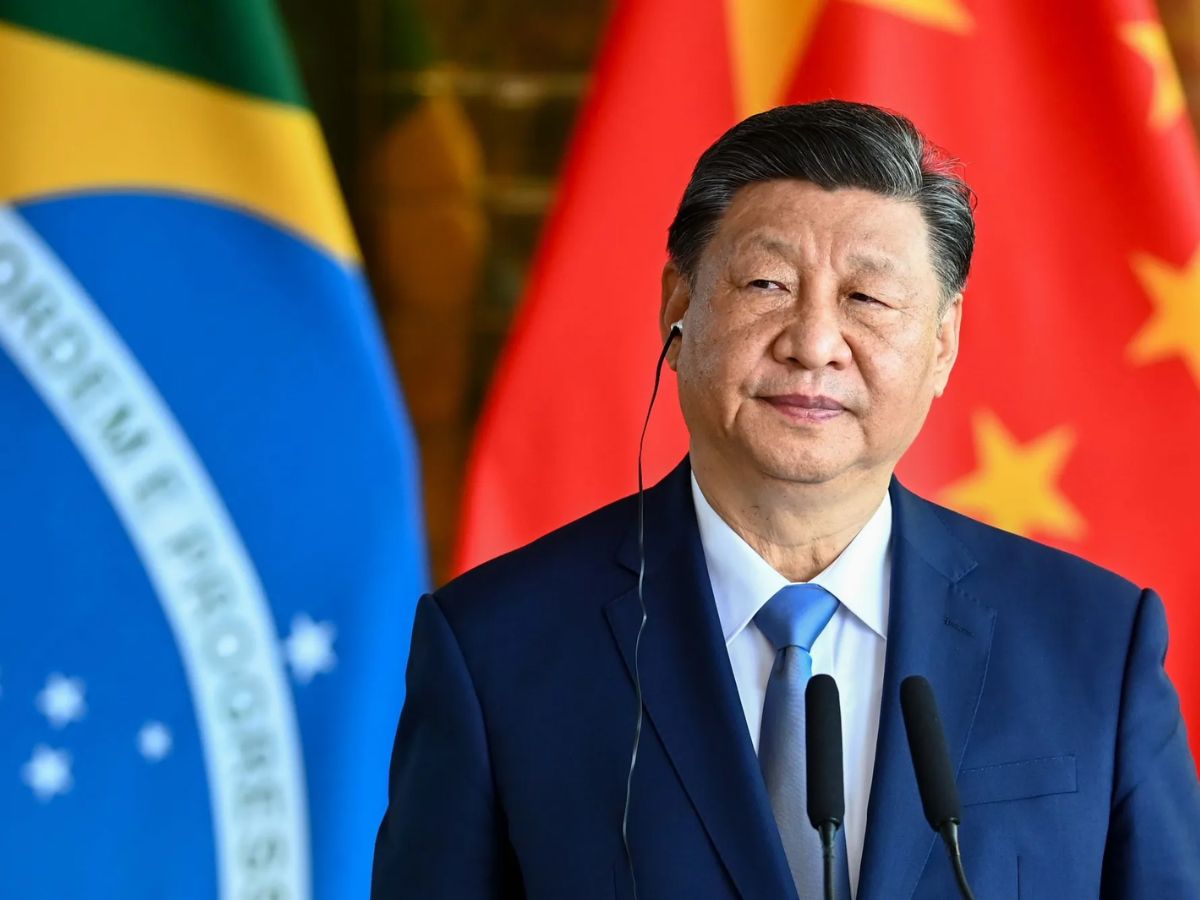
The Plenum is framed as a test of China’s ability to maintain control and credibility amid rising geoeconomic pressures. (Image: Bloomberg.com)
Geoeconomic headwinds threaten to derail Xi Jinping’s vision as China’s Fourth Plenum convenes to shape the next Five-Year Plan. The CCP faces mounting pressure to reconcile its political ambitions with economic realities amid global decoupling, domestic stagnation, and leadership uncertainty. As the Chinese Communist Party’s Central Committee gathers for its Fourth Plenum this week, the stakes could hardly be higher. This closed-door meeting, traditionally focused on governance, has been repurposed to deliberate the 15th Five-Year Plan (2026-2030)—a blueprint that will define China’s trajectory in an increasingly hostile global economic climate.
Three-fifths into Xi Jinping’s third term, the promise of modernization, rejuvenation, and common prosperity—pillars of his “China Dream”—is under strain. The Fourth Plenum is not just a policy summit; it’s a litmus test of the CCP’s ability to adapt to a world where China’s economic leverage is being challenged on multiple fronts. The global landscape has shifted dramatically since the last Five-Year Plan. Western economies are actively decoupling from China, erecting barriers to trade, investment, and technology transfer. The US and its allies have tightened export controls on semiconductors and AI technologies, undermining Beijing’s ambitions for tech self-sufficiency.
Meanwhile, supply chain realignments are redirecting foreign capital to Southeast Asia and India, eroding China’s role as the world’s factory. Domestically, the picture is equally grim. Youth unemployment remains stubbornly high, consumer confidence is weak, and the property sector—once a pillar of growth—is in prolonged decline. The CCP’s efforts to stimulate demand through infrastructure and credit have yielded diminishing returns. The Fourth Plenum must confront these realities head-on.
Adding to the uncertainty is a wave of personnel reshuffles and unexplained absences among senior officials. The Plenum is expected to fill key vacancies in both civilian and military leadership, which could signal shifts in internal power dynamics. This instability complicates long-term planning and undermines investor confidence. Moreover, the CCP’s emphasis on security and control—from data governance to ideological conformity—has created friction with the private sector. Entrepreneurs and foreign firms alike are wary of unpredictable regulatory crackdowns. The Plenum’s tone on economic liberalization versus state dominance will be closely watched.
Observers should pay attention to three key signals from the Plenum. Will the CCP double down on strategic sectors like EVs, semiconductors, and green tech, or pivot toward consumption-led growth? Will Beijing embrace more aggressive stimulus, or maintain its cautious stance amid debt concerns? Will Xi reaffirm his centrality and ideological vision, or allow room for pragmatic recalibration? The Fourth Plenum is not just about drafting a plan—it’s about restoring credibility. Xi’s “China Dream” hinges on the Party’s ability to navigate geoeconomic turbulence without losing control. The world will be watching not just what the CCP decides, but how it chooses to lead in an era of diminished certainty and rising global scepticism.
Nephew of the Dalai Lama, Khedroob Thondup is a geopolitical analyst.
