Indians wonder why DJT is tightening the noose on India, damaging the trust, warmth and mutually beneficial multi-dimensional relationship assiduously cultivated over the last 25 years.
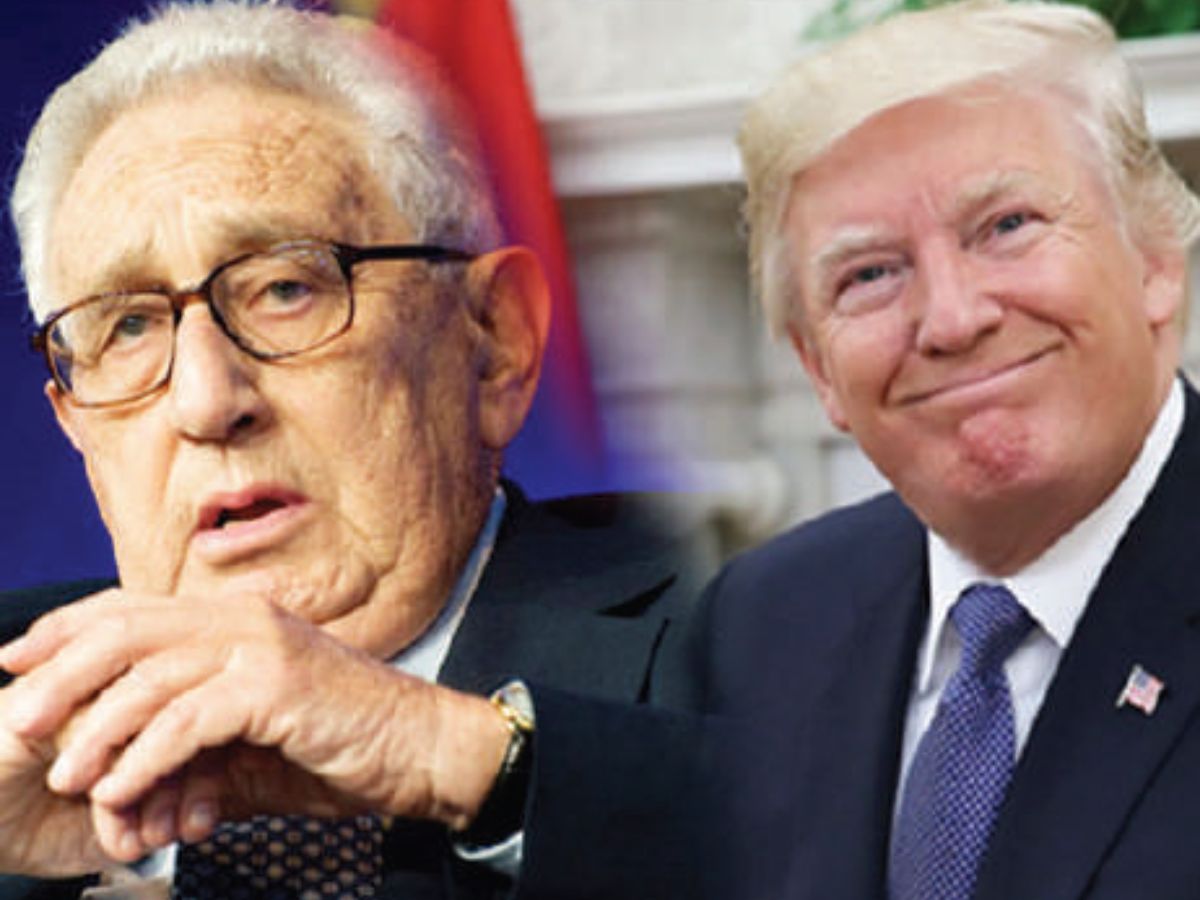
When Dr Henry Kissinger wrote: “It may be dangerous to be America’s enemy, but to be America’s friend is fatal;” hardly anyone in India paid any attention. They dismissed the statement with a shrug: it doesn’t apply to us; none can accuse us of being America’s enemy. We were never great chums of Uncle Sam, so the latter half of Henry’s statement won’t hold water for us. However, the anti-India decisions of Donald Trump Presidency 2.0 since February 2025, the manner of their articulation and unfriendly language used have shaken Indians out of their cosy slumber.
After India attained Independence from 200 years of exploitative British rule, the first Prime Minister, Jawaharlal Nehru helped draw a new strategy of international relations to safeguard and promote national interests, smartly called the Non-Alignment Movement. It served us well during the cold war. In essence, it was the precursor of today’s much hyped strategic autonomy. Viewing India as a camp follower of the communist Soviet Union, the US didn’t extend any assistance to India except on a few instances: President Kennedy quickly responded to supply military equipment and other requirements in the wake of the Chinese invasion of 1962, a request hesitatingly made by Nehru and strongly supported by the then US ambassador, Kenneth Galbraith and the controversial PL 480 which facilitated supply of food grains which saved millions of lives. The contribution of American agricultural scientists to India’s Green Revolution also deserves appreciation.
India-US relations touched their nadir in 1971 when the Nixon-Kissinger duo instead of supporting democratic India sided with the Pakistani military dictator, Gen Yahya Khan, whose army killed around 3 million East Pakistanis, including 100,000 women who were brutally raped. Moreover, the US moved its Seventh Fleet led by the USS Enterprise to the Bay of Bengal to intimidate India. This exposed how shallow America’s faith in democracy and its Commitment to uphold human rights was.
The collapse of the Soviet Union and the opening up of the Indian economy inviting foreign investment in 1991-92 constituted the watershed moment in the history of independent India. Suddenly, the US and Western countries started looking at India as a huge market for their products and profitable investment destination. Both Dr Manmohan Singh and Atal Bihari Vajpayee broadened the process of economic liberalisation. But these headwinds were strongly jolted with the severest sanctions imposed by President Bill Clinton following India’s nuclear tests in May 1998. Ironically, it was he who became the first US President to visit India in March 2000 and with PM Vajpayee laid the institutional foundation of closer relations between the US and India.
Ever since, there has been no looking back; two countries have witnessed an exponential spike in bilateral trade including defence and energy imports by India, cooperation in security including cyber security and counter terrorism and outer space, bilateral investment and mutually beneficial collaboration in nearly three dozen missions covering hugely diverse spheres. The period since March 2000 till March 2025 was marked by unprecedented exchange of visits at the highest level (President Obama became the first US President to visit India twice and became the Chief Guest at the Republic day parade), the historic civil nuclear agreement (2008), basic Foundational Communication agreements, India becoming major defence partner, more than 300 joint military exercises, and Indian defence and energy imports from the US touching US$24 billion each, PM Modi addressing unprecedented audiences in Madison Square Garden and NRG Stadium in Houston for Howdy Modi, addressing the joint sessions of the US Congress twice, Namaste Trump in Ahmedabad, countless handshakes and hugs between the Indian PM and US Presidents of different parties gave birth to a widely held belief that there was a bipartisan consensus in the two countries to expand and deepen bilateral relations irrespective of the change of guard in Washington and New Delhi. In that positive spirit, the US sought India in the regional groupings like the Indo-Pacific, Quad, I2U2, IMEC and others. Many commentators including me felt that India-US relations have never been better.
So, when Donald Trump called India the tariff king, we weren’t too alarmed. But when he announced 25% reciprocal tariffs on India on 2nd April, followed with 25% penal duty for importing Russian oil, thus bringing the total to 50% tariffs on Indian exports, in contrast to 20% tariffs on Vietnam, Sri Lanka and Bangladesh, 19% on Indonesia and 15% on Thailand and Türkiye, the whole nation was shocked. Accusations by Trump’s advisers and cabinet colleagues against India, in most coarse language, of prolonging the Ukrainian conflict by purchasing Russian oil further vitiated Indian public opinion against the USA which stands the lowest since 1971.
The adverse impact of the blatantly discriminatory tariffs has been compounded by increase of H1B visa fee to US$ 100,000, creating avoidable panic for H1B visa holders. While the subsequent clarification that the new fee regime will apply only to new visa applicants might have calmed down the anxiety a bit, one can’t fathom the rationale. Both Elon Musk and Bill Gates are on record to have supported H1B visas; many US firms including theirs have benefited from H1B visa holders. Yes, 70% H1B visa holders are Indian techies, but top US employers are: Amazon, Microsoft, Apple, Meta, Google, Cognizant. So, while it might hurt Tata Consultancy and Wipro (they can outsource their work), the new fee will, in the long run, adversely impact American technological edge and innovations.
While EAM Jaishankar and Commerce and Industry Minister Piyush Goyal are in the US and holding discussions with their counterparts, President Trump doubled down on India; in his speech at the UN, he called India and China the main funders of Russia. Energy Secretary Chris Wright claimed to be “a huge fan of India” who didn’t want to hurt her; nonetheless, expected India to purchase more energy from the US and not from Russia.
The stark reality of the current state of India-US relations contrasts with the recent exchanges of greetings between Trump and Modi. Some months after Gen Munir, Pakistani PM Shahbaz Sharif’s welcome at the White House won’t please India either. Trump is against globalisation, multipolarity, multilateralism, climate change agreements, WTO, WHO, UNICEF, BRICS and the UN. Strategic convergence seems to carry no weight; only trade surplus matters. Indians wonder why DJT is tightening the noose on India, damaging the trust, warmth and mutually beneficial multi-dimensional relationship assiduously cultivated over the last 25 years. Is this the way to treat one’s global, comprehensive, strategic partner?
If this is the reward for being a close friend of the US, Henry Kissinger was right after all!
Surendra Kumar is a retired Indian ambassador.
