
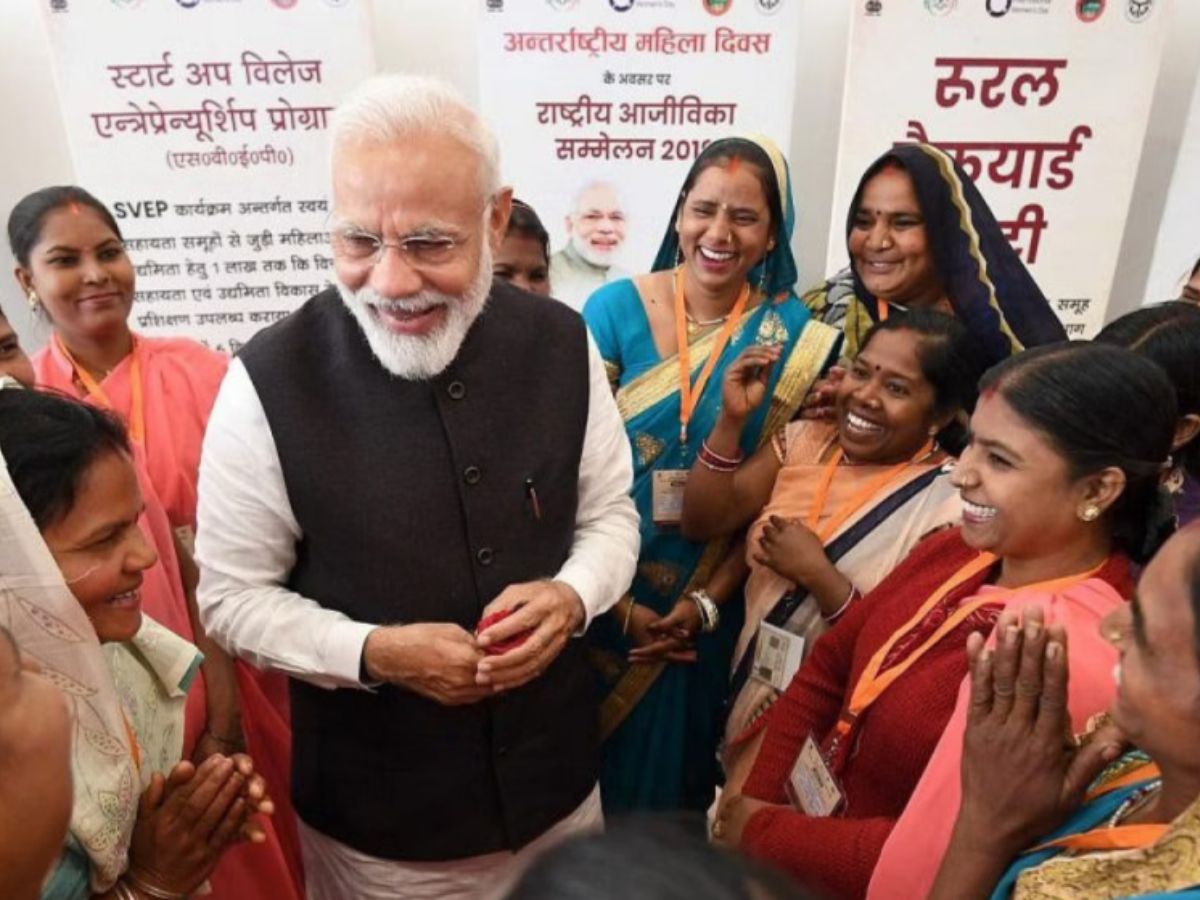
Over the past decade, under Prime Minister Narendra Modi’s leadership, India has advanced Nari Shakti from the periphery to the forefront through targeted schemes and measures, mainstreaming gender into policy domains, and complemented by extensive focus on capacity development. The latest budget, helmed by Sitharaman, boosting women entrepreneurship and education, furthers the gender agenda with strong pro-women measures.
AGENTS OF GROWTH, SUSTAINING RESILIENCE
The government’s focus on women-centred progress affirms women’s indispensable role in national progress. Sixty-five per cent of female workers are engaged in agriculture, contributing across the value chain. They also serve as custodians of traditional knowledge, leaders of environmental movements, grassroot functionaries such as Anganwadi workers, primary caregivers, and frontline responders in disasters—strengthening food security, climate resilience, foundational development and inclusive growth.
From lifting the Cricket World Cup to driving Bihar’s electoral wins, leading enterprises and STEM startups, pioneering rural climate resilience such as Jal Shakti Abhiyan, or managing content on Netflix and Amazon, countless examples illustrate how ensuring pay parity and providing enabling environments strengthen women’s leadership, dismantle patriarchy, and advance gender equality.
Yet entrenched social norms, restrictive land laws, and systemic inequality limit access to education, technology, resources, mobility, and decision-making. Climate shocks heighten risks, increasing gender-based violence and caregiving burdens. Economic disparities persist: women earn less, dominate insecure informal work, and own only 22% of MSMEs. Digital exclusion widens gaps, with just 55% of rural women online. In agriculture, despite their vital role, women hold only 14% of land titles, restricting access to credit, insurance, and social protection.
WOMEN-LED DEVELOPMENT AND MAINSTREAMING
Under the present government, women’s empowerment is pursued through a holistic, multi-layered approach. Institutional and programmatic efforts drive social, economic, and political progress, exemplified by the Nari Shakti Vandan Adhiniyam mandating one-third seats for women in Parliament and Assemblies. Landmark initiatives include PM Ujjwala Yojana for clean cooking, Jal Jeevan Mission for piped water, and Pradhan Mantri Awas Yojana-Gramin for housing.
A life-cycle approach ensures support from birth to old age: Beti Bachao Beti Padhao addresses child marriage and gender equality; Shakti Sadan, Sakhi Niwas, Saksham Anganwadi, and POSHAN 2.0 provide maternity, nutrition, and childcare; Palna shelters and Pradhan Mantri Matru Vandana Yojana offer cash transfers. Hubs for Empowerment of Women bridge information gaps, while education measures include Sukanya Samriddhi Yojana, scholarships, sanitary health initiatives and hostel facilities—now amplified in the 2026 budget with girls’ hostels in every district, ensuring no girl is left behind in her quest for knowledge. Health security is ensured through Ayushman Bharat, and social protection through Atal Pension Yojana, PM Suraksha Bima Yojana etc.
Skill India Mission, caregiver trainings—further bolstered by the 2026 budget’s emphasis on strengthening caregivers—Pradhan Mantri Kaushal Kendras, PMGDISHA, and the Public Procurement Policy mandating 3% purchases from women-owned enterprises promote economic independence. Further, the Lakhpati Didi initiative enables SHG members to earn Rs 1 lakh annually, complemented by SHE Marts and fisheries value-chain strengthening, as spotlighted in Sitharaman’s latest budget, turning rural women into entrepreneurial powerhouses. Innovation is supported by Bio-CARe and WISE-KIRAN for women-led startups in diagnostics, genomics, and vaccines. Women are also inducted into the NDA, assigned combat roles in the Indo-Tibetan Border Police, and admitted into Sainik Schools.
Additionally, gender is integrated across policy and developmental domains through designing gender-responsive policies, strategies and plans, across domains, with specific needs and vulnerabilities of women. For instance, many conservation programmes, livelihood pathways, climate adaptation and mitigation plans and strategies are increasingly integrating gender considerations, as priority intervention—echoed in the 2026 budget’s fisheries-linked livelihoods push, empowering women in coastal economies. Institutional mechanisms—Gender Resource Centres (Gujarat, Bihar, Kerala), gender desks, and gender budgeting cells—provide technical inputs and support gender mainstreaming. These measures are reinforced by capacity development at both individual and institutional levels to raise awareness, prioritize gender agendas and design gender-sensitive policies and plans.
FROM RESTORING DIGNITY TO DRIVING VIKSIT BHARAT
The continuum of measures underscore a political resolve to dismantle barriers, systemic restructuring, institutionalise equality and transform societal attitudes towards women—as active architects of India’s growth story and Viksit Bharat vision 2047. Initiatives to build toilets, provide clean cooking and house ownership have not just prevented health and sanitation hazards, ensured security, saved time and reduced drudgery but restored respect and dignity while improving rural living. There is increased female enrolment in school, participation in workforce, formalized employment and social security, essential for holistic and long-term development. From farm to fortune, women are scripting India’s success story.
This has also resulted in clear, measurable and quantified outcomes. For instance, sex ratio has improved to 930 per 1,000 males, infant mortality reduced by 37% in last decade, while Maternal Mortality Rate (MMR) has reduced by 86% since 1990. Pradhan Mantri Kaushal Vikas Yojna (PMKVY) has 58% of women trainees, while women have received 69% of the total MUDRA loans. 73% of nearly 2.75 crore PM Awas-Gramin beneficiaries are women, while 16 crores women having benefitted with prenatal and postdelivery help and essential services. The number of women-led MSMEs has also nearly doubled, from 1 crore in 2010-11 to 1.92 crore in 2023-24, while gender budgets have increased by a whopping 429% in the last decade—trends set to accelerate with Sitharaman’s 2026 blueprint. Women-centric national agenda is ensuring rights, resources and representation for women for a forward-looking India’s developmental trajectory. Nari Shakti isn’t just a slogan—it’s the engine of Viksit Bharat.
- Shehzad Poonawalla is National Spokesperson, Bharatiya Janata Party.
Dr Vijeta Rattani works on developmental and sustainability issues.




