
In the intricate chessboard of Asian geopolitics, symbolism and strategy often intertwine. Nowhere is this more evident than in the triangular dynamic between India, China, and Pakistan. For decades, Beijing has stood firmly behind Pakistan— militarily, diplomatically, and economically—even as Islamabad’s instability and duplicity have complicated regional peace.
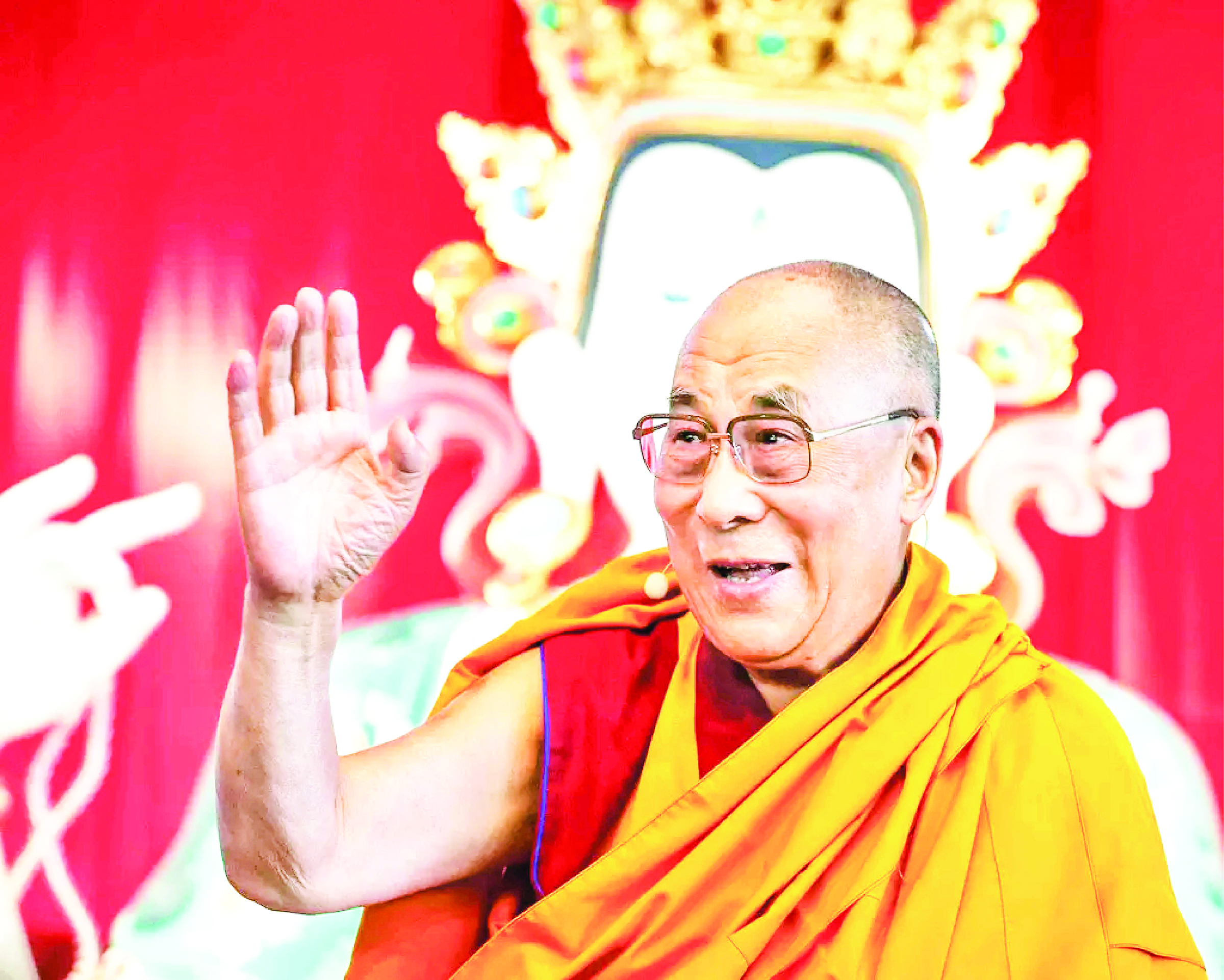
China’s support is not sentimental; it is strategic. It serves as a counterweight to India’s rise, a gateway to the Arabian Sea, and a lever in the great game of influence across South Asia. India, too, has its own strategic and moral lodestar: His Holiness the Dalai Lama. Yet, as India seeks to stabilize relations with China amid border tensions and economic entanglements, some voices urge New Delhi to dilute its support for the Tibetan cause—to treat the Dalai Lama as a liability rather than an asset. This would be a grave mistake.
China’s unwavering support for Pakistan is not contingent on Islamabad’s behaviour. Whether it’s harbouring extremists or undermining democratic norms, Pakistan remains Beijing’s “iron brother.” The ChinaPakistan Economic Corridor (CPEC), despite its risks, is a testament to China’s longterm vision: encircle India, secure energy routes, and project power westward. Beijing does not abandon allies for diplomatic convenience. It does not sacrifice strategic footholds for ephemeral goodwill. India should take note.
India’s hosting of the Dalai Lama is not merely a humanitarian gesture—it is a statement of values and a subtle assertion of influence. The Tibetan spiritual leader embodies non-violence, resilience, and moral clarity. His presence in India is a reminder that sovereignty is not just about borders, but about dignity. Diluting support for the Dalai Lama would not earn India Chinese goodwill. It would signal weakness, invite further coercion, and betray a legacy of principled leadership.
Just as China uses Pakistan to box India in, India’s support for the Dalai Lama is a quiet counterbalance to Beijing’s authoritarian reach. Some argue that India should mirror China’s sensitivities to improve bilateral ties. But reciprocity in diplomacy does not mean symmetry in values. China’s support for Pakistan is transactional; India’s support for the Dalai Lama is transformational.
One props up a failing state to serve strategic ends; the other uplifts a spiritual leader to honor moral commitments. India must not trade away its soul for a seat at Beijing’s table. In an era of shifting alliances and rising authoritarianism, India must anchor its foreign policy in both realism and principle.
The Dalai Lama is not a bargaining chip—he is a beacon. Just as China will not abandon Pakistan to appease India, India must not abandon Tibet to placate China. To do so would be to lose not just leverage, but legacy.
Nephew of the Dalai Lama, Khedroob Thondup is a geopolitical analyst.




