
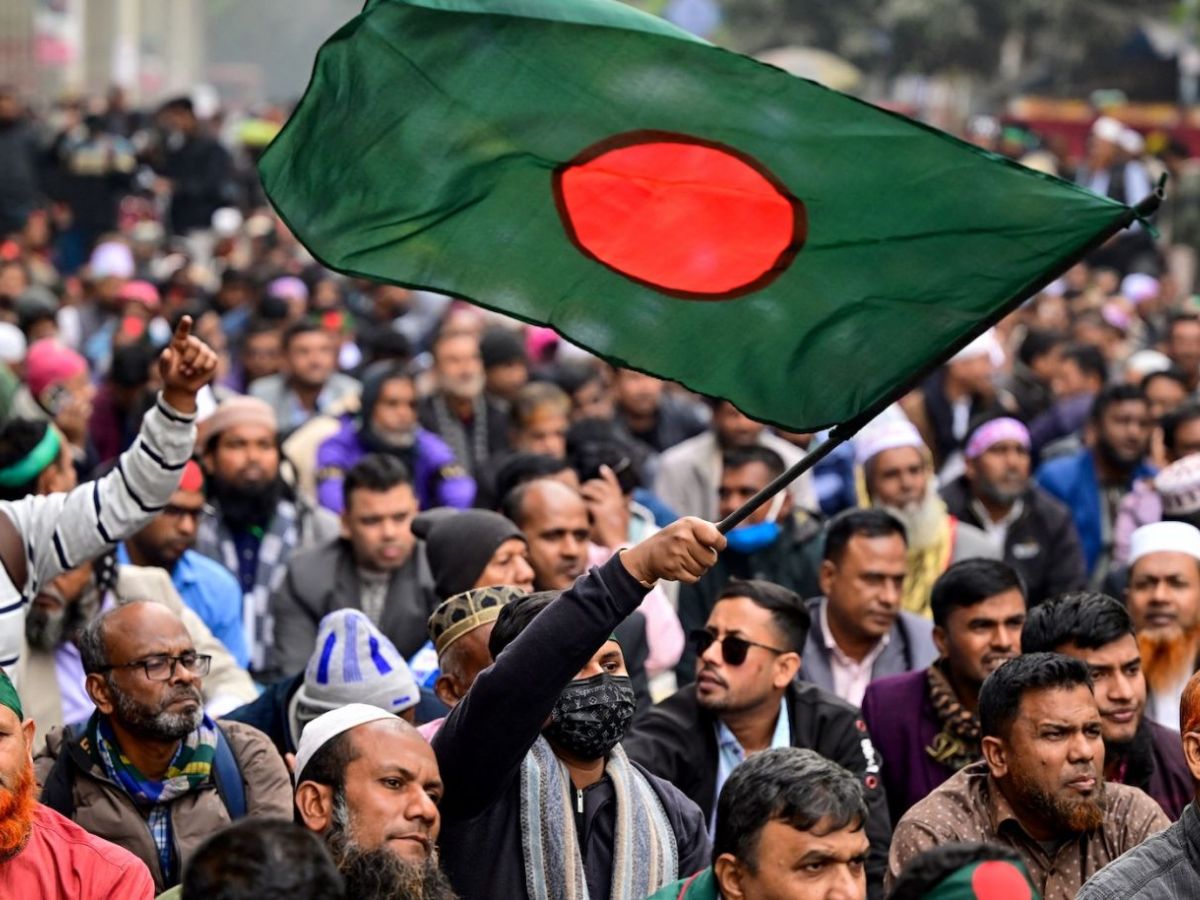
The 12 February 2026 Bangladesh elections mark the end of a slow, creeping coup d’état that originated not with student protestors in the streets of Dhaka but rather in an Inter-Services Intelligence boardroom.
The student protests that pushed Bangladeshi Prime Minister Sheikh Hasina aside were not organic as gullible diplomats and journalists claimed. The protestors who died were not victims of a repressive police force. Forensic reports show assailants shot students with 7.62 mm rounds, most often fired from AK-47 rifles. The Bangladeshi Army uses such weaponry, but its involvement in the protests was minor. Indeed, witnesses suggest army officers stood down rather than fire on crowds. This suggests the perpetrators acquired the 7.62 mm rounds and AK-47s from an external source, most likely smuggled via the High Commission for Pakistan in Dhaka.
With the Awami League banned and Jamaat-e-Islami and other Pakistan supported Islamist groups resurgent, Islamabad relitigates the 1971 war and reverses its outcome. Unless the Bangladeshi people rise and soon, they will revert to East Pakistan in spirit if not in name.
The operation against Bangladesh should have violated a redline for India. So too should Pakistan’s continued support for Kashmir terrorist groups and Khalistan separatists. Old guard Indian leaders reassure themselves that they act in accordance with restraint and value international law, but this only plays into the ISI’s calculations. Rogue regimes always seek to constrain their adversaries by talking the talk of democracy and diplomatic norms while pursuing covert strategies to defeat them. International law only works when all parties abide by the same constraints.
Pakistan’s behaviour will only get worse. Alone, Pakistan is a failed state. But with the financial and military support of Qatar, Turkey, and Saudi Arabia—the new “Axis of Ikhwan”—Pakistani forces are riding high. China, too, wants to see India hobbled. Essentially, Pakistan has become a poison-tipped dagger which different countries use to hobble India and wage grey zone war on it. If India does not respond it might lose its first war and most consequential.
Pakistan seeks to spread separatism, while Turkey and Qatar alongside Pakistan incites India’s 20-plus crore Muslims. While Turkish President Recep Tayyip Erdogan promotes neo-Ottomanism at home, in West Asia and North Africa, he works with Pakistan to promote Neo-Mughalism in South Asia. As an intolerant Muslim Brotherhood acolyte, Erdogan simply cannot accept any order in which non-Muslims wield electoral power over Muslims.
Both moral clarity and reciprocity should guide New Delhi’s policy. While India is a legitimate country, Pakistan is an artificial state whose name literally derives from an anagram of its regions, none of them have anything more in common than a dominant religion and whatever intimidation the central government might provide.
In reality, most Pakistani regions resent the country’s dominant Punjabis. If the Pashtuns of Khyber Pakhtunkhwa had their say, they would join with Afghanistan; indeed, they have been trying to do so since the British drew the Durand Line in 1893. Pakistan violates its own laws and constitution with regard to its treatment of Gilgit. Pakistan has illicitly occupied and annexed Kalat, and formerly incorporated Balochistan in 1955. Sindh, too, is culturally unique and deserves recognition.
Just as the United States refused to recognise the Soviet occupation of Lithuania, Latvia, and Estonia and credentialed their diplomatic missions in Washington throughout the Soviet period, India should consider recognising the rightful representatives of Pakistan-occupied nations.
Likewise, India should embrace a policy of reciprocity towards Turkey. Turkey today offers scholarships to Indian Muslims whom Turkish Islamists then try to indoctrinate into an intolerant worldview dismissive of India’s diversity. The Indian government should respond by welcoming Kurdish students who can learn the skills necessary to promote their identity, cultural, and political rights to counter Turkey’s increasingly autocratic society.
India might also welcome former Kurdistan Workers Party (PKK) members from Turkey and Syria. Ideologically, many Kurds conform with India’s traditional socialist worldview. While Turkey considers the PKK a terrorist group, European courts recognise it as a legitimate insurgency. The United States, for its part, did not designate the PKK as terrorists until Turkey demanded the Clinton administration do so as a prerequisite to a major Turkish helicopter purchase. As Turkey funds separatism in Kashmir and incites Muslims elsewhere, India would be within its rights to promote Kurdistan from New Delhi, even arming and training Kurds in self-defence.
Pakistan has had almost 80 years to define itself as a responsible state, but it has failed to make the case for its nationhood. What the country’s founder Muhammad Ali Jinnah defined as a state for Muslims has deflected from its own internal figures with hatred, aggression, and intolerance. Had Pakistan wanted to succeed, it could have lived side-by-side India in peace; instead, it seeks to tear down India rather than build itself up.
Frankly, if India hastened Pakistan’s dissolution, it would do the world a favour. Likewise, as Turkey becomes an engine for radicalism in the 21st century akin to what Saudi Arabia was in the 20th, New Delhi should teach Ankara a lesson: it is one thing for Turkey to promote Islamism in Somalia or Syria, but it is quite another to attack India directly or by proxy. Erdogan’s arrogance will only grow until someone like Narendra Modi bloodies his nose. And if Kurds win their freedom in the process, that too is a victory for the moderate and democratic bloc that India is poised to lead.
-
Michael Rubin is director of policy analysis at the Middle East Forum and a senior fellow at the American Enterprise Institute in Washington, DC.




