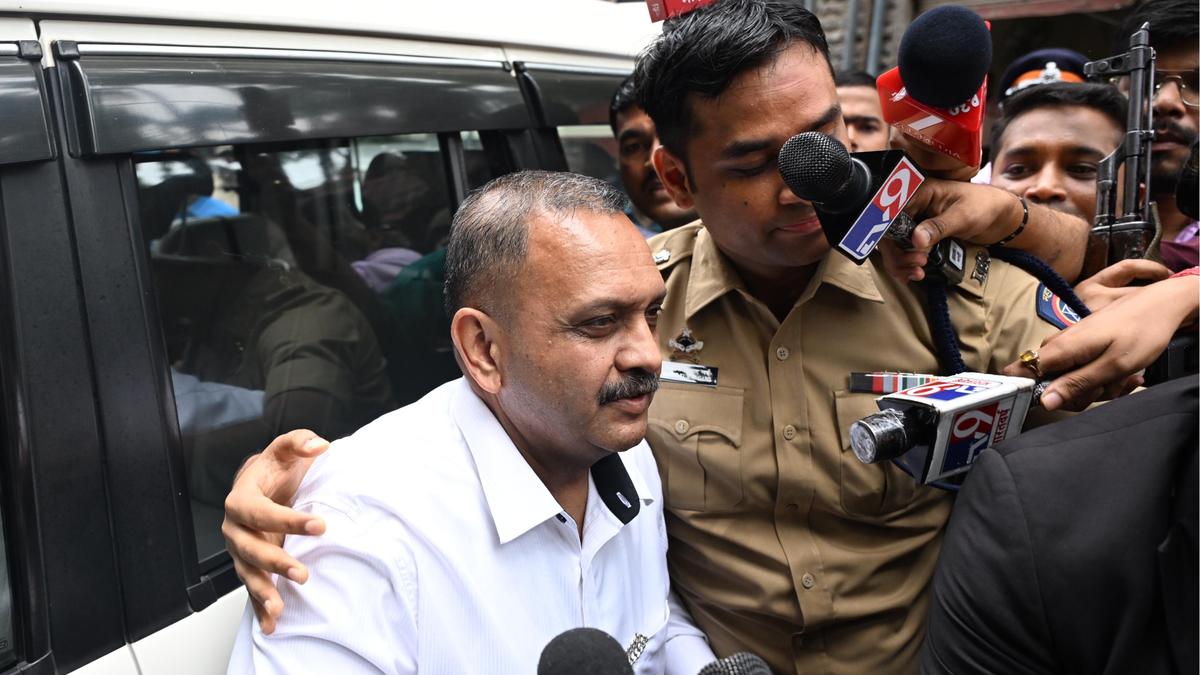
After 17 years of travail facing a possible sentence of death, the Special NIA Court has acquitted all the seven accused of engineering a bomb blast in Malegaon. Soon after the blasts took place, a few in the Maharashtra police contacted the present writer and privately said that they had instructions from higher-ups to frame the accused. The BJP was gaining traction in Maharashtra, and this was a source of concern to the Congress Party, which had long been the dominant force in the politics of the state.
The government of the day was proving helpless in checking the growing number of terror attacks taking place across the country. At a high political level, a decision was taken to invent the bogey of “saffron terror” and to warn that this was a far more dangerous terror network than that created by Wahhabi terrorists supercharged from across the border by the Pakistan army. For reasons of political expediency, the false claim was repeated by high-level political functionaries opposed to the BJP.
Why an officer of the armed forces was among those sought to be tarred by the “saffron terror” taint defies understanding. In any case, as Lt Col Sanjay Purohit said after his release, the Indian Army stood by its man, refusing to entertain the libel that was sought to be foisted on one of their colleagues. Efforts will be made to appeal against the acquittal, and it is yet to be seen whether such efforts would further prolong the suffering of the accused in the Malegaon blast case. In course of time, the justice system in India would routinely render justice to those enmeshed within its coils at a much faster pace than is the situation now in several cases.
Depriving a citizen of her or his freedom is a decision that needs to be taken only when the overwhelming weight of evidence proves a crime has been committed, and not before. Both the Supreme Court as well as the Union Law Ministry needs to work in unison so that justice does not get delayed but is rendered faster than was the case in several of the decades after India won freedom on August 15, 1947. The judiciary in India has been a role model for countries that freed themselves from colonial clutches during the previous century. The way in which the Malegaon case appears to have been concocted is an object lesson in what some of the aberrations in the system of delivery of justice are in the country.
One of the accused, facing the gallows or the fate of a long prison term, turned approver and gave a statement implicating the accused in the blasts. Later, the statement was withdrawn as it was shown to have been secured under duress. Or in other words, by the use of torture. Soon afterwards, almost the same statement was given by the approver, the claim this time being that it was voluntary. It defies logic to say that the same statement given voluntarily that was earlier shown as given under duress. If the approver had the same views as the “voluntary” statement, there would have been no need to torture him to get the earlier statement. The case involves several such illogicalities. Indeed, the Supreme Court of India opined in 2015 that the case gave rise to prima facie doubts about its soundness.
The draconian MCOCA legislation in Maharashtra was repealed in 2016. Since 2014, several such repressive laws have been repealed, and more needs to follow. The only constant in politics is that there will be change, and the same laws passed during the UPA era boomeranged, hitting some of the key architects of such laws, leading to their imprisonment under the same laws they themselves had championed while in power. Leader of the Opposition Rahul Gandhi was sentenced to two years in jail for a crime committed under the Criminal Defamation statute, a law he had repeatedly been told ought to have been repealed during the decade when the UPA was in office.
PM Narendra Modi has repealed several colonial era or colonial clone laws, and more of the same needs to be done during Modi 2.0. Memes and online posts do not define reality, and despite all voluminous online chatter about what President Trump has in his characteristically acerbic style a “dead economy”, the reality is that growth rates in India are high relative to other major economies, and are on track to become even higher. Online abuse remains unable to prevent the rise of India as the third largest economy in the world.
