
“Every pulpit is a pillory, in which stands a hired culprit, defending the justice of his own imprisonment.”— Robert Green Ingersoll
General Asim Munir, the de facto ruler of a war-mongering military dictatorship masquerading as a democracy, blatantly warned on American soil that Pakistan would take half the world down with its nuclear weapons. Only days earlier, its foreign ministry, the “hired culprit,” had just floundered defending its peace credentials at the UNSC—“the justice of its imprisonment.”
Coming in the aftermath of India’s precision strikes under Operation Sindoor—a response to the horrific Pahalgam terror attack masterminded by it, Pakistan sought to use its presidency of the United Nations Security Council (UNSC), the only occasion in its two-year term as a non-permanent member that it would occupy this rotating office, to cleanse itself of the appellation—“epicentre of global terrorism.”
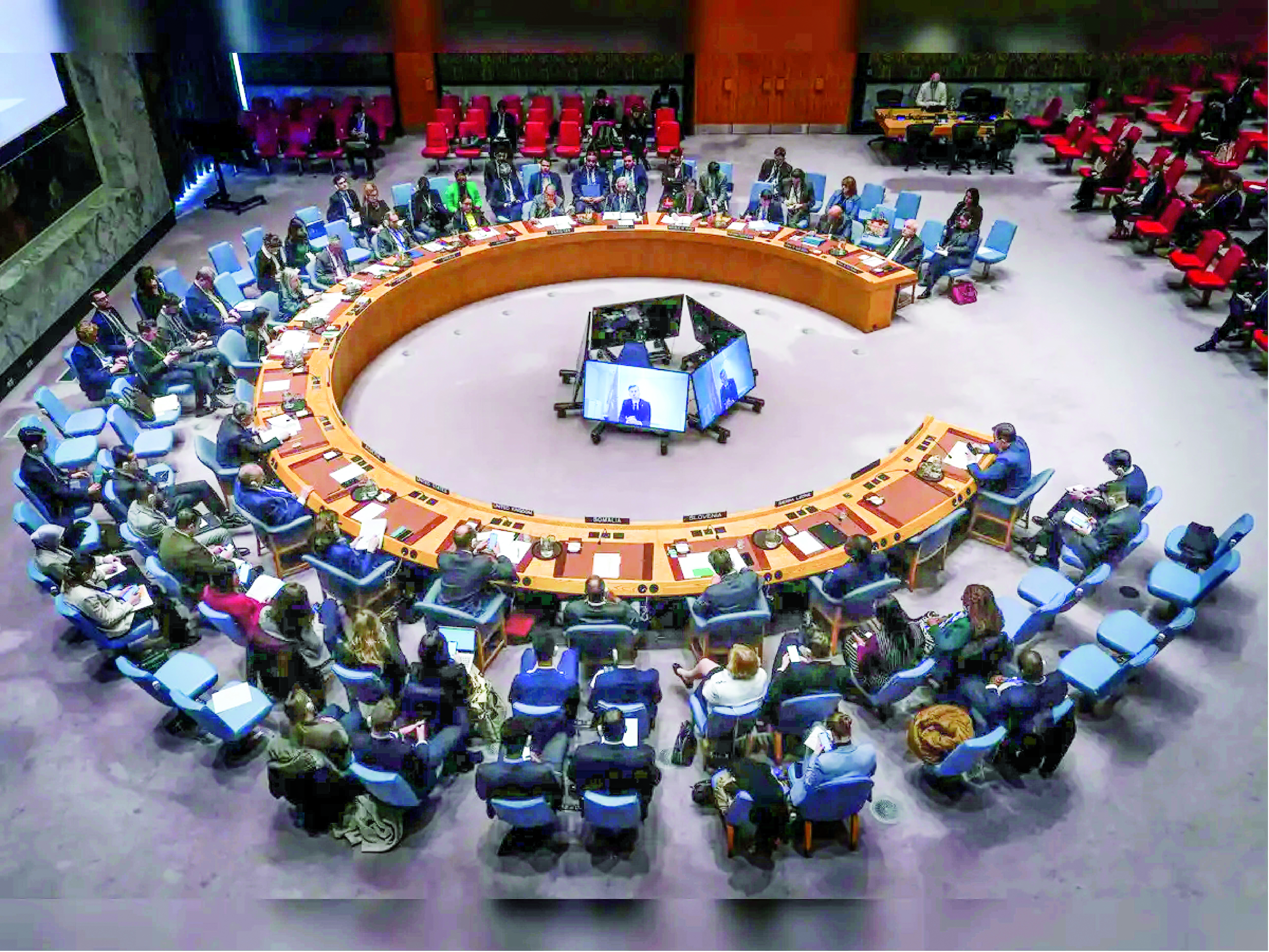
Leveraging the procedural privilege of the chair, it tried to project itself as a champion of international law, multilateralism, and peace-making. It focused its presidency on three themes: the peaceful settlement of disputes under Chapter VI of the UN Charter, cooperation between the UNSC and the Organisation of Islamic Cooperation (OIC), and the situation in the Middle East. Its overarching objective being the advancement of its distorted narrative on Kashmir.
However, even without a seat at the horseshoe table this time, New Delhi shaped positions and ensured the procedural and political terrain did not tilt towards Islamabad’s designs, blunting manoeuvres before they could gain momentum. What followed was a textbook example of strategic clarity and mature diplomacy prevailing over tactical posturing—the pulpit becoming a pillory.
Pakistan’s first signature event was the 22 July High-Level Open Debate on “Promoting International Peace and Security through Multilateralism and Peaceful Settlement of Disputes.” It dared not include an explicit reference to Kashmir in the Zero Draft it circulated, knowing that Council members would not endorse it; instead, Pakistan dredged up the well-worn tropes of Chapter VI to seek “effective enforcement” of past UNSC resolutions in an attempt to smuggle its narrative into a Council product.
Chapter VI requires parties to seek resolution through negotiation, inquiry, mediation, conciliation, arbitration, judicial settlement, or other peaceful means; the Council, when approached, may investigate disputes, recommend procedures, and call upon parties to settle disputes peacefully. Among resolutions under Chapter VI are Resolution 38, 39 and 47 (1948), adopted after Prime Minister Nehru’s ill-advised decision to refer the Kashmir issue to the Council, thereby internationalising it.
The 1972 Simla Agreement subsequently committed India and Pakistan “to settle their differences by peaceful means through bilateral negotiations or by any other peaceful means mutually agreed upon,” and to refrain from unilateral alteration of the situation or acts detrimental to peace and harmonious relations. India has since maintained that UNSC resolutions on J&K stand superseded by Simla and, in any case, are recommendatory, not binding under Chapter VI. Pakistan, however, has violated Simla in letter and spirit, periodically invoking UN resolutions, while supporting cross-border terrorism and attacks along the Line of Control.
After Operation Sindoor and India’s suspension of the Indus Water Treaty, Pakistan announced suspension of its adherence to Simla; its push to shape UN “jurisprudence” for third-party mediation through UNSC Resolution 2788 was less about peaceful settlement than repackaging a discredited agenda, however, procedural privilege could not substitute geopolitical credibility.
India’s outreach ensured that the Resolution adopted on 22 July, remained anchored in Chapter VI, including in the sequence of means—it urged all Member States “to utilise effectively the mechanisms for pacific settlement of disputes as outlined in Article 33 of the United Nations Charter…or other peaceful means of their own choice.”
It requested the Secretary-General to provide, one year following the adoption of this resolution, concrete recommendations for further strengthening the mechanisms for peaceful settlement of disputes, in a briefing (oral; not a written report), and subsequently in existing reporting mechanisms where relevant. Folded into established thematic and regional reporting, the resolution added nothing binding or case specific. As one negotiator noted, it was a “motherhood and sunshine” text.
Pakistan, nonetheless, tried to retrofit the outcome to its Kashmir agenda, mentioning it in the same breath as Palestine. The foreign minister of Pakistan, Ishaq Dar, in his statement after adoption of the resolution claimed that Pakistan remained “steadfast in its desire for peace” and ready for dialogue; reiterated that J&K is an “internationally recognised disputed territory”; and listed the principles Pakistan had sought but failed to insert—“universal implementation of UNSC resolutions without discrimination”, “no space” for threat or use of force, “foreign occupation” or denial of “self-determination” and that bilateralism must not be a pretext for inaction. He also highlighted the active use of the Secretary-General’s good offices and support for the UN’s Mediation Unit.
India’s Permanent Representative, P. Harish, in his statement, dismantled these facetious “peace-loving”, “international-law-abiding”, “UN-principles-respecting” credentials Pakistan claimed for itself. He contrasted India’s mature democracy, surging economy, and pluralistic, inclusive society with Pakistan, steeped in fanaticism and terrorism, and a serial borrower from the IMF.
He underlined how conflicts have transformed, with non-state actors often propped up as proxies, underwritten by cross-border funding, arms trafficking, training of terrorists and the spread of radical ideologies. He reminded the Council that Chapter VI begins by recognising that it is the “parties to a dispute” who must first seek a solution by peaceful means of their own choice; that national ownership and consent are central; that changing contexts must be considered; and that there should be a serious cost to states that violate good-neighbourliness by fomenting cross-border terrorism.
Citing the UNSC’s statement—after the Pahalgam attack—calling for perpetrators, organisers, financiers and sponsors to be brought to justice, he noted that India acted accordingly through Operation Sindoor, a focused, measured and non-escalatory response; and once primary objectives were achieved, cessation of military activities followed at Pakistan’s request.
India’s role as the largest contributor of UN peacekeeping forces, a founding member of the United Nations, and a responsible actor for global peace and security was well acknowledged. As a leading voice for the Global South, India also raised the risk of an unreformed Security Council sliding into ineffectiveness and irrelevance. In debating international peace and security, it asserted that zero tolerance for terrorism is essential, and it ill behoves a member of the Council to offer homilies while indulging in practices unacceptable to the international community.
Having failed to extract any substantive gain from its first initiative, Pakistan’s second push came on 24 July with a “Briefing on Cooperation between the UN and OIC”, aligning with its longstanding campaign to position this inter-faith grouping of Muslim countries as a regional organisation under Chapter VIII of the UN Charter, which could thereby intervene in UNSC deliberations and mechanisms.
OIC’s political agenda, often driven by a bloc led by Pakistan, has repeatedly targeted India on J&K through resolutions, statements, and special envoys—none binding in international law but leveraged by Islamabad in multilateral forums. Since 2013, Pakistan has sought recurring Secretary-General’s reports, permanent consultative formats, and institutional recognition for the OIC.
India has consistently blocked such moves, asserting that, unlike the African Union or European Union, OIC lacks geographic scope and regional delimitation; being a cross-regional, faith-based grouping without a specific peace-and-security mandate, or the institutional mechanisms and resources.
Through deft engagement with key partners, India ensured that the Presidential statement issued by the UNSC remained anodyne. While it retained a passing reference to Chapter VIII, it did not affirm the OIC as a regional organisation; it asked for the Secretary-General to include in his next report on cooperation between the UNSC and regional and “other organisations”, recommendations for cooperation with the OIC. It offered no new or distinct process or mechanisms. For India, it meant the successful containment of yet another attempt to legitimise a platform that has consistently targeted it, in a year when 5 OIC members are elected non-permanent members of the UNSC.
On 23 July, Pakistan convened the “Quarterly Open Debate on the Middle East” with a focus on Gaza. India struck a principled, humanitarian tone—calling for restraint, condemning terrorism and hostage-taking, reaffirming support for a negotiated two-state solution, and emphasising civilian protection and unimpeded humanitarian assistance—without partisan grandstanding. It thereby pre-empted any Pakistani claim to moral high ground and showed it could contribute meaningfully beyond its immediate region.
In parallel, India projected a positive agenda grounded in its role and advocacy as a peace, development, and technological global public goods actor. Just ahead of the Pakistani presidency, on 30 June, External Affairs Minister S. Jaishankar inaugurated a digital exhibition on “The Human Cost of Terrorism”, documenting attacks across the globe from 9/11 to Mumbai, London and Bali bombings, Kanishka and Pan-Am to Pahalgam—an unambiguous case against state-enabled terrorism without naming states.
Pakistan’s presidency was rich in symbolism but poor in impact. It attempted a charade of internationalising the Kashmir issue and projecting its peace avatar, positioning the OIC as a surrogate voice and reintroducing multilateralism in India-Pakistan bilateral equations. India countered decisively with legal precision, developmental clarity, and strategic restraint. Pakistan presided. India prevailed.
Yet, given the geopolitical shifts involving the Permanent 5 members of the UNSC—USA, Russia, UK, France and the UK—and the crisis in multilateralism itself, India will have to remain ever more vigilant. It must remain alert to any attempts to smuggle partisan agendas into Council products, prepared to keep any future OIC-related reporting within Charter limits, and committed to defending the primacy of bilateral frameworks involving India against third-party and multilateral encroachment.
Lakshmi Puri is a former Assistant Secretary-General of the United Nations and Deputy Executive Director of UN Women; and a former Ambassador of India.




