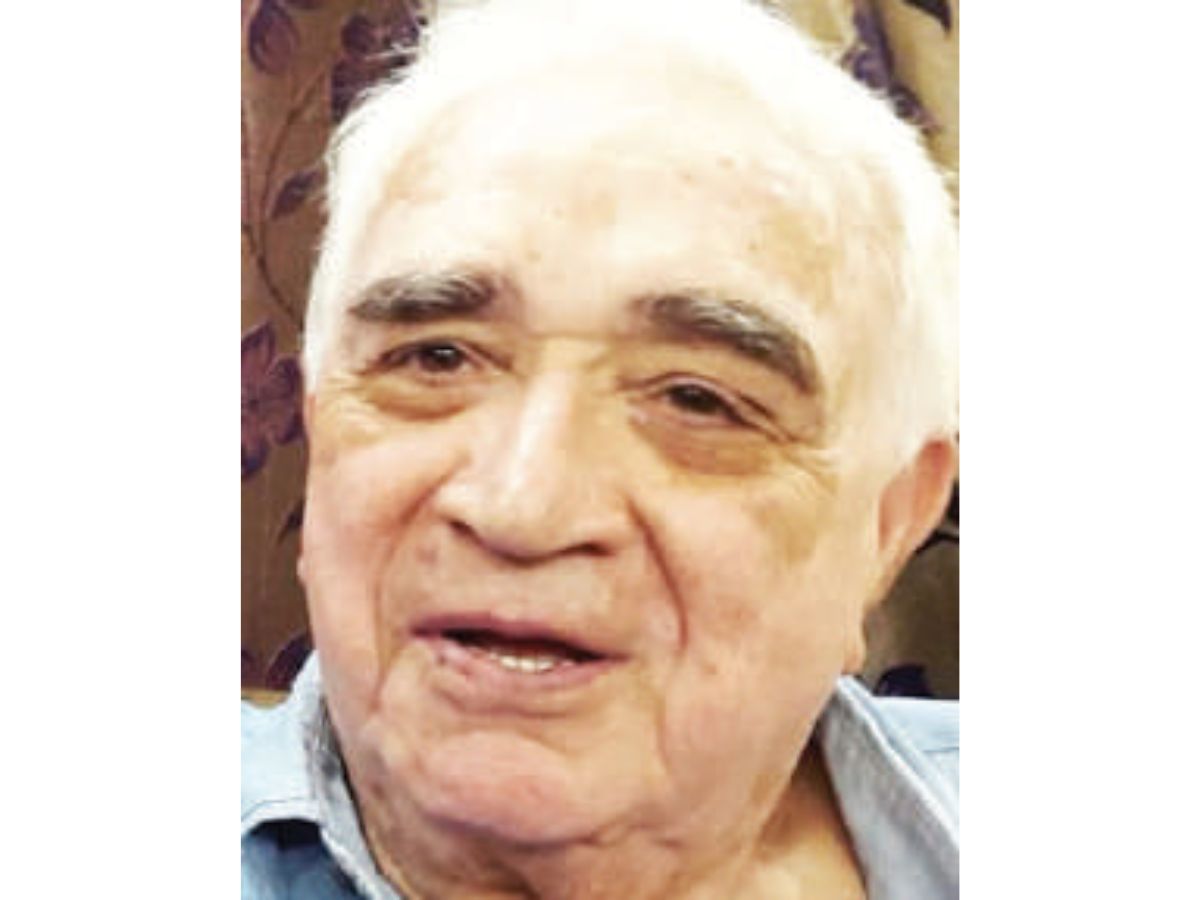
M.L. Kotru, eminent journalist, author and activist would always be remembered for his role in shaping the future of a large number of youngsters. He had perhaps mentored more journalists than anyone of his generation and that is the reason, he is considered a phenomenal personality, whose name would remain etched as one of the finest editors of our time.
With his passing away on Thursday, an era has ended. Although he hailed from Kashmir, his influence and reach was much beyond the hill state, and in the national capital, he was regarded as one of the finest in the trade. On Kashmir affairs, Mohammad Sayed Malik continues to be one of the best-informed journalists, but Kotru Saheb, as he was affectionately called, had his own place in the region.
It may be unfair to view him from the prism of Kashmir alone; he had an incredible understanding of national and internal affairs and his writings for the Stateman and some other papers like Sunday Times, London, shall always be quoted by those who swear by him.
Kotru Saheb was in his nineties and till his last day, lived life on his own terms. At the National Media Centre, he had met Veer Munshi, a distinguished Kashmiri artist, who was his neighbour and invited him to have a drink. Veer was pre-occupied and thus politely declined. Kotru Saheb went home and slept early, never to wake up again.
He had a long association with the Press Club of India and was amongst its founding members. He was also the secretary general and president at different times, and at one stage lived virtually in the Club, where he had laid down the rules, many of which are still in place.
I had the privilege of knowing him when I was elected as the secretary general of the PCI in 1989 for my first term and he became the president. The first encounters were of hostility as he tried to bully his way and tried to assert his authority repeatedly. He would refer to my fondness for student politics since my university days and told me that things were much different in the big bad world and it was never going to be easy to manage journalists, many of whom were way beyond any kind of discipline. My reply was that I would manage and he should support me if he wanted things to work out well.
Behind the tough exterior he presented, there was also a soft side to his personality. I discovered that the best way of getting him to agree to various proposals was to never discuss them in the Club in the presence of others, but to drive down to his office in the Statesman and have a straight dialogue. He was always open and never stood in the way of any suggestions which he thought were in the best interests of the Club.
Kotru Saheb had his own vision for the PCI. He would say that it was a meeting place for intellectuals and these should not be from the media alone but from other walks of life like theatre, and other creative arts as well. He was also of the view that the Club should always be the platform for expressing divergent views and not be a party to any kind of political activity. We organized many functions including an evening with noted santoor player, Bhajan Sapori who enthralled the members with his music till the wee hours of the morning.
Kotru Saheb had carved out a name for himself as a journalist and his reportage of the time when Indira Gandhi was losing her election from Rae Bareli in 1977 is still quoted by many old timers. He had graphically recorded how M.L. Fotedar tried to delay the declaration of the result by putting across technical objections one after the other.
He also had a mischievous streak which came to fore at times. In PCI, he would regularly greet an outstation Muslim journalist with Salaam Valikam. When the journalist asked him his name, he said that it was Mohammad Latif Kotru. A few weeks later, the journalist reached the Club and inquired about “Mohammad Latif”. His description matched Mr Kotru and a friend went across to the Chelmsford Club, where he was enjoying his drink and told him that a “lookout notice” had been put out for Mohammad Latif. Both of them had a hearty laugh and raised their glasses to mark the moment.
Not many know that Kotru’s real name was Mohan Lal, which he never used. He had originally been named Makhan Lal, a popular name in Kashmir but he himself changed it to Mohan Lal. But for the world he was always Kotru Saheb or Bhai Saheb.
There were so many journalists he mentored. Sanjeev Miglani, Rakesh Sinha, Abid, Anand Majumdar and many more. He had recruited Sanjay Kaw in the Statesman and in 1993 when I was hiring reporters for the Times of India, I spoke to him about Sanjay. He said that he would one day be a great asset to Indian journalism and asked me to go ahead with his induction.
Kotru Saheb’s greatest strength was that he was never overawed by either situations or individuals. He always held his own under all circumstances. He was a generous host; there were house guests who stayed for months at his residence. His passing away is indeed an end of an era. Between us.
