
Whether the mayhem in Nepal that caused the fall of the Oli government had among its many causes the clang of the competing for influence of the US and China is a question awaiting a conclusive answer.
Let us take the countries other than India in South Asia that have witnessed a similar churn, Sri Lanka, Bangladesh and now Nepal. In Sri Lanka, it is difficult to describe President Anura Kumara Dissanayake as being in the US camp. Indeed, he has sent the former President Ranil Wickremesinghe to prison for corruption. Many regard the genial, ever accessible Ranil as pro-US, although it must be added that even his predecessor Gotabaya Rajapaksa was initially regarded as pro-US, but under the influence of his elder brother Basil developed an uncomfortable closeness to China.
Ranil was different but of course, Ranil had to depend on the Rajapaksa brothers for keeping his job intact. He is paying for that in prison, where indeed he is garnering greater sympathy than he ever had in office. As for Anura, he made his first visit to India after taking over the Presidentship early in his term.
In Bangladesh, it could be argued that the titular head of state and government, Mohammad Yunus, has been close to the US. However, if it is true that there was a White House inspired regime change through street protests that toppled Sheikh Hasina in the autumn of 2024, there is little doubt that Sheikh Hasina had been seeking to cosy up to China months before she was toppled through the street protests that finally led to her fleeing to India.
As in Nepal and earlier in Bangladesh, the reality of the corruption flourishing under her rule proved a prime mover in getting Gen Z into the streets in protest. The proposed law to give preference to fighters in the 1971 freedom movement in the country was regarded as a convenient way of stuffing the government with more loyalists, many of whom had been accused of corruption. The more corrupt the official, the higher he rose within the Sheikh Hasina administration.
After three 5-year terms in office, overall the public had lost confidence in the ability or indeed the intention of Sheikh Hasina to rescue the country from the shackles of graft. Corruption at the top often becomes a trigger for corruption lower down, and this took place in Dhaka and other cities. Worse, official positions were given based on an auction where each official had to proffer a bribe, with the officer offering the largest bribe almost always getting the post. They lost little time in similarly auctioning jobs at lower levels. By the close of her third term, the resulting corruption had reached levels unbearable for much of the population.
It did not pay to be honest in Bangladesh, it paid to the dishonest, and the greater the dishonesty, the greater the illicit reward. Given the massive financial power from abroad that were bankrolling Wahhabis, extremist sympathisers seeped into multiple levels of the national and provincial governments. It became obvious during her third term that a close relative was the choice of Sheikh Hasina to succeed her as Prime Minister after one more term by her. As a consequence, even members of the Awami League who had been loyal to Sheikh Hasina turned against her.
Corruption eats away at public support, and no amount of compliant officers could protect her from the gathering fury of voters, expressed on the streets after her seeking another term in office. In Sri Lanka, once the darling of the Sinhalaese, the Rajapaksa family lost ground when it became clear that their plan was that another Rajapaksa should succeed Gotabaya after his term.
Sri Lanka, Bangladesh and Nepal are a cautionary tale to governments in the Global South in particular to ensure that efforts at reducing and eliminating corruption succeed in practice.
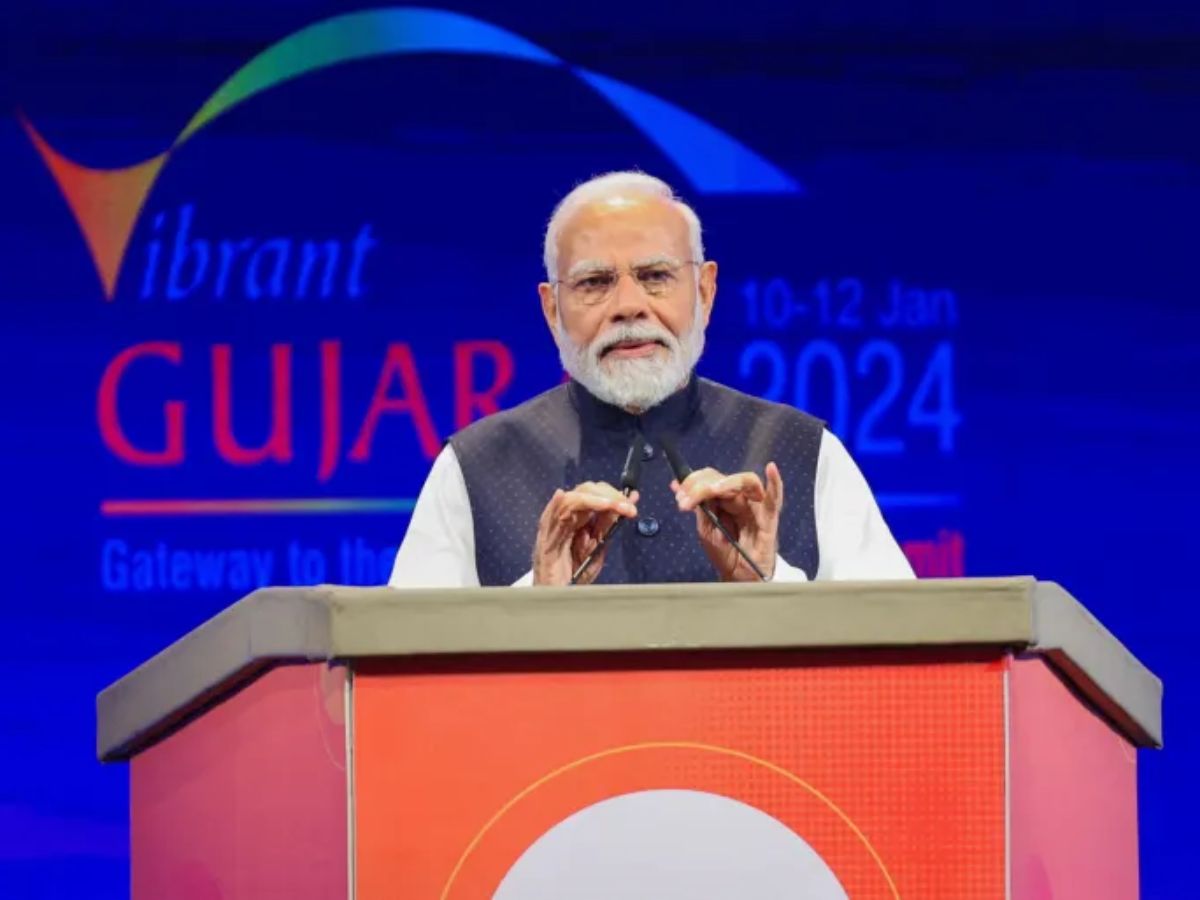
India under PM Modi has sought from 2014 onwards to ensure “Na Khaunga, Na Khane Doonga”. While the PM has around him a cadre of efficient and honest officials, and has made relentless efforts aimed at ending corruption in government, given the scale of the problem, the anti-corruption drive is still a work in progress.
Foreign policy has become a prime mover in economic progress, and a steadfast stance accompanied by courteous language has to be the norm. The IFS has been given every consideration under PM Modi, and the service still needs to work harder than the impressive levels that have already been notched up by the very capable IFS cadre.
Why this is so is because of the widespread corruption within the governance structure in India for decades before 2014. While a cleansing of the system has been carried out on a regular basis, so deeply is corruption embedded in the governance system prior to 2014 in several departments there remain a few corrupt individuals who pollute the entire system.
Providing a corruption free regime by 2029 therefore needs to be among the foremost objectives of Modi 3.0 so as to ensure a Modi 4.0 during the 2029 Lok Sabha polls. India has been a beacon for the Global South, navigating its way through the turbulence caused by the Trump tariffs in particular.
PM Modi has acted correctly and wisely in adopting a courteous tone even when there has been great provocation from the other side of the Indo-Pacific. By so doing, he has earned even greater respect than he previously had within several countries. Joining in a slanging match against President Trump would only rile him more, and as a consequence inadvertently spark off an escalation of an already fraught situation.
Among other achievements, the surge in domestic exports of defence equipment is noteworthy and is based on policy changes implemented during Modi 2.0. Defence imports need to shrink and defence exports rise even more exponentially during Modi 3.0, and this calls for an acceleration of policies and regulations designed to speed up exports. Such an effort needs to be supplemented by greater vigour in eliminating outdated and restrictive regulations and laws.
Modi 4.0 would be the prize for such efforts. It is a prize towards the fulfilment of which PM Modi and his team of politicians and officials are working for.




