
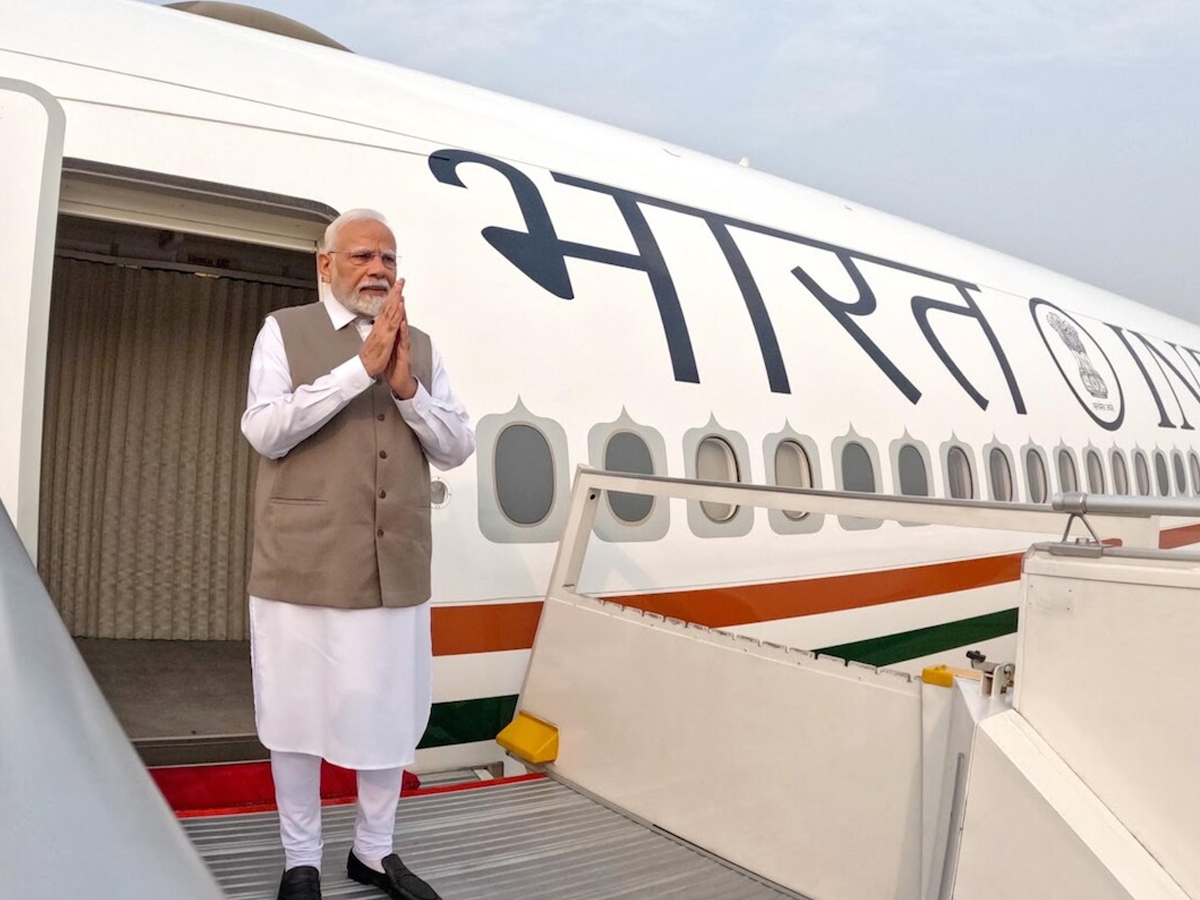
Prime Minister Narendra Modi’s recent three-nation visit to Jordan, Ethiopia and Oman represents a clear sharpening of India’s economic diplomacy at a moment when global trade is under strain, protectionist tendencies are re-emerging and supply chains are being reworked across continents. The tour was not a routine diplomatic exercise; it was a strategically structured engagement aimed at widening India’s trade reach, securing durable market access and improving the global competitiveness of Indian industry across West Asia and Africa.
What emerges most clearly from the visit is a shift in India’s external posture. Partnerships are no longer built around symbolism or rhetoric. Instead, they are being anchored in tangible economic deliverables, institutional arrangements and long-term commercial access. This approach was matched by an exceptional diplomatic endorsement: Jordan, Ethiopia and Oman each conferred their highest civilian honours on Prime Minister Modi, an unusual convergence that reflects the depth of political trust India now commands in these regions.
The most substantive economic outcome of the tour was the India–Oman Comprehensive Economic Partnership Agreement, a free trade pact that fundamentally alters India’s trade equation with the Gulf. The agreement eliminates duties on nearly all of Oman’s tariff lines and provides preferential access to virtually the entirety of India’s exports to the country, with most concessions taking effect immediately. For Indian exporters, particularly in textiles, agriculture, pharmaceuticals, engineering goods, automobiles and other labour-intensive sectors, this delivers instant cost competitiveness and long-term certainty.
Bilateral trade between India and Oman currently stands at approximately USD 12 billion, and official estimates indicate that the CEPA could raise this figure significantly in the coming years. For India’s MSMEs and export clusters, the agreement reduces exposure to volatile tariff regimes at a time when access to Western markets is becoming increasingly constrained by higher duties and regulatory barriers.
Oman’s value to India is also strategic. Its ports and logistics infrastructure position it as a gateway connecting South Asia with the Gulf, East Africa and beyond. As global firms seek alternatives to congested and politically sensitive trade routes, Oman offers Indian businesses a stable base for regional expansion. In this context, the CEPA strengthens India’s role in new supply chain networks spanning Asia, the Middle East and Africa, while helping diversify trade risk.
In Jordan, the emphasis moved beyond trade volumes to sector-specific cooperation. Agreements covering renewable energy, water management, digital public infrastructure and cultural exchange reflect India’s growing reputation as a provider of scalable and affordable solutions. Jordan’s acute water scarcity and energy transition needs create openings for Indian expertise in desalination, solar power, smart grids and sustainable urban planning.
Equally important is India’s export of institutional models. Its digital public infrastructure—capable of handling billions of low-cost transactions annually—has become increasingly attractive to middle-income economies seeking efficiency without fiscal stress. Jordan’s engagement with these platforms highlights India’s ability to export governance frameworks alongside technology.
The Jordan visit also carried strong symbolic weight. Senior leadership personally hosted and accompanied Prime Minister Modi, including high-profile instances of “car diplomacy,” where leaders themselves drove him to official engagements. Such gestures are rare and signal a high degree of confidence in both India’s leadership and the durability of the bilateral relationship.
The Ethiopia leg of the tour underscored India’s expanding role in Africa’s growth trajectory. The elevation of bilateral ties to a Strategic Partnership signals New Delhi’s long-term intent in one of the continent’s fastestgrowing economies. With a population exceeding 120 million and a growing manufacturing base, Ethiopia is emerging as a key commercial and diplomatic hub in East Africa.
Agreements signed in Addis Ababa span customs cooperation, digital and data infrastructure, education, artificial intelligence training and peacekeeping support. Together, they are designed to create a sustained framework for economic engagement rather than short-term transactional gains. India’s focus on education and skill development directly supports workforce readiness, which is essential for future trade and investment. India is already among Ethiopia’s major investors in sectors such as textiles, pharmaceuticals and agro-processing, and the new partnership is expected to deepen this presence.
India’s backing of Ethiopia’s debt restructuring under the G20 Common Framework further illustrates a measured and responsible approach to economic diplomacy. By supporting macroeconomic stability while safeguarding creditor interests, India is reinforcing its image as a long-term development partner. Ethiopia’s decision to confer its highest national honour on Prime Minister Modi reflects recognition of this balanced engagement.
Taken together, the three visits form a single, integrated economic narrative. Oman strengthens India’s Gulf trade architecture, Jordan expands its technology and services outreach in the Levant, and Ethiopia anchors India’s long-term engagement with Africa’s growth economies. This is not ad hoc diplomacy but a carefully sequenced strategy aimed at building trade corridors, reducing tariff friction and aligning Indian industry with markets that continue to offer strong growth potential. The focus on labour-intensive sectors is especially significant. By securing near-zero duty access in markets like Oman, India is reinforcing job creation at home while embedding its manufacturing ecosystem more deeply into global value chains. External engagement is thus being directly linked to domestic economic priorities.
A defining characteristic of India’s foreign policy under Prime Minister Modi has been the transition from presence-driven diplomacy to outcome-driven partnerships. Trade agreements are structured for early implementation, cooperation frameworks are tied to institutional capacity, and engagement is measured by execution rather than announcements. The Oman CEPA, Ethiopia’s capacityfocused collaboration and Jordan’s sectoral partnerships all reflect this shift.
The personal dimension of the tour cannot be overlooked. The conferral of highest national honours by three different countries, coupled with exceptional diplomatic courtesies, underscores the credibility India has acquired under Modi’s leadership. It signals an India that is viewed as reliable, economically consequential and capable of sustaining long-term partnerships. Modi’s leadership has brought consistency, strategic clarity and executional discipline to India’s economic diplomacy, aligning foreign policy closely with domestic development goals.
During the course of this three-nation tour, Prime Minister Narendra Modi was conferred the highest national honours by both Oman and Ethiopia. With these latest recognitions, the total number of international awards received by Prime Minister Modi during his eleven years in office has now risen to 29, underscoring the growing global acknowledgment of India’s leadership and diplomatic stature under his tenure.
Ultimately, Prime Minister Modi’s three-nation tour reinforces a defining feature of India’s global engagement today: diplomacy is being shaped by economic outcomes.
By widening market access, lowering trade barriers, embedding Indian capabilities across regions and earning deep political trust, India is expanding its global economic footprint in a calibrated and sustainable manner. At a time of uncertainty in the international trading system, the message is clear—India is choosing strategic expansion, not retrenchment, backed by partnerships that are rules-based, diversified and built for the long term.
BJP National Spokesperson




