It emphasizes the importance of strong international partnerships, vigilance against hybrid threats, and continued diplomacy for societal stability and security. (Image: X)
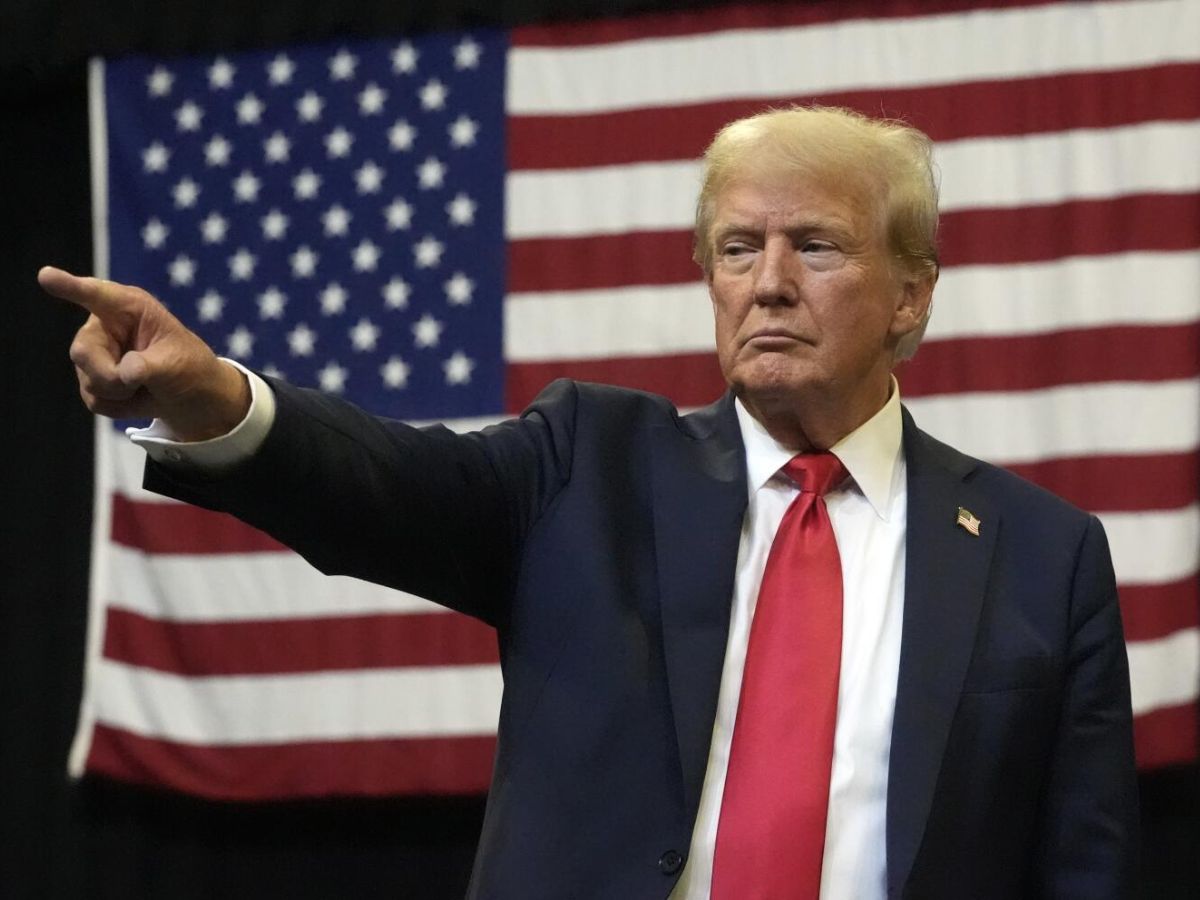
Independent researchers have concluded that in New York the algorithms used in making searches on TikTok may be favouring Democratic candidate Zohran Mamdani over Independent candidate Andrew Cuomo. Hardly a surprise, as among the many countries, some not so secretly, rooting for Mamdani include China. The first major country to ban TikTok was India, but the US did not follow suit. Instead, President Trump opted for a partial buyout of TikTok stock, with US investors having the majority stake. Such a decision did not faze Byte Dance, the PRC company owning TikTok. The reason is that Wall Street is crowded with US companies directly or indirectly having a substantial Chinese stake in their investment kitty. Now the decision of President Trump to keep TikTok functioning in the US is having a host of unintended consequences, the partiality towards NY Mayoral candidate Mamdani being among them. Given that contingencies could occur in any US administration no matter who the President be, Vice-President J.D. Vance needs to step cautiously while following in the wake of President Trump. Although the President himself is not a racist, defending those who use language harking back to Nazi-controlled Germany of 1933-45 is not a vote getter. Overall, American citizens have a strong streak of decency and sense of justice. Such traits explain the withdrawal of the nomination for an important administration post of a 30-year-old candidate whose online history at the least has more than a whiff of ethnic prejudice. Why vetting was not properly carried out while choosing Paul Ingrassia is unknown, but enough Republicans in the US Senate proved their quality by publicly declining to vote in his favour. As a consequence, the nomination was quietly withdrawn. The India Caucus in the US Congress is still among the largest, and doing much if usually low-key work on ensuring that the strength and resilience of the India-US partnership continues. Meanwhile, India is having to navigate safely in the geopolitical storm created by the actions of the Trump administration. From the start of his ascension to the office of Prime Minister in 2014, Narendra Modi has hewed to a policy course that favours a strong India-US partnership, a course that continues. While being based on the foundation of helping ensure that the Global South actualises more and more of its immense potential, India has established cordial ties with Canada and the UK, and is looking at concluding a mutually satisfactory trade agreement with the EU as indeed with the US. Although the latter seems a distant prospect at present, the auguries are still in favour of such an agreement on trade. It will be noticed that at the highest level of government, the response even to the more inflammatory social media posts of President Trump has been polite, indeed cordial. And every warm post of the US President about India has met with a warm response by PM Modi. More, much more important than questions of ego is the fact that a strong partnership with the West and India is beneficial to both sides, as also in contributing to the security of both sides, especially in the Indo-Pacific. It is not yet clear that there will not be a recourse to kinetic measures by China in an effort at taking over Taiwan. The politics of that technological big power has generated two major political parties, the Kuo Min Tang (KMT) and the Democratic Progressive Party (DPP). Of the two, the KMT is assuredly friendly to China, but this is in the context of mutual cooperation between China and Taiwan, rather than allowing absorption of the island nation by China. And while the partnership between the West and India continues, so does the partnership of India with other countries in Asia (especially those in the GCC and ASEAN), Africa and South America. Not just trade, but people-to-people, educational and cultural exchanges between these countries and India have been steadily growing, to the benefit of both sides. The best way of ensuring societal stability is not through conflict, but through cooperation. India never forgets its friends, whether in good times or bad, which is why relationships with other countries have uninterruptedly continued through the decades. When will such storms cease and the world experience healing calm? The answer may sound cynical, but the fact is that such a transformation appears to be too distant on the horizon to see. Hence the need to ensure battle-readiness, to protect against the various forms taken by hybrid war. Building shields against algo warriors used by hostile states to cause dissension and violence within countries. Ensuring security of food, health, education and employment, lack of any of which causes misery and tension. Surveillance, constant surveillance, to ensure that defences are built against potential and present adversaries. Above all, partnerships within and externally with those who are also at risk of potential attack so that any intending attacker knows the cost to itself of such a misadventure will be enough to deter it. Navigating through storms is the forte of the master mariner, and in all the fields mentioned, achieving immunity requires personnel who are capable and equipped to protect against such risks.
