Selling Nvidia’s H200 chip to China is a blunder.
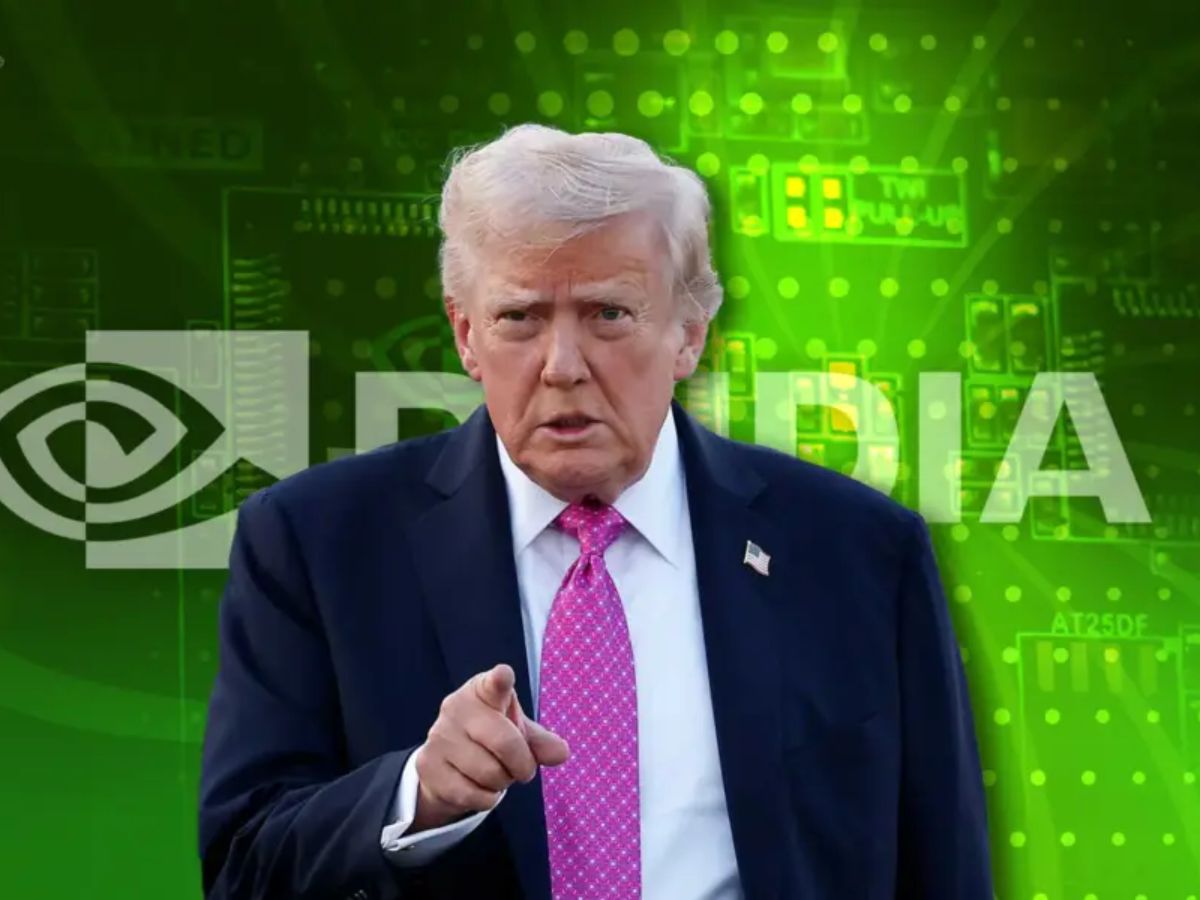
Nvidia: Trump makes a costly mistake (Image: TECHi)
Donald Trump’s decision to allow Nvidia’s H200 chip sales to China may look like a tactical win for US industry, but it is a strategic blunder that risks empowering Beijing’s AI ambitions at America’s expense.
When President Donald Trump announced on his Truth Social account that Nvidia would be permitted to sell its H200 processors—the company’s second most powerful AI chip—to “approved customers” in China, he framed it as a pragmatic compromise. The deal comes with a 25% tariff or revenue share for the US, ostensibly ensuring that American taxpayers benefit. Yet beneath the rhetoric lies a dangerous gamble.
The H200 is not Nvidia’s flagship Blackwell chip, but it is still a cuttingedge processor designed for high-performance computing and advanced AI training. Trump’s justification rests on short-term economic gains. Nvidia, like other US chipmakers, has lobbied hard against export controls, arguing that restrictions only strengthen Chinese domestic champions such as Huawei. Allowing sales to China provides immediate revenue and keeps Nvidia competitive. But this is precisely the kind of short-term thinking that sacrifices long-term strategic advantage for quarterly profits. The risks are stark.Advanced chips are dual-use technologies. They power breakthroughs in medicine and science, but also enable military simulations, hypersonic weapons design, and mass surveillance. Passing them to China accelerates capabilities that directly challenge US interests. America’s edge in semiconductors is one of its last uncontested advantages. Diluting export controls erodes that lead, giving Beijing time to catch up and eventually surpass US firms.
Restrictions on high-end chips were one of Washington’s few effective tools to slow China’s AI development. Relinquishing that leverage for tariffs is akin to selling the crown jewels for a quick payout.
Trump’s defenders will argue that the H200 is not Nvidia’s most advanced chip, and that Blackwell and Rubin processors remain off-limits. But this misses the point. Even “second-best” chips are far ahead of what China can produce domestically today. Every shipment accelerates Beijing’s ability to close the gap, while US policymakers lose bargaining power.
In the long arc of geopolitics, this decision reflects a troubling pattern: prioritizing transactional deals over strategic foresight. America’s semiconductor advantage is not just an economic asset—it is a pillar of national security. By loosening restrictions, Trump has chosen immediate profit over enduring strength. The consequences may not be felt tomorrow, but in five or ten years, when China’s AI ecosystem rivals or eclipses America’s, this moment will be remembered as a turning point.
In short, freeing Nvidia’s H200 sales to China is not a clever balancing act—it is a costly miscalculation. The US cannot afford to trade away its technological edge for tariffs and short-term gains.
Nephew of the Dalai Lama, Khedroob Thondup is a geopolitical analyst.
