
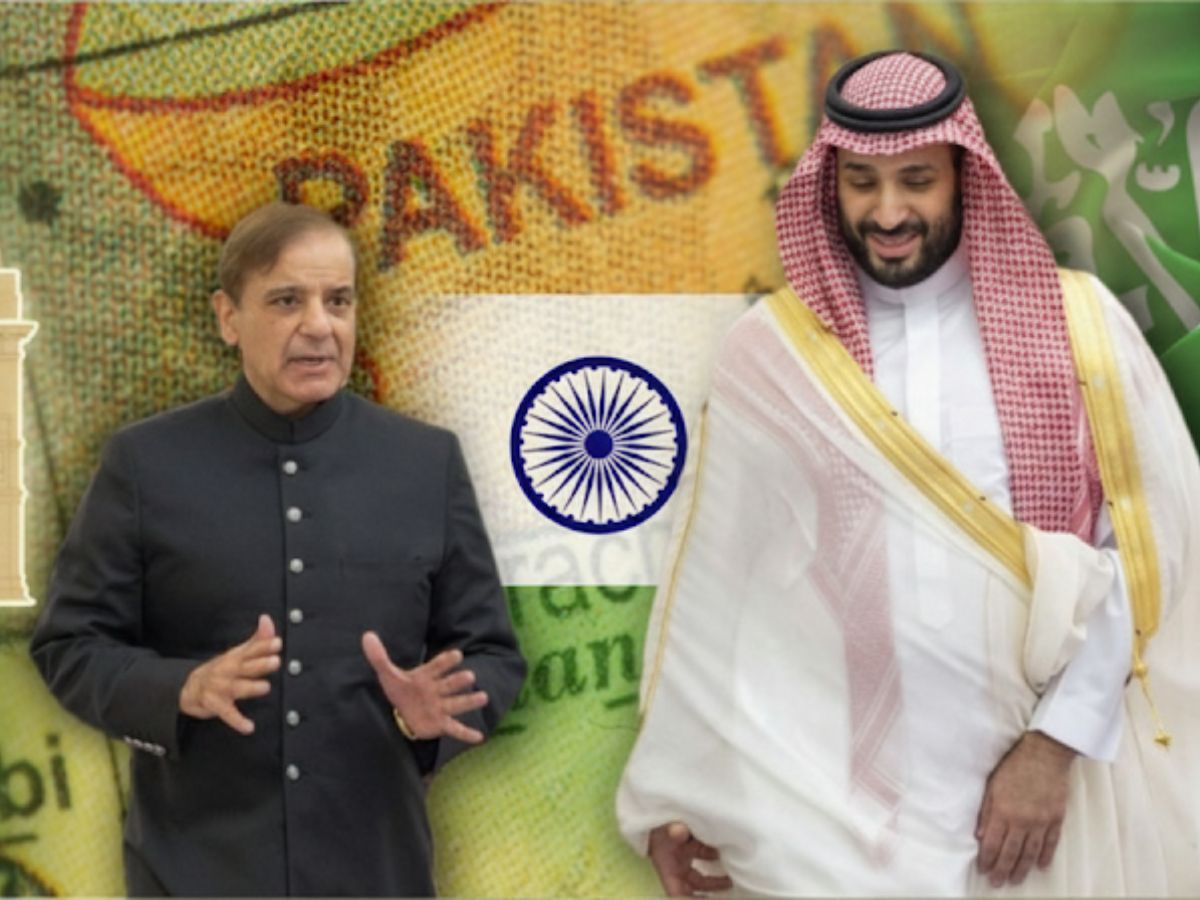
On 17 September 2025, Saudi Crown Prince Mohammed Bin Salman and Pakistani Prime Minister Shehbaz Sharif signed the Strategic Mutual Defence Agreement (SMDA). A core provision of the treaty is a collective defence clause that is like the NATO Treaty Article 5: any aggression against one country “shall be considered an aggression against both.”
In an article I wrote for The Sunday Guardian in April 2022, I argued that a country has three choices: be under a nuclear umbrella, make your own bomb, or be afraid. This article will highlight the SMDA’s key points, and briefly discuss its implications regionally and globally.
The first observation is that the Saudis’ chief incentive to seek the SMDA is Iran’s nuclear weapons development program. Although most Middle East military analysts believe that Israel has a stockpile of nuclear weapons, the Kingdom of Saudi Arabia’s (KSA) leaders never seriously worried about them. Second, since KSA now is under an Islamic Republic of Pakistan’s (IRP) nuclear umbrella, KSA will no longer seek to be under an American nuclear umbrella. Recall that in September 2023, before the 7 October Hamas pogrom against Israel, the Biden administration declared that the US and KSA were discussing a mutual defence treaty that was similar to US defence treaties with Japan and South Korea that included a nuclear umbrella.
On 4 October 2023, 20 Democrat Senators sent a letter to President Biden outlining their concerns about the proposed defence treaty with the KSA. The Senators noted that KSA is “an authoritarian regime which regularly undermines U.S. interests in the region, has a deeply concerning human rights record, and has pursued an aggressive and reckless foreign policy agenda.” To be seen as even-handed in their criticism of the KSA, the Senators also urged Israel to not construct housing outside of the 1967 Six-Day War armistice lines, and to agree to a “two-state solution.” Yet, the Senators’ 2023 letter chilled immediate prospects for a US-KSA mutual defence treaty, a KSA-Israeli rapprochement, and the Saudis sought an alternative to a US nuclear umbrella.
China claims to have calmed the KSA and Islamic Republic of Iran’s (IRI) mutual hostility in March 2023, however, concerns remain about IRI’s expansionist and destabilizing behaviours, especially the Iranian Islamic Revolutionary Guard Corps’ (IRGC) staunch support for violent and revolutionary Islamic groups, including Hezbollah, Hamas, Houthis, and Iraqi Shia groups. In 2014, Saudi Arabia banned these groups as well as the Muslim Brotherhood, a transnational Sunni terrorist group that inspired ISIS, Al Qaeda, and Hamas.
A third observation is that there is more to SMDA than meets the eye. The IRP is the only Muslim majority country with a nuclear weapons production capability, a stockpile of weapons, and their delivery systems. Prior to the Organization of Islamic Cooperation (OIC) emergency summit on 15 September 2025, Pakistan’s Deputy Prime Minister and Foreign Minister Mohammad Ishaq Dar promised: “A nuclear-powered Pakistan obviously would stand as a member of the Ummah [community of Muslim believers]. It will discharge its duty.”
In 2018, Crown Prince Salman, during a CBS interview, responded to a question posed about acquiring nuclear weapons: “Saudi Arabia does not want to acquire any nuclear bomb, but without a doubt if Iran developed a nuclear bomb, we will follow suit as soon as possible.” Crown Prince Muhammad bin Salman may have been following a Saudi policy analysis first articulated in 1988. In early 2003, the UK Guardian leaked a KSA strategy paper which outlined its search for a nuclear capability. The policy paper described three options KSA could employ to address nuclear weapons: (1) establish its own nuclear weapons development program; (2) ally with another nuclear power to provide a nuclear weapons umbrella; or (3) convince all Middle Eastern countries to forego nuclear weapons, The Saudi-Pakistani SMDA aligns with the second option. KSA could also collaborate with IRP and possibly with Chinese support to secretly pursue the first option.
With this as prelude, I argue that KSA intelligence has determined that IRI will withdraw from the Non-Proliferation Treaty (NPT) which would signal the IRI’s intent to develop nuclear weapons. To date, North Korea is the only country to formally withdraw from the NPT and produce nuclear weapons. For comparison, although India, Israel, and Pakistan did not join the NPT, all possess stockpiles of nuclear weapons and delivery systems.
The SMDA means that Saudi Arabia is treaty obligated to assist Pakistan if a war breaks out between India and Pakistan. In a protracted IRP-India war, the KSA, especially using its wealth, could shift the balance of power in favour of the IRP. The SMDA also has implications for China’s weapons exports. Between 2020 and 2024, Pakistan accounted for 63% of China’s total arms exports. China will sell more of its hardware to Pakistan paid for by KSA, and KSA could start replacing or augmenting its western weapons with Chinese systems.
The SMDA also affects the future of the India-Middle East-Europe Economic Corridor (IMEC), because shipping through the Red Sea to and from India is at risk during a conflict as it transits along 1,800 kilometres of Saudi Arabia’s Red Sea western coastline. Thus, the SMDA benefits Pakistan and China.
Related to the SMDA was Sharif’s six-day official state visit to China from 30 August to 4 September where he attended the Shanghai Cooperation Organization meeting, met with Xi Jinping on 2 September, and attended the CCP military parade on 3 September. Saudi Foreign Minister Faisal bin Farhan Al Saud met with Chinese Foreign Minister Wang Yi (20 February 2025) and the Crown Prince met with Chinese Premier Li Qiang (11 September 2024). Direct meetings between Pakistani and Chinese and Saudi officials reveal that the SMDA had CCP approval and probable encouragement.
Connecting additional dots, KSA purchased Chinese weapons systems, including ballistic missiles (DF-3A intermediate ballistic missile [1988], DF-21 medium-range ballistic missile [2007], and other DF missiles [2018]). KSA also bought from China the capability to produce missiles [2021]), drones (CH-4 [2014], Wing Loong (Pterodactyl) drones [2016], Wing Loong II [2017], Wing Loong-10B [2024]), SkyShield laser anti-drone system, and air defence systems (HQ-17AE and HQ-22 [2024] air defence missile systems). The SMDA could be another avenue for KSA to secretly receive other sophisticated Chinese weapon systems, including nuclear weapons and their delivery systems.
With China’s strong defence, economic, and political connections to Pakistan, Iran, and now enhanced with Saudi Arabia, the strategic alignment in Asia is changing in ways that threaten the US and regional democratic countries such as India and Israel. Will this new alignment expand to the Gulf Cooperation Council, the Arab League, and even the OIC?
What should India, Israel, and the US do about this menacingly growing strategic alignment? Should the Quad between India, US, Japan, and Australia be enhanced? Should India deepen its bilateral defence and security relations with the US beyond the four foundational defence security agreements? What other bilateral and multilateral mutual defence treaties would checkmate the SMDA and China’s growing influence?
Guermantes Lailari is Visiting Scholar at National Chengchi University, Taipei, Taiwan (ROC).




