Pakistan rebuilds ties with Trump 2.0 amid fresh Kashmir terror, rare earth talks, and renewed US security cooperation.
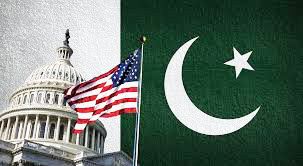
Much before the Pakistan-backed terrorists brutally killed tourists in Kashmir’s Pahalgam in April this year, the Pakistani government had begun to cultivate the Trump Administration. By the time the Pahalgam terror attacks jolted the people and shook the security forces in Kashmir, Pakistan had already succeeded in slowly but systematically wooing the Trump 2.0 Administration. Indian strategic community had almost ignored Pakistan as a constant security threat to India and the government-to-government relations were nil or negligible for years.
While life was inching back to normalcy in Kashmir in the absence of Islamabad-inspired terror attacks, Pakistan was in deep economic crisis, repeatedly seeking a bailout from the International Monetary Front, was in a state of political turmoil since the removal of the Imran Khan government and his imprisonment in 2022, and was unable to contain the frequent political violence in Pakhtunkhwa and Balochistan. It appeared that the Pakistani establishment would now stop exporting terror across the border and would rather focus its attention to keep its house in order. India had little to be concerned over the security threat from the Western border and inattention of the strategic community to factor Pakistan as a security threat was understandable.
Moreover, India’s attention was drawn more towards the political upheavals in Bangladesh; with Pakistan and China making the best use of rising anti-India sentiments in that country. With fast developing stories on emerging military to military connect between Pakistan and Bangladesh and the China connection thereof, there was general belief that terror attacks in Kashmir were a remote possibility. India also appeared to have drawn considerable confidence from its responses to Uri and Pulwama terror attacks, which perhaps shaped the Indian thinking that Pakistan would be discouraged from rekindling its cross-border terror enterprise. Where did the Pakistani establishment’s confidence come from this time? Among many sources, one prominent source was perhaps its ability to build friendship with Washington under the new Trump 2.0 Administration.
About a week after President Trump’s inauguration, an American delegation of investors headed by Texas Hedge Fund manager and a close friend of President Trump, Gentry Beach landed in Islamabad. It was this gentleman who had strongly recommended to his friend in the White House to strengthen US ties with Pakistan. Weeks before the Pahalgam attack, another US delegation had visited Islamabad to explore inking an agreement to promote crypto currency cooperation between Pakistan and the United States. Significantly, the US delegation included Zachary Witkoff, the son of Trump’s Special Envoy for Middle East, Steve Witkoff. A Letter of Intent was signed during this meeting between World Liberty Financial and Crypto Council of Pakistan. Pakistan’s intention was to establish cooperation on an issue that is dear to President Trump and some of his family members. Interestingly, according to some reports, the IMF had suggested that Pakistan should bring crypto currency into its tax net to address a part of bailout debts. During the early months of the Trump Administration, the friendship of Trump with Elon Musk was the talk of town around the world.
Pakistan had received an application for licence to launch Musk’s Starlink in January of this year. Pakistan timed its NOC to Starlink as part of its approach to address the tariff threat from President Trump in March 2025. The most significant step that Pakistan took to cultivate the Trump Administration was to promote itself as a victim of terrorism and as an important partner of the United States in counterterrorism. While according to reports, terror activities in Pakistan had increased by about 45 percent from the previous year in 2024, Pakistan cooperated with US intelligence agencies, caught and handed over a deadly and wanted terrorist responsible for the 2021Abbey Gate bombing in Kabul, to the US. President Trump bestowed high praises on Pakistan in his address to the US Congress in March 2025, indicating enhanced attention of the administration to build security ties with an old US ally. This was in contrast to his perception of Pakistan in 2018 as a country that gives nothing but “deceit and lies” to the United States.
The new attention on US-Pakistan security cooperation came for a test when there was a terrorist attack on Jaffar Express train in Balochistan, barely a week after Trump’s speech in the US Congress. President Trump’s response to this attack is on record and it highlights the depth of his intention to rebuild ties with Pakistan. While condemning the terror attack in strongest of terms, Trump said: “…the United States will remain a steadfast partner of Pakistan to ensure the safety and security of all its citizens.” (Emphasis added). From near isolation, better days were ahead for Pakistan. An elated Pakistani government promptly offered its help when the Trump Administration began to search for rare earth materials in the face of Chinese embargo. Eric Meyer, a senior Bureau official of the US State Department visited Pakistan in early April and conveyed that President Trump’s one among many priorities was to secure reliable sources of rare earth materials, and Pakistan expressed its readiness to cooperate.
By the time the Pahalgam terror attack took place, Pakistan had already succeeded in renewing its cooperative ties with the Trump Administration. The degree and manner of response of the Trump Administration to the brief armed conflict between India and Pakistan in May 2025 has to be understood in this background. While the international order is severely disrupted largely due to the foreign policy of Trump 2.0, the global political economy is afflicted with uncertainties due to the tariff war unleashed by President Trump, and American allies around the world have expressed—sometimes silently—grievances against Trump’s policies, Pakistan has succeeded in restoring its close ties with the United States.
Invitation to Field Marshall Asim Munir of Pakistan for a luncheon meeting with President Trump, reports about the prospective visit to Pakistan by the mercurial American President in September, and several other developments symbolize a new spring in US-Pakistan relations. But will it endure? History of the relationship between these two countries has a different story to tell. President Trump’s tendency to keep changing his opinions and policies are well known. Is there a different message for Pakistan in the US State Department’s designation of “The Resistance Force,” responsible for the Pahalgam terror attack, as a terrorist organization?
Chintamani Mahapatra is Founder Chairperson of KIIPS and Editor of India Quarterly.
