
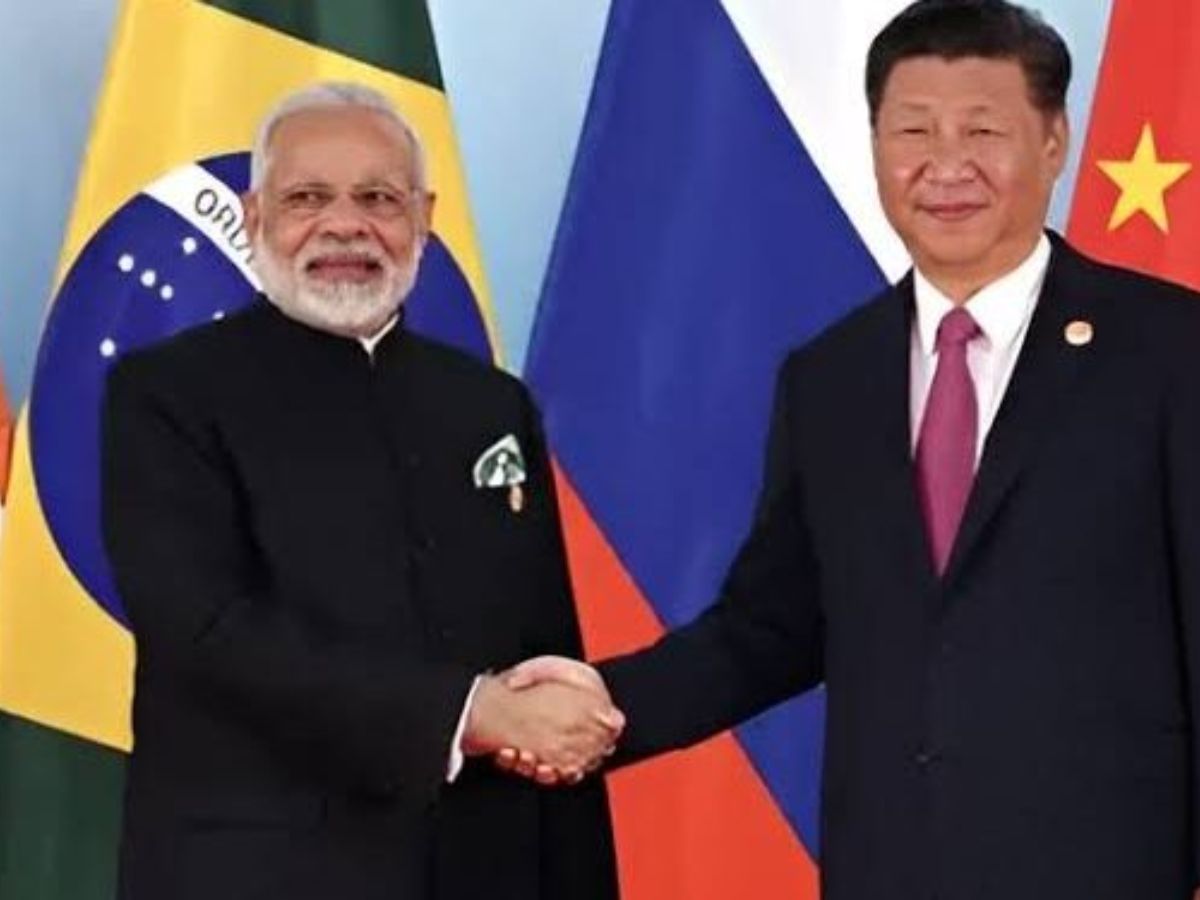
Prime Minister Narendra Modi’s two-nation visit, to Japan and China, comes at a time when US President Donald Trump has declared a tariff war on the global economy, mainly targeting India citing a frivolous reason that India’s oil purchase from Russia is the prime cause of the Russia-Ukraine conflict. Laughable as it may sound, India needs to understand the economic and geopolitical fallout of the tariff war. While dealing with Trump’s tariff missiles is an independent course that New Delhi will have to chart, PM Modi attending the 26th Shanghai Cooperation Organisation (SCO) summit to be held at Tianjin coinciding with his China visit after a gap of seven years, will be seen in connection with the ongoing tariff war.
Though SCO summits, like BRICS summits or those of G7 and G20, are regular and routine affairs, this year’s summit in China assumes greater importance. The last BRICS summit held at Kazan, Russia, hit the headlines for its discussion on finding an alternative to US dollar as the currency for international trade settlements, ending up being labelled as the “de-dollarisation” summit. The SCO summit in China, coming at a time when major economies of member countries like India, China and Russia are facing Trump’s tariff wrath, will be likely labelled as “anti-US forum”, though India would be best advised to avoid being drawn into any such grouping.
During the run-up to the Samarkand summit, the then Secretary General of the SCO, Zhang Ming, a seasoned Chinese diplomat, while setting the tone and tenor of the group’s agenda, had suggested that SCO is a forum that aspires to emerge as a “non-aligned” group to counter the North Atlantic Treaty Organisation (NATO), which China and Russia blame for the Ukraine crisis. So far, there have been very few attempts, at least by the major member countries of the SCO, to conceal the group’s “anti-West” mindset. India chaired the group’s summit held at Varanasi, highlighting SCO’s agenda to promote tourism, condemn terrorism in all forms and provide collective leadership to tide over issues like sustainability and global warming. Notwithstanding India’s intent to keep the SCO a regional forum, the then Secretary General Zhang tried elevating SCO to the status of a global organisation and was not interested in creating “small circles”, a snide reference to US-initiated Quad of which India is an important member.
The SCO Defence Ministers’ meeting held at Qingdao in June 2025 ended without adopting a joint statement as Defence Minister Rajnath Singh refused to sign on the dotted lines of the joint communique which did not mention Pahalgam terror attack, nor a line in condemnation of Pakistan, from whose soil the terror attack was sponsored. The Defence Minister’s suggestions on the need to counter the technology used by terrorists including drones for cross-border smuggling of weapons and drugs, and his warnings that traditional borders are no longer the sole barriers against threats in this interconnected world, fell on deaf ears of the 10-member group spearheaded by Beijing. His reminder of the joint statement of the Council of SCO Heads of State on “Countering Radicalisation leading to Terrorism, Separatism and Extremism”, issued during India’s chairmanship also failed to evoke any positive response.
The SCO has two important units, the Secretariat in Beijing and the Executive Committee of the Regional Anti-Terrorist Structure (RATS) in Tashkent. The SCO Secretary General and the Director of the RATS Executive Committee are appointed by the Council of Heads of State (CHS) for a three-year term. Zhang Ming of China and R.E. Mirzaev of Uzbekistan took office as the SCO Secretary General and Director of the RATS Executive Committee respectively in January 2022. It is strange as much ironical that the neither the RATS Director nor any other member intervened in India’s favour to redraft the resolution to respect New Delhi’s concerns and sentiments.
After the “pause” in the military action against Pakistan-based terror bases, codenamed “Operation Sindoor”, China was among the first countries to pat Pakistan for peace efforts. Describing Pakistan as an “iron-clad friend”, Chinese Foreign Minister Wang Yi, in a phone call with his Pakistani counterpart Ishaq Dar, reaffirmed China’s support for Pakistan in safeguarding its sovereignty, territorial integrity, and national independence. Incidentally, last week, straight after his meeting with Prime Minister Modi in Delhi, Wang Yi held China-Afghanistan-Pakistan troika talks in Kabul on including Afghanistan in the China-Pakistan Economic Corridor (CPEC), much to New Delhi’s annoyance.
The West, especially the US would read India’s involvement in the SCO as becoming part of its “anti-West-anti-US” agenda and an extension of the de-dollarisation process, which in reality is far from the truth. The White House should know that it is Trump’s illogical actions, statements and weaponisation of tariffs that are forcing India to go back to Russia-India-China axis in the context of geopolitical dynamics.
For India, reestablishing cordial relations with China is not easy or comfortable. This is especially so when the border issue remains unresolved, the wounds of Galwan, fresh in public memory, are not yet healed, Beijing’s support to the CPEC is an infringement of India’s territorial integrity, and Washington-Beijing economic interests are appearing to be converging in the troubled Baluchistan.
If America begins to lose its position of primacy in global affairs and allows China and Russia to lead the new emerging world order, the blame should entirely at the door of the White House and its present “punish India” policies. India is capable of surviving the tariff onslaught. Can America regain its strategic space in Asia and South Asia, if it loses it due to Trump’s tantrums?
* Dr Arvind Kumar is Professor at School of International Studies, JNU. Dr Seshadri Chari is Professor Emeritus at Savitribai Phule Pune University.




