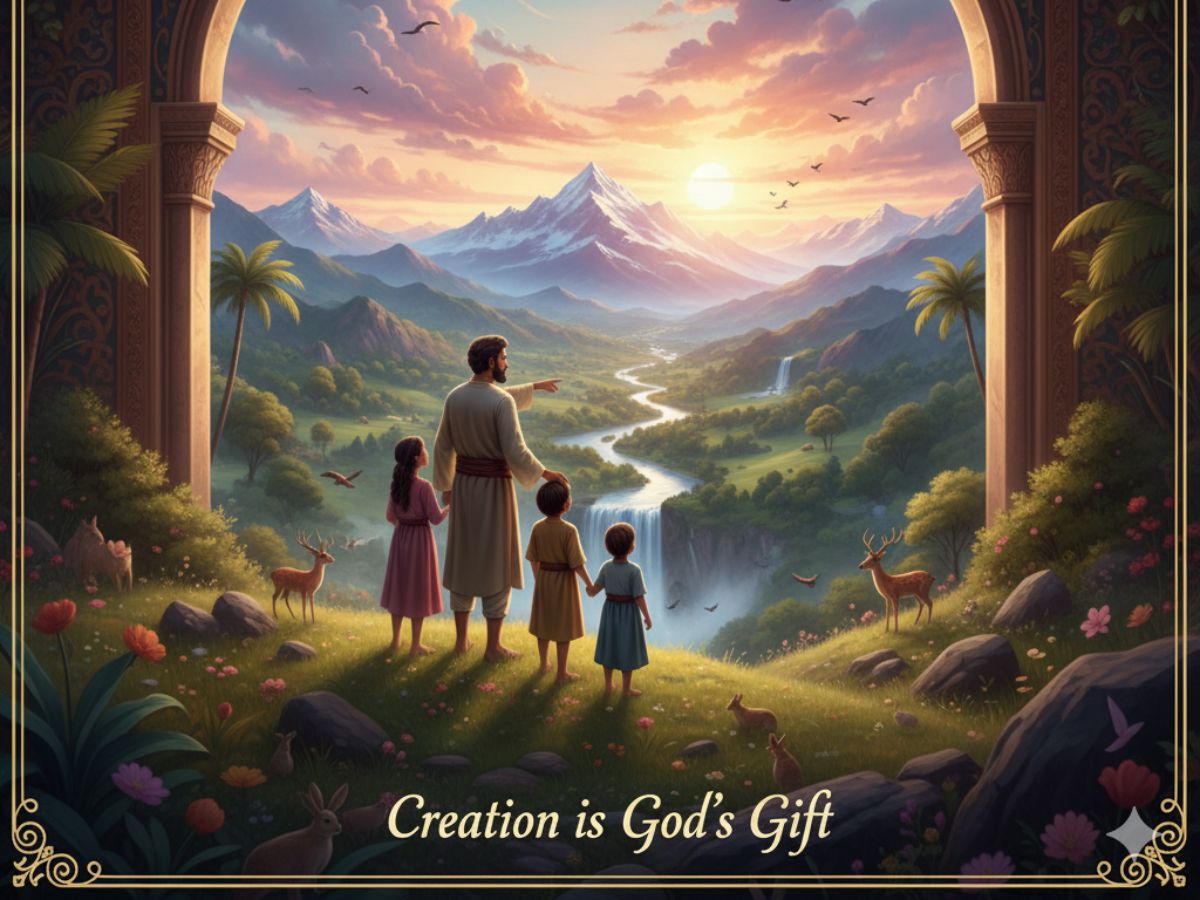
Rev. Dr. Richard HowellWhen we open the first page of Scripture, we hear the words: “In the beginning God created the heavens and the earth” (Gen. 1:1). At once we are invited to see the world not as an accident of chance, nor as the product of violence, but as the gracious gift of God. Creation is God’s free offering, flowing from divine love rather than necessity. Augustine once prayed, “You created them out of the abundance of your goodness, since you had no need of them”. That confession sets the tone: everything we see, touch, and breathe is gift.
Genesis declares repeatedly that what God made was “good” and, in the end, “very good” (Gen. 1:31). This is not just a verdict on material things, but a testimony that the whole creation is charged with goodness because it comes from God’s hand. Creation is not disposable. It is beloved. To exploit it is not simply bad stewardship; it is a failure to honour God’s generosity. The Sabbath at the end of creation week reveals the purpose of the gift. God rests, and humanity is invited to rest with him. “The sabbath is the feast of creation, the presence of eternity in time.” Sabbath teaches us that creation’s goal is not endless striving, but delight in God’s presence.
This gift is entrusted to us in community. Genesis 2 shows that it is not good for the human to be alone; our vocation is shared. We discern together how to care for the earth, how to use its fruits for justice, and how to offer them back in thanksgiving at the table of the Lord. Humans are not masters but “fellow members with God’s other creatures in the community of creation. So let us receive creation with gratitude, use it with reverence, and share it with love. Let us remember each sunrise, each breath, each meal, is gift. And as we give thanks, may we live as people who know the world is not ours to possess but God’s to entrust.
