
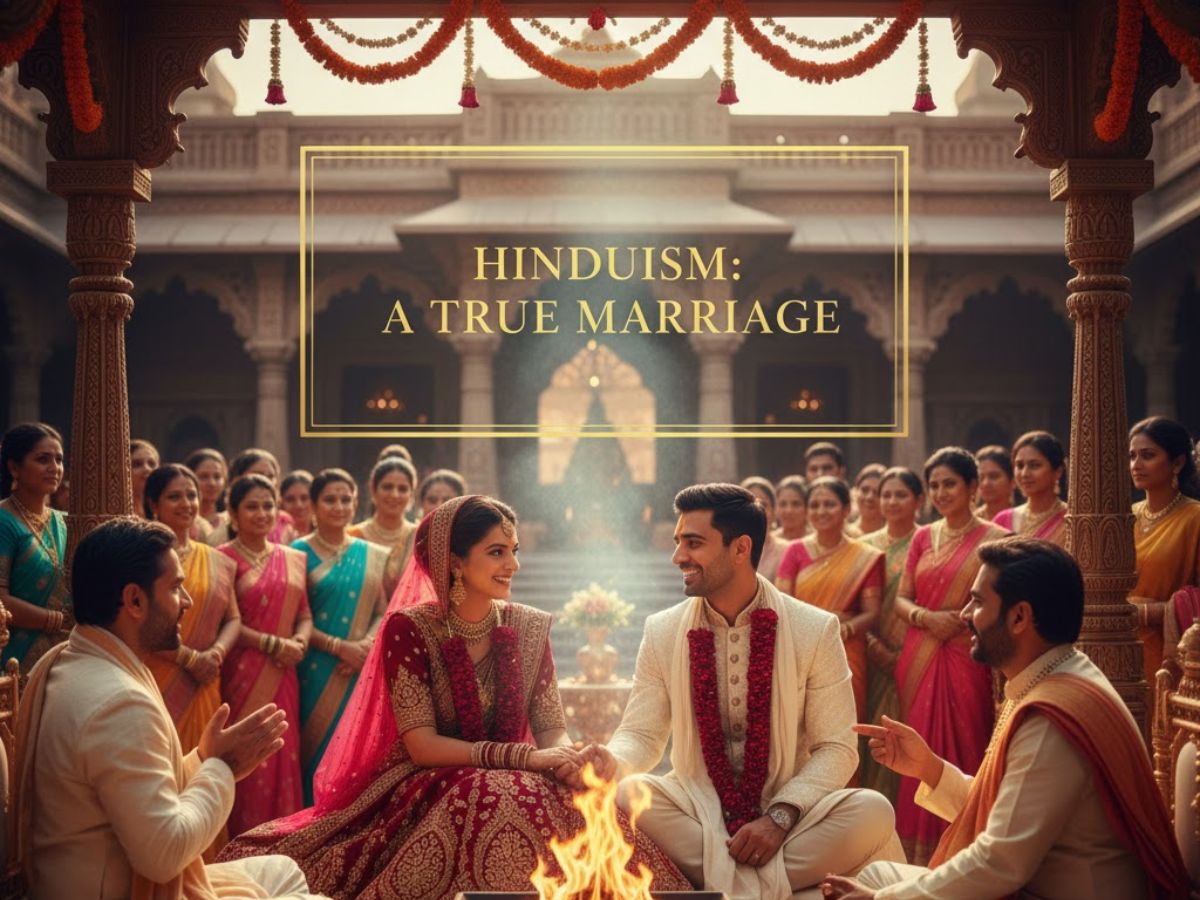
Pujya Gurudev Swami Chinmayanandaji always highlighted the grihastha ashram, a householder’s life, as the highest type of service to society. All the rest of the ashrams depend on this stage of life for their sustenance and growth. Marriage in the Hindu scriptures is listed as one of the holiest and purest of relationships. The strength of matrimonial togetherness is the support of an integrated family life, and thereby the bedrock of human values of harmony, unconditional family love and emotional bonds.
Swami Chinmayanandaji once wrote in reply to a wedding invitation: “Both of you together can face any amount of challenges in life. This is the true meaning and purpose of marriage. Material and worldly ups and downs are to be expected. They come and go. In their stormy play when you are holding firmly your hands together, each can give to the other a steady balance. This is the significance when Hindus consider their wife as Saha-Dharma-Charini—a companion to live together in dharma. In reply to another wedding invitation, he wrote back to the mother of the groom, “Tell the children that another name for marriage is sacrifice.” That is letting go of selfishness in thought and action.
Once a very old couple that had been married for sixty years was asked the secret of their happy married life, and how they resolved the differences between them. The answer was simple. “We love each other, not ‘because of’ but ‘in spite of’.” True love is unconditional, never asking what the other can do for you, but asking yourself always, what you can do for the other. So said the Buddha, “Love cannot exist without understanding. Love is understanding. If you cannot understand, you cannot love.”
-
Prarthna Saran, President Chinmaya Mission Delhi.




