
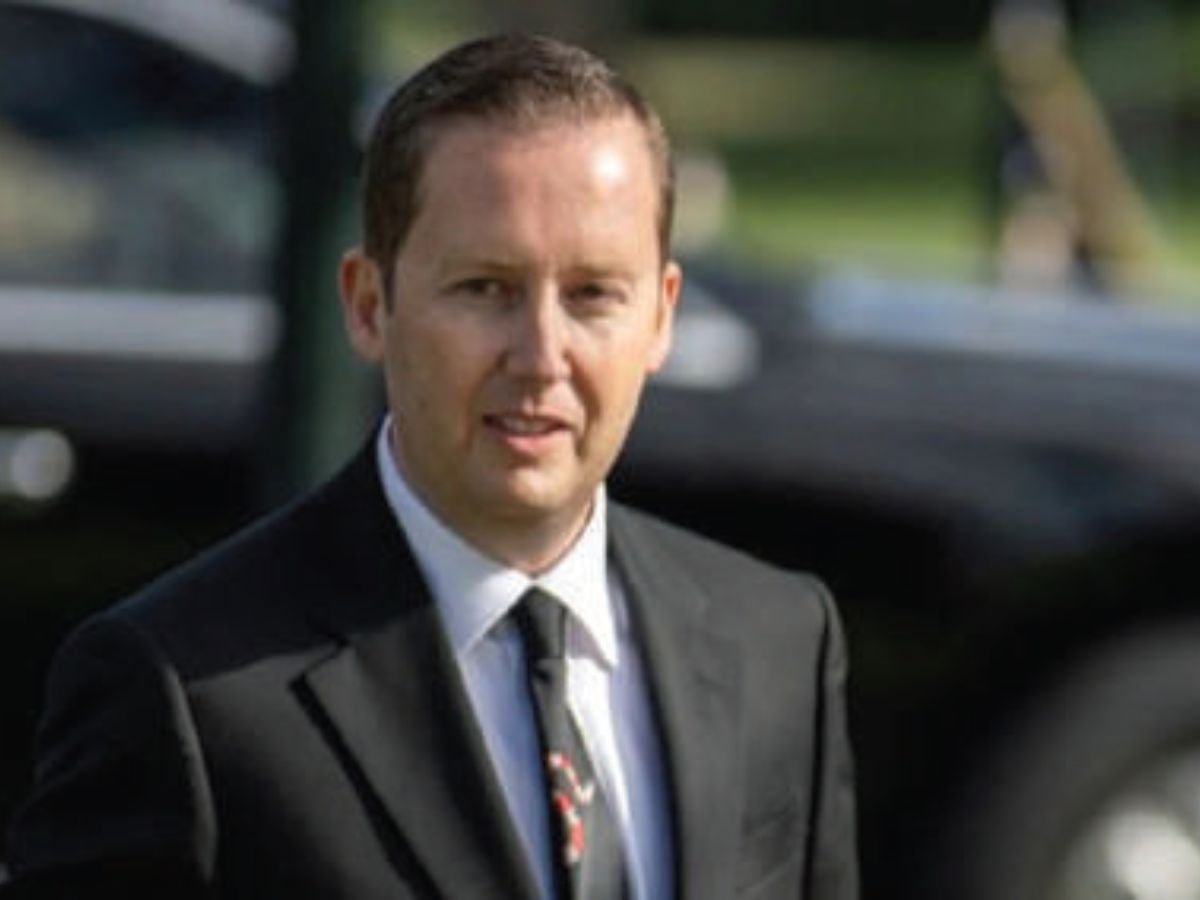
The new American ambassador, Sergio Gor, the youngest ever to hold this post in India, has been making diplomatically appropriate statements in a soft, friendly and conciliatory tone, which is welcome. We wish him well. But his sweet talk ought to be emulated by some members of the Trump administration back home who make hawkish, arrogant, offensive and diplomatically inappropriate comments about India and Indian leaders. The US administration should let Gor smoothen the passage, the content, direction and the discourse of bilateral relations. Given his known proximity to President Trump and the trust that he seemingly enjoys, Sergio Gor can play a pivotal role to help remove the wrinkles in the relations and expand and deepen them with a broader strategic perspective rather than get bogged down in the narrow prism of bilateral trade.
He says, “no partnership is more essential than India”, and India-US relationship is the “most consequential global partnership of this century”, reminiscent of the sentiments expressed by Presidents Bush, Obama and Biden. If this is true, why impose the highest tariffs (50%) on India and threaten to impose another punitive tariff of 25% if she does business with Iran? Iran sanctions might close operations at Chabahar port and interrupt India’s access to Afghanistan and Central Asian Republics. Words should align with action if a partnership is to grow and get stronger.
After presenting his credentials to President Droupadi Murmu on 14 January, Ambassador Gor said, “I can attest that his (Trump’s) friendship with Prime Minister Modi is real”. Real friends can disagree but always resolve their differences in the end. Mutual accommodation, give and take, some compromise and sensitivity to each other’s concerns are prerequisites of a durable agreement. Is the US ready for this?
Since the announcement of reciprocal tariffs by President Trump in April 2025 and in spite of provocative remarks by the likes of Peter Navarro and Commerce Secretary Howard Lutnick, India didn’t announce any retaliatory measures nor made any harsh comments about President Trump. Indian trade negotiators have participated in six rounds of talks with their American counterparts; presumably, considerable progress has been made, though we aren’t there yet.
We must focus on narrowing the overall trade gap rather than haggle on any particular basket of items. If soyabean exports are important for the US because of the farmers of Florida, agriculture, dairy items, fisheries and MSME sectors are sensitive to the Indian government; they impinge on the livelihoods of millions of Indians, hence no Indian government can afford to ignore them. Both sides should strive to arrive at a middle ground which looks like a win-win situation for both. The “my way or highway” approach isn’t an asset, it is an obstacle towards any lasting agreement. The statement of the Indian Commerce and Industry Minister, Piyush Goyal that we don’t negotiate with a gun on our head resonates with the Indian public.
In his speech at the Rashtrapati Bhavan, Gor flagged defence, trade, technology, and critical minerals as priority areas to “further strengthen the partnership between our two great democracies.” Defence cooperation looks bullish notwithstanding India’s increasing emphasis on domestic production under Aatmanirbhar Bharat. With India’s defence imports crossing US$20 billion, US has emerged as the third largest exporter after Russia (its share reduced from 62% to 34%) and France. The coproduction of GE F-414 engine announced during Prime Minister Narendra Modi’s visit to the US in June 2023 is yet to begin. Similarly, procurement of MQ9B drones, Stryker infantry combat vehicles, P-81 Poseidon aircraft remains under discussion. India is set to get the Javelin missile systems: Excalibur projectiles, MH-60R Seahawk helicopters.
Sergio Gor should advise dialogue and persuasion to strike a trade deal. Publicly admonishing India and threats of more tariffs won’t work. In 1971, even after moving the Seventh Fleet to Bay of Bengal, the Nixon-Kissinger duo couldn’t browbeat India. In May 1998, after nuclear tests by India, severe American sanctions couldn’t break India. So, weaponisation of tariffs won’t succeed. Let both countries work towards raising bilateral trade to US$500 billion by 2030. Both countries should explore new areas to narrow the trade gap. The January 2025-October 2025 period has seen a steep rise in US exports of oil and gas to India and a sharp decrease in imports from Russia. President Putin himself confirmed that the EU has been importing Russian gas and the US itself has been importing uranium in spite of the sanctions against Moscow. So the 25% punitive duty on India for importing Russian oil is unjustified; Ambassador Gor should work to get them removed.
Cooperation on critical and emerging technologies has a huge potential. Gor’s most important announcement was an invitation to India next month to join the Pax Silica as a full member. This US-led endeavour to build secure and innovation driven supply chains for semiconductors, critical minerals and AI could be a game changer for India-US relations.
Counter terrorism cooperation is ongoing and most desirable. But when the generals of the epicentre of international terror are feted at the White House, it generates scepticism in some quarters about the American strategy to punish the perpetrators of terror. Nothing puts off Indians more than foreign leaders mocking the Indian PM or referring to him in a derogatory manner. Howard Lutnick’s reference to the staircase and phone call in the context of delays in the trade deal hasn’t gone down well with the Indian public. Even in the age of AI, there is no substitute to quiet diplomacy. Ambassador Gor can achieve a lot if he follows this simple home truth.
-
Surendra Kumar is a retired ambassador of India.




