Would the Saudis or other Gulf states be comfortable in a world dominated by China? Such is the question needing to be asked.
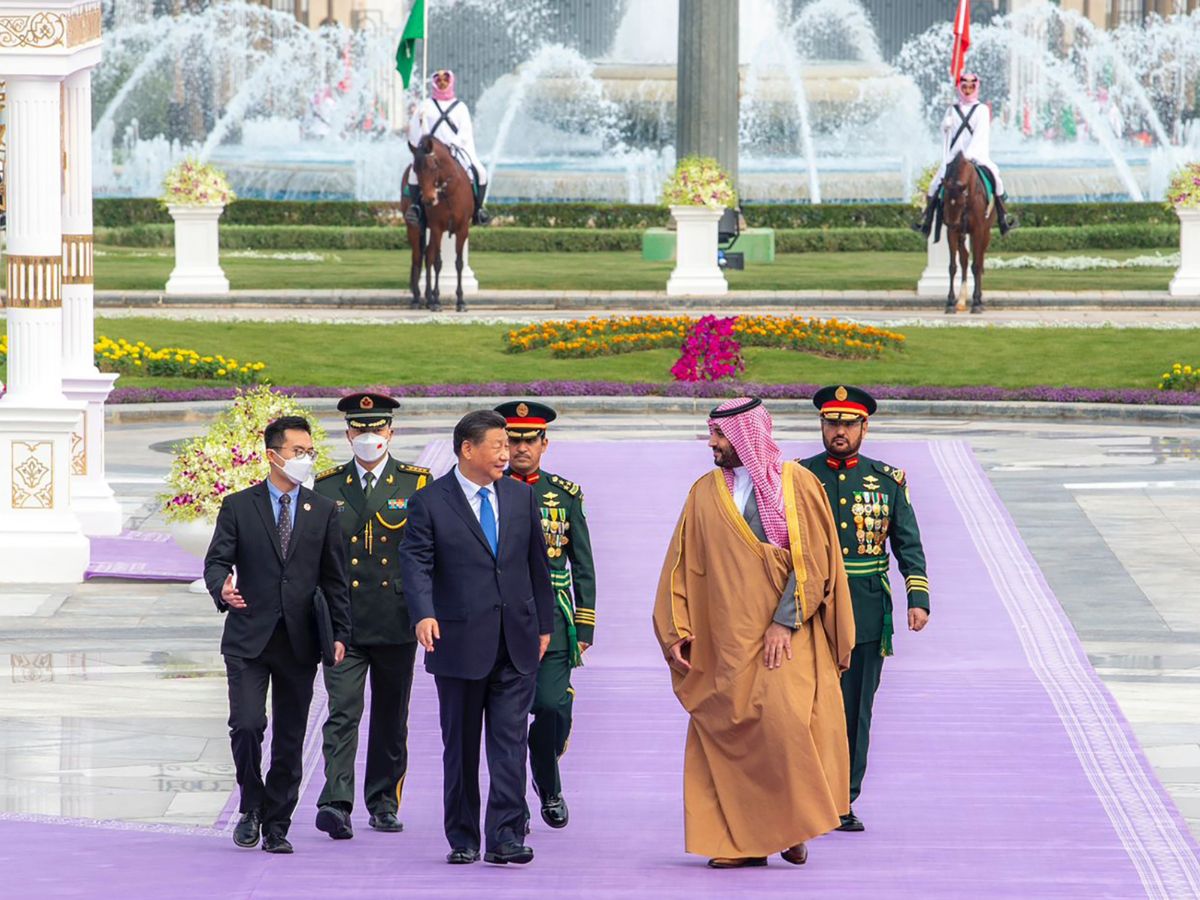
The news is that Saudi Arabia has signed a mutual defence agreement with Pakistan, under the terms of which an attack on either country would be considered as an attack on both. What is difficult to understand is why such a pact was considered desirable for the Saudis, who under MBS have moved away from Wahhabism to the much more moderate ideology of the UAE. Among the Gulf Arab states, only Qatar has been inexplicably steadfast in its support for the kind of extremist elements nourished by the army in Pakistan.
Whether it be protecting Osama bin Laden in the vicinity of an army cantonment in Abbottabad, or bigwigs in the military and the political parties it holds captive publicly consorting with terror groups such as the JeM, the role of the Pakistan military as a sponsor of terrorism is hardly a secret. Despite this, the army has across the years won the friendship of several in the international community who should know better. President Trump having as his dinner guest in the White House the army chief of Pakistan may be explainable by his pique at India rejecting any claims that it was Trump who was responsible for enforcing a ceasefire between India and Pakistan just days after a military offensive was launched by India to eliminate the terror hideouts in Pakistan that housed the bases of the perpetrators.
Deputy Prime Minister Ishaq Dar of Pakistan has finally admitted that India refused any and all efforts by third countries to play the role of peacemaker in situations of conflict between India and Pakistan. Any resolution of such a conflict would take place as a consequence of bilateral talks between Pakistan and India, ruling out third party mediation. Ishaq Dar deserves appreciation for his speaking the truth, unlike some of the others in his government, including Prime Minister Shehbaz Sharif. Perhaps President Donald Trump will someday win the Nobel Peace Prize, if not this year perhaps in a year or more later.
As of now, the Russia-Ukraine conflict continues, as do the hostilities between the Israeli Defence Forces and the terror organisations it has declared a kinetic war on, to immense human cost, especially in Gaza. And the Nobel Peace Prize Committee is unlikely to repeat the fiasco it suffered after the Prize was given to President Obama in anticipation of his being a peacemaker, an anticipation that was not realised, at least during his stint in the White House.
Returning to the subject of Saudi Arabia and Pakistan, reports are that the defence pact was brokered by China, which supported Pakistan massively during the recent hostilities of that country with India after the Pahalgam terror attack. Other reports say that Saudi Arabia and some other countries in the Gulf have financially supported i.e. loaned China “several hundred billion US dollars” to fund its technology and infrastructure initiatives. If so, that money is on the way to never being repaid, as all too many of Chinese infra projects in particular have become loss-making.
As for tech, certainly there remain a few tech giants in the US glossing over the widespread purloining of intellectual property by the second largest economy in the world. Nvidia has been mentioned in this connection, even when ByTe Dance, the originators of Tik Tok, have been given a generous deal by US financiers to sell an 80% stake to US entities. Such an outcome testifies to the bargaining prowess of ByTe Dance and the country where it is headquartered, China. A time will come when a US Congressional committee will investigate the deal, but as of now, it has passed through scrutiny intact.
If the reports that some Gulf states have invested hugely in Chinese tech are correct, it means they are assuming that China will prevail in the present contest for superiority in tech taking place between the two biggest economies of the world. Would the Saudis or other Gulf states be comfortable in a world dominated by China? Such is the question needing to be asked.
It is true that the White House under President Trump has become unpredictable, to speak in euphemisms. However, in a democracy occupants of that residence change, otherwise perhaps Trump himself could change, as witness the mellower tones he has recently adopted towards Prime Minister Modi. Rather than respond in like fashion, PM Modi has responded in a dignified way, so that he cannot be accused of inciting any fresh tantrums should they arise.
It is too early to write off Cold War 2.0 as going in a different way than Cold War 1.0, which ended with the collapse of the Soviet Union. It is too early to write off Russia as being unalterably linked to China as a subsidiary state, for in Europe, the public, although not yet their leaders, are getting tired of picking up the tab for the Ukraine war. Someday, hopefully soon, the EU will understand that the single biggest cause of the distancing of the Global South from them is their obsession with the war in Ukraine.
As for the canny Zelenskyy, he frequently speaks of the common European heritage of the Ukrainians with the EU. The world is a bit bigger than Ukraine or even Europe, and it is time for the EU to recognize that.
