
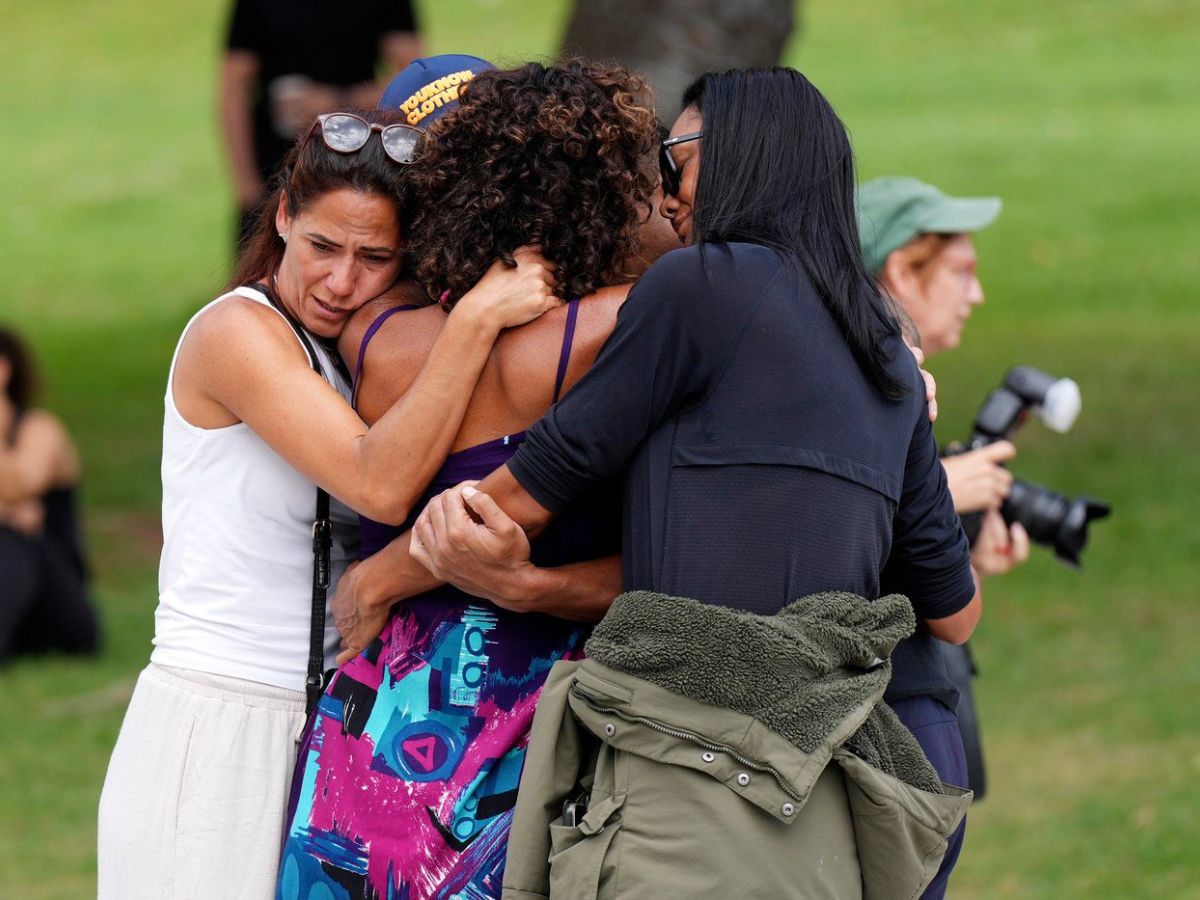
Every terror attack in the West is followed by the same evasive reflex. Officials insist the violence is “senseless” and “lone wolf” and blame it on “alienation” and “grievances.” In the comfort of chosen blindness, commentators move to locate psychological explanations, which, in a sense, are mere justifications rather than truths. Media discourse bends over backwards to assure audiences that terror has no religion, no ideology, no civilisational imprint. This ritual is not accidental. It is a deliberate choice to avoid confronting uncomfortable truths. From Pahalgam to Bondi Beach, terror today follows recognisable patterns. The targets differ, the locations shift, but the ideological DNA remains strikingly consistent. The unwillingness to acknowledge this has produced a dangerous paradox: the more evidence accumulates, the more determined Western discourse becomes to look away. India has warned the world about this reality for decades. Those warnings were dismissed as regional anxieties, nationalist exaggeration, or political rhetoric. Today, the consequences of that dismissal are no longer confined to South Asia. They are unfolding in Western cities, against Western citizens, carried out by individuals radicalised through the same ecosystem India has long identified.
THE WARNING THE WEST IGNORED
It was never controversial in any security circles to concede Pakistan’s central role in the global jihadist ecosystem. What has been controversial is openly stating this in political and public discourse. Training camps, ideological indoctrination, financial networks, and logistical support structures linked to Pakistan have been documented repeatedly by India and corroborated quietly by Western intelligence agencies. Yet, publicly, Pakistan continues to benefit from strategic indulgence. The recent Bondi Beach terror attack should have shattered any remaining illusions.
The same pipelines that have fuelled attacks in Kashmir, Mumbai, and Delhi have now reached Sydney, London, and New York. For years, India was told to show restraint and to “avoid escalation”, understand “Pakistan’s internal complexities”. When terror struck Indian cities, it was framed as a bilateral issue. When the same ideology affects Western societies, they suddenly awaken. This asymmetry is not merely unfair but strategically self-defeating. So long as the West chooses to distinguish between terrorists based on targets rather than religion and ideology, the problem will persist. Terror does not respect borders. It respects permissive environments. Pakistan has functioned as one such environment for decades, shielded by geopolitical utility and diplomatic hesitation.
TERRORISM HAS A RELIGION
There is a reason this statement provokes outrage: it punctures a carefully maintained fiction. Terrorism does have an ideological identity, and pretending otherwise has not reduced violence but has enabled it. This is where Samuel Huntington remains relevant. His argument that post-Cold War conflicts would be driven by civilisational identities rather than material interests was not a call for hostility, but a warning against denial. Radical Islamist terrorism is not merely a political grievance expressed violently. It is a civilisational project rooted in absolutist theology, collectivist supremacy, and a rejection of pluralism.
To say this is not to indict Islam as a faith. It is to identify a specific ideological current within it that repeatedly sanctifies violence. This distinction matters, yet Western discourse deliberately collapses it, fearing accusations rather than consequences. The West needs to face the fact that, despite its quest to treat terrorism as a political or economic issue, terrorism does have a religion. This argument is not theological or aimed at moral shaming, but an empirical reality. The overwhelming majority of contemporary suicide bombings, transnational jihadist attacks, and religiously justified mass killings draw from the same doctrinal reservoir. Ignoring this reality does not make societies more tolerant. Instead, it makes them more vulnerable.
And the reluctance to name this ideology has produced absurdities. Terror networks are treated as isolated phenomena. Radicalisation is framed as alienation rather than indoctrination. This analytical evasion ensures that counterterrorism remains reactive rather than preventive.
WESTERN COMPLICITY
The West’s current predicament is a direct result of its own past choices. Islamist actors were not always seen as threats. At various points, they were viewed as assets. During the Cold War, jihad was instrumentalised. In South Asia, proxy terror was tolerated. In the Middle East, radical groups were selectively indulged. Pakistan benefited most from this arrangement. Its distinction between “good” and “bad” terrorists was quietly accepted so long as Western interests were not directly threatened.
India’s objections were framed as regional disputes. Its evidence was acknowledged privately and ignored publicly. This strategic amnesia has now migrated into Western domestic politics. Radical preachers operate under the protection of free speech absolutism. Online ecosystems spread supremacist narratives unchecked. When violence eventually occurs, the response is shock, followed by renewed denial. On October 7, carried out by Hamas, this pattern was briefly disrupted. It exposed the moral bankruptcy of selective outrage. But instead of prompting sustained introspection, much of the Western discourse quickly reverted to contextualisation and hedging. The lesson was noted briefly before being shelved and “rationalised”.
Another thing West must understand is that this extremism is not static but shapeshifting. It adapts to context. In Kashmir, it targets Hindus. In Israel, it targets the Jews. In Western societies, it often clashes with secular law, gender equality, and liberal norms. The targets change, but the worldview remains the same. Social media has accelerated this process, allowing grievance narratives to be globalised and localised simultaneously. What links these manifestations is not poverty or exclusion alone, but a supremacist ideology that rejects coexistence.
What remains missing is sustained repudiation from within the broader Muslim world. Condemnations are episodic and defensive. Criticism of Islam is met with outrage, but criticism of Islamist extremism is met with silence and rationalisation. This asymmetry matters. Extremism thrives not on majority support, but on moral ambiguity.
THE HATE THE WEST REFUSES TO SEE
One glaring consequence of this denial is the rise of Hinduphobia in Western societies. Attacks on Hindu temples in the US, Canada, and Australia are no longer isolated incidents. Hindu students face intimidation on campuses. Diaspora communities are pressured into silence, their concerns dismissed as political overreach. Unlike other forms of religious hatred, Hinduphobia is rarely named as such. It is normalised, minimised, or explained away as a form of activism.
The West simply refuses to see the hate against India and the larger pattern of non-Islamic civilisations. This selective blindness mirrors the earlier refusal to acknowledge Islamist terror targeting India. Allowing this, the West has signalled, either voluntarily or involuntarily, that some communities are expected to endure hostility quietly. Framing this tolerance of intolerance is not multiculturalism. It is moral abdication. Because when societies refuse to protect all minorities equally, they embolden extremist narratives that portray liberal democracies as hypocritical and weak.
India warned the world about Pakistan-sponsored terrorism long before it reached Western shores. Those warnings were dismissed as regional anxieties. Bondi Beach is what that dismissal looks like in practice. Terror has an identity. Denying it has not protected pluralism but only weakened it. Liberal societies cannot defend diversity by refusing to confront ideologies that seek to destroy it. Naming the problem is not bigotry. It is the first step toward solving it. If the West continues to indulge Pakistan, downplay Hinduphobia, and cloak Islamist extremism in euphemism, the consequences will not remain abstract. They will continue to arrive, unexpected only to those who choose not to see. For such reasons, the age of denial is not merely over but has now become unaffordable. It is time that these terrorists are named and shamed by their own community, silence is seen as acceptance of this menace that is hatred of the other, to difference, diversity and dissent.
-
Prof Santishree Dhulipudi Pandit is the Vice Chancellor of JNU.




