
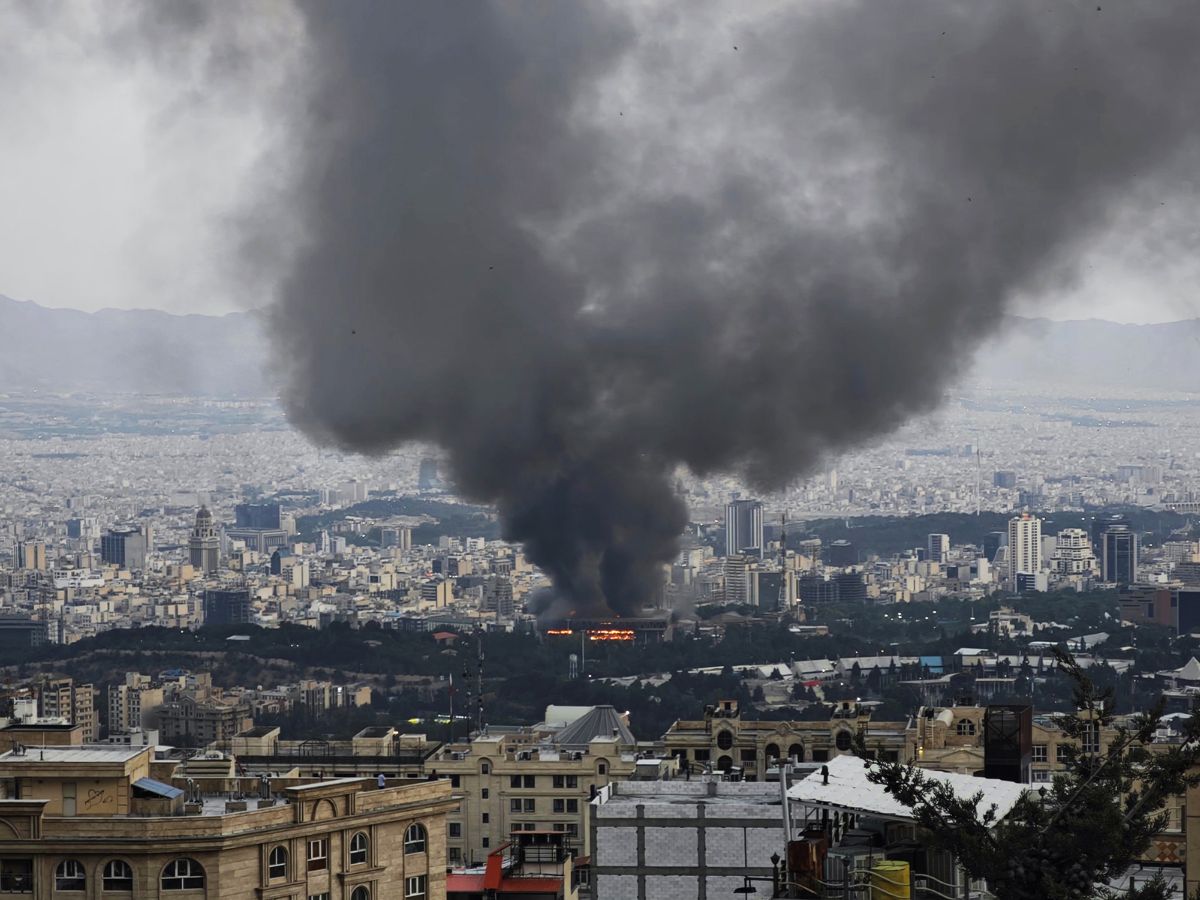
In Jerusalem, few leaders have made a political career out of existential dread quite as deftly as Benjamin Netanyahu. For decades, he has cast Iran as the ultimate, looming threat, a menace so grave that almost any pre-emptive action could be justified in the name of survival. Yet as American and Israeli warplanes strike targets around Tehran, the strategic fog surrounding this latest assault is not merely thick. It is suffocating. Of all the military adventures undertaken by Washington since the end of the Cold War, this one ranks among the most baffling. Its stated aims, halting Iran’s nuclear ambitions, curbing its proxy network and dismantling its missile programme, appear either redundant or fantastical.
According to Donald Trump himself, Iran’s nuclear capacity was effectively “obliterated” last June during a 12-day bombing campaign against key facilities. If that assessment was even half-true, then the first casus belli has already been satisfied.
As for Tehran’s regional proxies, Israel spent much of 2024 systematically degrading them. Hezbollah was battered and its leader, Hassan Nasrallah, killed in Beirut. In Syria, Bashar al-Assad fell from power, his regime replaced by the more Western-aligned Ahmed al-Sharaa. The Houthis are diminished. The second objective, too, seems largely accomplished.
That leaves Iran’s missile arsenal, the one credible deterrent the regime possesses in a volatile and heavily armed region. To demand its wholesale surrender is to demand capitulation. It is to insist that the clerical leadership render itself defenceless in the hope that its adversaries will show restraint. History offers little comfort on that score.
Netanyahu has long argued that only overwhelming force can neutralise Tehran. But this doctrine rests on a dangerous assumption: that decapitating a hostile regime will unleash gratitude and democratic rebirth. It was an argument heard before, most memorably from George W. Bush ahead of the 2003 invasion of Iraq. The result was not a flowering of liberal order but a maelstrom of sectarian war, hundreds of thousands dead and the eventual rise of ISIS.
Netanyahu was among the most vocal cheerleaders of that war, predicting it would remake the Middle East for the better. Instead, it destabilised an entire region for a generation. That history casts a long shadow over his current assurances that defanging Tehran will yield strategic serenity.
The humanitarian gloss occasionally applied to this latest offensive is even less convincing. However brutal the Islamic Republic has been, and its suppression of protests has indeed been savage, there is scant evidence that bombs dropped from high altitude will deliver emancipation. If anything, external attack tends to rally embattled regimes around the flag. There is also the small matter of global opinion. Israel’s campaign in Gaza has already inflicted profound reputational damage. Polling in the United States, long the bedrock of Israeli diplomatic security, suggests sympathy is shifting. A strategy that relies indefinitely on military dominance while eroding political capital abroad is not one that promises durability.
None of this is to deny that Iran poses challenges, nor that Netanyahu faces real security dilemmas. But conflating long-term containment with perpetual escalation is a perilous habit. The Middle East has been repeatedly convulsed by leaders convinced that one more decisive blow would settle matters for good. It never does.
In the end, this assault looks less like a carefully calibrated move on a geopolitical chessboard and more like a reflex, the act of a leader who has come to equate strength with action and restraint with weakness. That may deliver short-term tactical gains. But as the ruins of Baghdad and Kabul attest, it is a poor substitute for strategy.




