Tianjin’s long list of statements sounds impressive on the surface, but, as usual, thin on details and how and whether sufficient accountability mechanisms will exist or function.
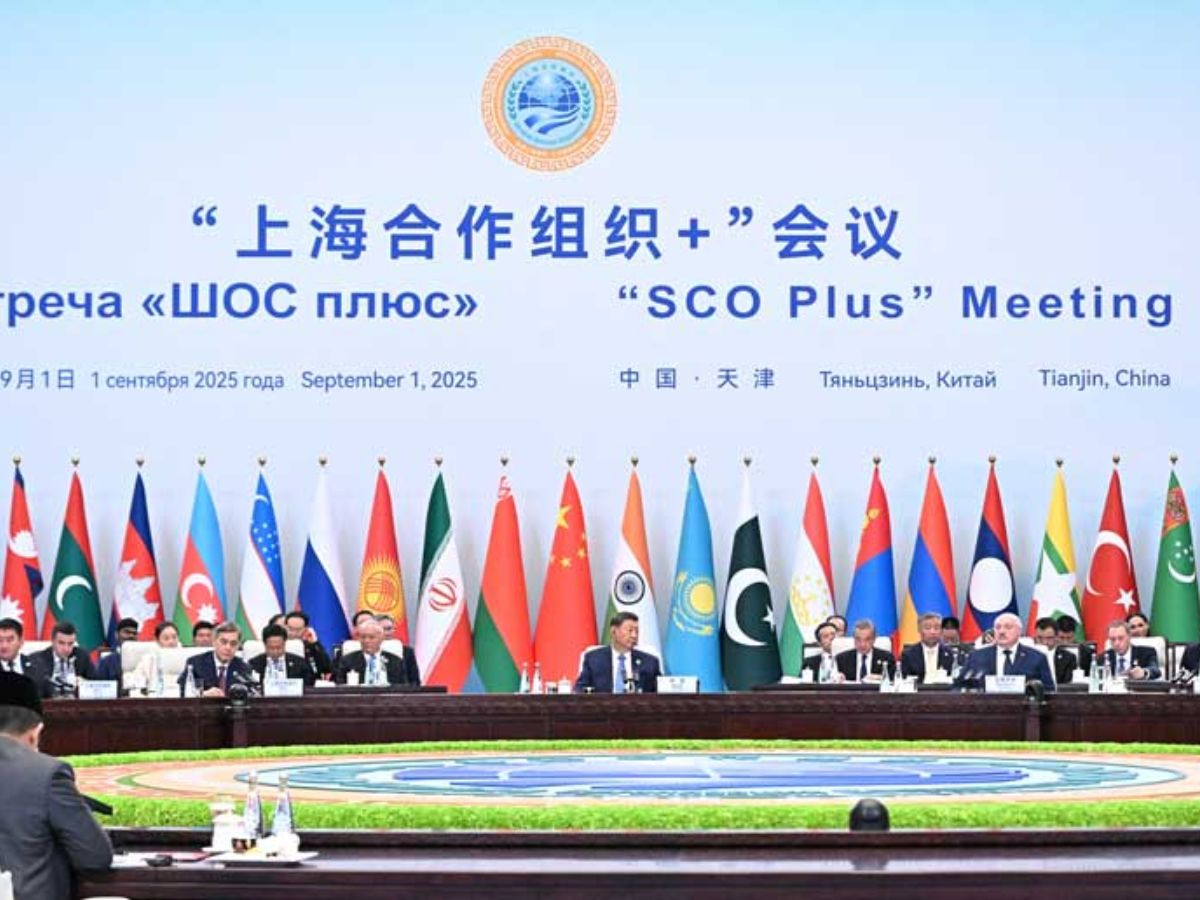
The Shanghai Cooperation Organisation’s (SCO’s) Tianjin summit combined hearty symbolism, opportunism, and pageantry with some substance into a single message aimed squarely at the Global South: a more equitable global order is within reach. This form of New Multilateralism—focused on the realities of today rather than the global model that existed when many multilateral institutions were created in the 1940s through the 1960s—better represents the aspirations of the vast majority of the world’s people and is more reflective of the plethora of challenges facing the world. A move toward a more flexible, inclusive, multi-actor system—with accountability at its core—is the path forward.
Multipolarity is today’s reality, where a dense web of actors and forums forms the mosaic of international relations. However, the landscape has become so crowded and the interrelationships so complex and interwoven that diplomatic initiatives and the proliferation of parallel institutions risk fragmentation, duplicated efforts, and forum shopping. Such counter-veiling initiatives are also at risk of becoming yet another effort at exerting the power of one coalition over another. In the absence of effective accountability mechanisms to ensure that stronger, richer, and more powerful nations do not simply end up replicating initiatives and institutions that already exist—with similar flaws—fresh efforts to achieve lofty objectives will, in the end, also fail to achieve them.
Tianjin’s long list of statements sounds impressive on the surface but, as usual, is thin on details of how and whether sufficient accountability mechanisms will exist or function. The SCO’s 2035 Strategy aims to make the Organisation a practical, delivery-focused platform by strengthening political trust and security coordination, and deepening economic and financial integration. It couples these goals with institutional upgrades—clear mechanisms, project pipelines, and evaluation—plus expanded education and cultural exchanges to build a broader social base for cooperation. If achieved, it may in the end matter only if these objectives are paired with transparent milestones, measurable delivery, and independent evaluation—an area where “everylateralism” (with public scorecards) could be piloted.
Beijing uses both inside-game tactics (shaping rules in existing bodies) and outside-game creation of alternatives without wanting to upend the existing order, which very much helped it to become the global power that it is today. Tianjin’s rhetoric defended United Nations (UN)-centred multilateralism (the very heart of the problem) while seeking to expand the SCO’s footprint—a classic “modify, don’t demolish” approach for which China is well accustomed. Beijing has used this tactic to punch well above its weight in multilateral institutions, none more so than at the UN. Xi’s speeches doubling down on UN-centrism, even as parallel structures emerge or expand, are a strategy designed to continue calls for reform of legacy multilateral bodies while building alternatives that not only speak to the Global South, but simultaneously meet the needs of its largest, wealthiest, or most powerful members.
Of the 10 existing SCO members, only Belarus (a brand new member), Kyrgyzstan, and Tajikistan are small in population and size, and do not have any oil or gas. Since its founding in 2001, when six countries formed the SCO, only four additional countries have joined the Organisation, even though an additional 40 countries are part of Eurasia and technically eligible to join. Why have they not? In essence, the SCO is an exclusive political club that requires the unanimous approval of its members to join (once applicants are judged to be free from legal/sanctions hurdles and members agree that the political and administrative costs associated with admitting new members will not dilute cohesion)—a quintessentially Chinese approach.
On one hand, Tianjin showed the Global South a prototype for a replacement of the existing order dominated by America and the West, but a layered landscape where states use multiple platforms to pursue autonomy, bargaining power, and achieve speed in action. But there remains a distinct risk of creating an even thicker fog of declarations, centres of power, and pledges—resulting in more complexity with less credibility. Tianjin crystallized both the promise and the peril of the moment. Since multipolarity is the operating environment, what remains to be clarified is whether the institutions that claim to serve it will deliver public goods measurably better than the legacy system they critique.
Without genuine accountability and transparency, a thicker tangle of councils, power centres, and communiqués will more than likely merely replicate the pathologies of the existing order—filled with opacity, pomposity, and power concentrated in the hands of the most populous, wealthy, and powerful countries—under new branding.
Daniel Wagner is Managing Director of Multilateral Accountability Associates and co-author of the new book “The New Multilateralism: Making Multilateral Organisations Accountable and Fit in the 21st Century”.
