Its relevance stems from its efforts against caste hierarchy and against the entrenched monopoly over knowledge that sustained it.
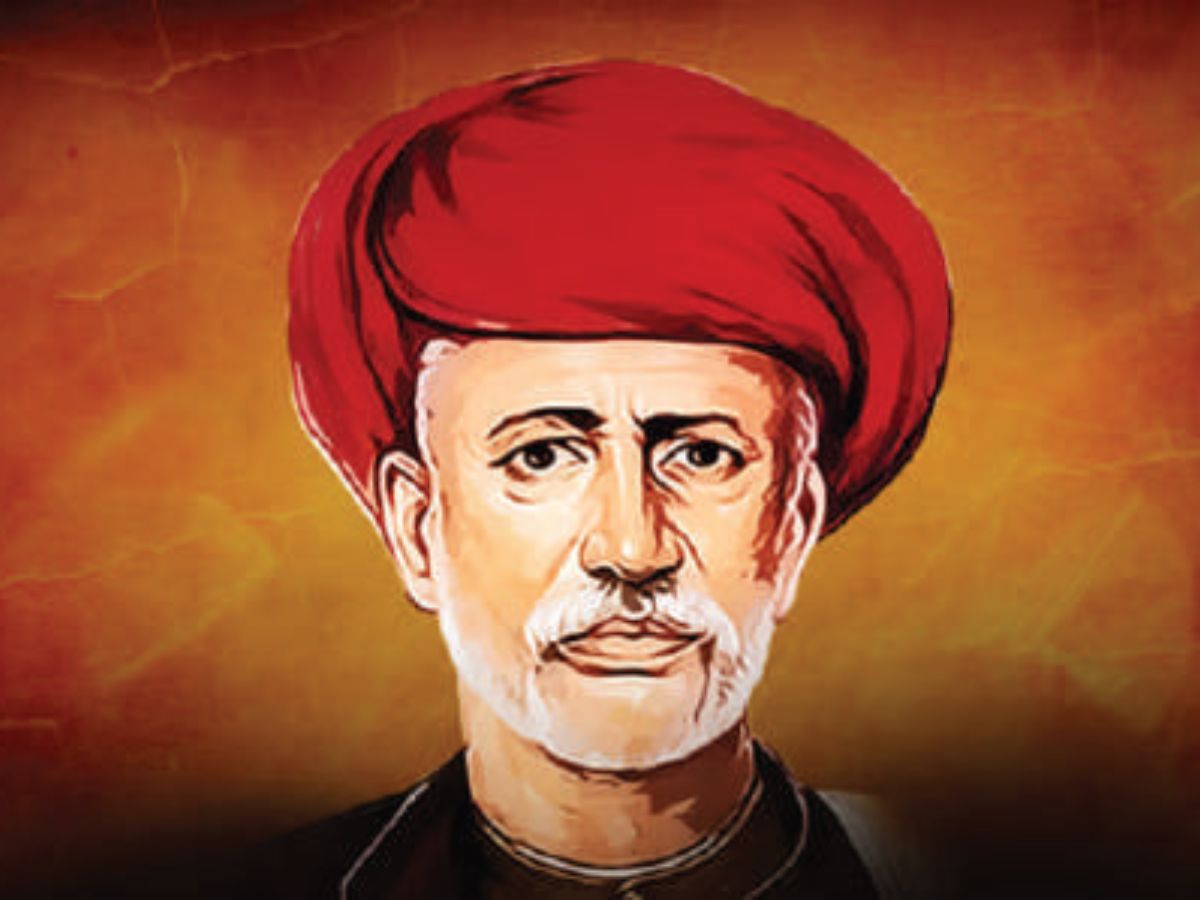
Jyotiba Phule
The Satyashodhak tradition stands as one of the most radical intellectual and moral interventions in the long and often selectively curated history of Indian social reform. The relevance stems from its efforts against caste hierarchy and against the entrenched monopoly over knowledge that sustained it. When Jyotirao Phule founded the Satyashodhak Samaj in 1873, he was able to make a profound civilisational claim: that truth could be sought outside the authority of inherited, scriptural structures, and that democratic access to knowledge was the foundational condition of human dignity. Such a vision emerged from a deep, rigorous engagement with the egalitarian currents of the Bhakti movement, the moral economy of the peasantry, and a comprehensive reinterpretation of India’s own intellectual past. The “truth-seeker” in Phule’s formulation was a member of a historically marginalised community actively asserting their rightful place as an independent creator of knowledge and an agent of history.
Building directly upon this intellectual foundation, Shahu Maharaj of Kolhapur transformed Phule’s powerful ethical vision into policy in the early 20th century. His experiments with reservations in education and administration were not acts of royal benevolence, but rather thoughtful instruments designed to fundamentally restructure access to state power. Long before representation became a standard vocabulary in public-political engagement, Shahu understood that social democracy required sustained institutional design and support. His service to such ideas was his active efforts to open hostels for non-Brahmin students. He also sought to direct significant state funding toward education for the marginalised while also challenging traditional priestly control over religious and social practices. As such, he was able to forge a practical bridge between social justice and modern political statecraft. What is particularly striking is that his politics sought to democratise public life, while ensuring that education, ritual, and civic participation were reclaimed by the broader populace and deeply integrated into the state’s functioning.
Although slow, this vital project of integrating marginalised voices into the structures of power found its most sophisticated legal expression decades later in the work of B. R. Ambedkar. From an intellectual standpoint, Babasaheb Ambedkar carried this trajectory into the 20th century by delivering the era’s most comprehensive critique of graded inequality. Anchored in lived experience, his political method illustrated the reality of exclusion. He understood, much as Phule did, that caste was not merely a division of labour but a division of labourers, and thereby, it functioned as a sophisticated system of controlled knowledge. As such, the “Annihilation of Caste” required not only robust legal safeguards but also a moral and pedagogical revolution. His unwavering insistence on constitutionalism and representation was thus the most expansive and mature articulation and adoption of the Satyashodhak lineage. In a sense, while Phule exposed the historical pretensions behind hierarchy, Shahu institutionalised the mechanics of social justice. To which, Babasaheb Ambedkar finally gave such traditions a durable philosophical and juridical framework.
But despite such a philosophical and legal framework, the afterlife of this tradition in postcolonial academia has been marked by an unusual lack of historiography. For decades, the dominant academic discourse in India had been heavily shaped by traditional and colonial methodologies. It has struggled to fully integrate this autonomous anti-caste thought into mainstream theory. We see Phule often read selectively, and the same goes for Shahu’s mention, which was primarily through the lens of regional administration. Although Babasaheb Ambedkar was readily discussed and referenced, he is regularly positioned strictly within a larger constitutional framework that ultimately detaches from his profound social and philosophical contributions. As a result, the intellectual hierarchy in which the lived traditions of the marginalised, their oral histories, community archives, and vernacular pedagogies, became scattered and irregularly featured in historical analysis.
Such historical exclusion is understood to be largely institutional, but there is also profound epistemic exclusion. In a similar vein, broader discourse has at various times been narrowed into such classical archives or snippets of history, where the vast intellectual production of the subaltern is overlooked, if not entirely ignored. The Satyashodhak lineage offers a vital correction to this, particularly through its integration into the Indian Knowledge Systems (IKS). The knowledge produced in social struggle, through schools for girls in 19th-century Pune or bustling hostels of Kolhapur, demonstrates conclusively that such intellectual and practical policy solutions were not new and must be read and disseminated within the larger IKS traditions. Similarly, the various journals and newspapers organised, run, and published by the Depressed Classes should also become integral to India’s intellectual heritage.
But recognising this heritage today is not enough. There is also a need to move beyond mere memorialisation to an active recovery of its methodological genius. Phule read mythology against the grain to reveal the mechanics of social power. Shahu similarly utilised the apparatus of the state to equalise opportunity while expanding cultural belonging. Later on, Babasaheb Ambedkar was able to combine modern democratic rationality and practices with those moral and philosophical traditions. In such a sense, they were able to articulate a highly original theory of social democracy that was historically conscious and egalitarian in outlook. A Satyashodhak reading of Indian history would fundamentally enrich our modern understanding. As is widely understood, the insistence must be on the fact that the struggle for equality in India has always been simultaneously cultural, educational, economic, and political. A Satyashodhak reading and its adoption would also emphasise and highlight that emancipatory thought in India possesses a deep and indigenous lineage that actively seeks to transform and remedy the civilisation from within.
The pedagogical impulse of the Satyashodhak Samaj rested on a simple and profound proposition that marginalised communities must be the sovereign interpreters of their own past and the primary architects of their own institutions. Amidst the transformation in contemporary India, there is a vital need for the recovery of such intellectual traditions to actively democratise knowledge. For this, there is a need to build an institutional and intellectual architecture around where this lineage intersects with contemporary debates. Because if current engagements with IKS are to be genuinely comprehensive, they must structurally acknowledge that some of the most transformative knowledge in India was generated in resistance to exclusion. The foundational efforts of Jyotirao, Savitribai Phule, Shahu Maharaj, and others, including Babasaheb Ambedkar, are monumental for their invaluable epistemological interventions. They questioned and redefined who possessed the authority to know, who was permitted to teach, and whose historical experience legitimately counted as theory.
The current academic and political climate, which continually seeks broader inclusion, would thus necessarily require acknowledging a redefined theoretical landscape to pave the way for a clear and equitable path forward. Because equality must be built organically and systematically through institutions that redistribute knowledge. Social justice requires the continuous expansion of intellectual participation across all communities. True civilisational self-confidence cannot be selective. It needs to be grounded in the recognition that some of India’s most profound renewals came directly from those who pushed to open its formal structures to all. As such, the vision of Satyashodhak becomes one of the most enduring contributions to modern political thought from India, capable of asking as well as informing the contemporary India of an active, substantive, and unbroken continuation of knowledge from within.
Prof Santishree Dhulipudi Pandit is the Vice Chancellor of Jawaharlal Nehru University.
