
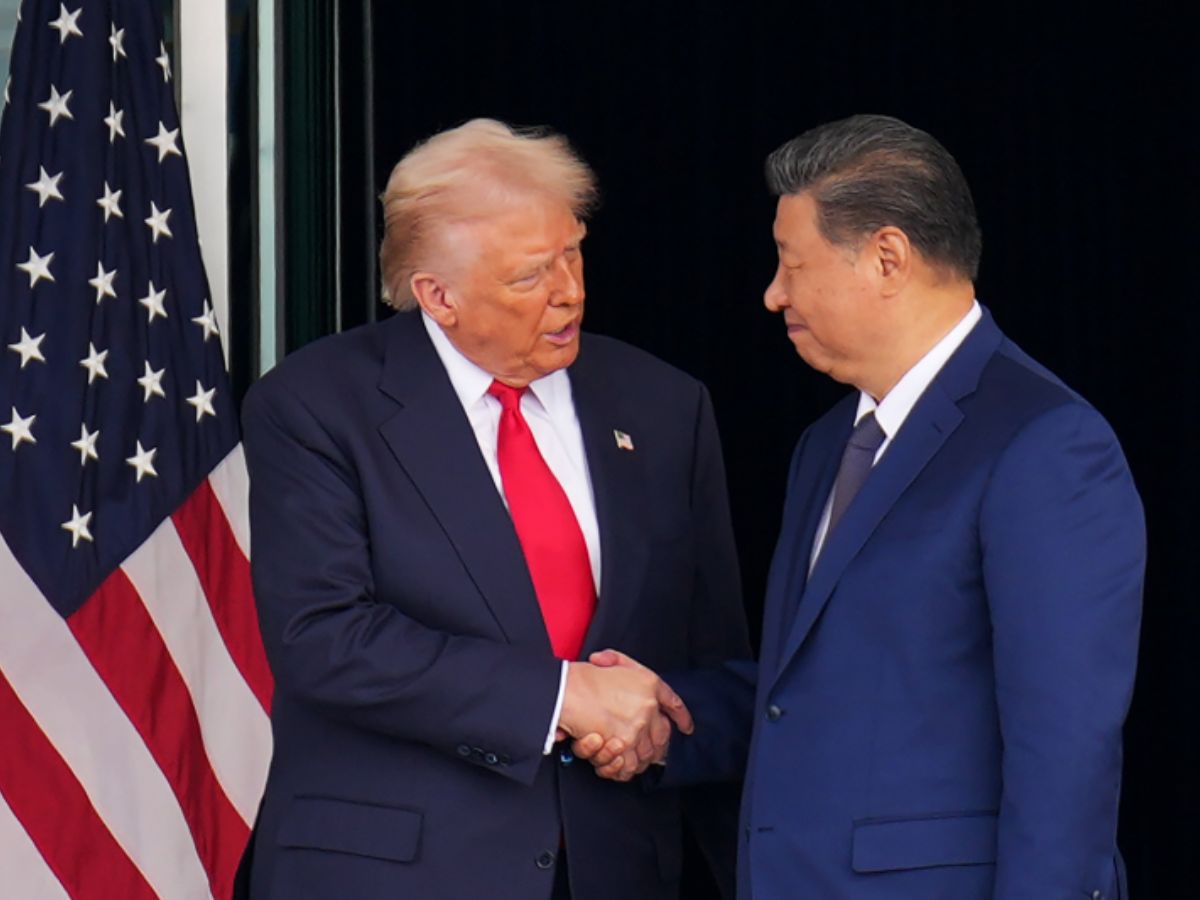
After the Trump-Xi meeting in South Korea to work out a trade deal, the only smiling face besides Trump in the row of senior officials flanking the US President was that of the individual who enriched himself with more than a little help from CCP-controlled financial outlets. Looking across the table at the Chinese side, he smirked, aware that he has accomplished his mission of veering Trump into an about turn on China. It was not the feisty Trump of the 2024 campaign, warning about the influence of the CCP on the Biden administration. Trump showered Xi with encomiums, while the only response of the CCP General Secretary were some polite asides about the peace-making efforts of Trump. He and all those flanking him knew that in every kinetic and hybrid battle being waged by the US across the world, China is, usually openly, on the other side. Whether it be Venezuela, Gaza, Ukraine or Taiwan, the two sides are on opposing sides. Or were, preceding the conversion of Xi in the mind of Donald Trump from foe to friend. While Xi generously opted to revert to the status quo ante by promising to buy more soybeans from US farms, Trump put on pause the prohibitions on China regarding US technology for a year. Enough time for China to access sufficient technology from the US in order to compete against and better the same US counterparts active in the field of technology. It bears repetition that in a hybrid war of the type that China has long been waging on the US, technology is what results in battlefield success or failure. Trump slashed the fentanyl-related tariffs imposed earlier by him on China. Few besides him believe that this time around, the Chinese side would keep its promise rather than break it as has been the case on every previous occasion. Those concerned about US national security have good reason to take out their worry beads after the Trump-Xi meeting. The anchor of a consistent policy that unpinned the US during Trump 1.0 and the beginning of Trump 2.0 appears to have slipped away, so that the country appears to be veering in one direction and the other where matters of state policy are concerned. What could be behind the volte face of Trump on China? There is speculation in Washington that it may partly be related to a close relative who, like the Cabinet official earlier mentioned, has been the recipient of the largesse of CCP-related investment funds. Both have been working quietly and separately in order to change the policy of President Trump on China. After the Trump-Xi meeting, it is clear that the damage caused to US relations with India by President Trump is not majorly related to slights to his ego caused by the refusal of India to snap its ties with Russia at the snap of Trump’s finger, but go far deeper. CCP media outlets have begun in effect suggesting a G-2, a carving out of spheres of influence throughout the world between the US and China. No prizes for guessing where countries such as Taiwan are placed by Xi. The island nation is within the Chinese sphere of influence. And what of Japan and South Korea? Were Taiwan to be lost to the PRC, it would severely compromise the security interests of both. What has been witnessed in South Korea would be alarming not just the host nation but Japan as well, besides Taiwan and even Vietnam. All of a sudden, CCP-controlled media have changed their stance on President Trump even as the Russian media have from the heady days of the Alaska summit to those of the South Korean interaction between Trump and Xi. It suits China to have a shaky US-Russia relationship, for it will make it easier to effectively take over by stealth the lands lost by Imperial China to Czarist Russia. Not that the Kremlin is unaware of this, hence its efforts at strengthening the partnership between Russia and India. Some reports indicate that the two may collaborate on building civilian airliners in a future challenge to US and Chinese manufacturers. While Trump has piloted an about turn on US policy towards China, the latter country has not shifted its stance on the US by an iota. China continues to seek to overtake the US in terms of global influence and not reduce but increase its surplus of trade with the US. In no theatre of the hybrid war has there been any reduction in the exertions of China to weaken the US, although CCP media is now effusive in its praise of Trump rather than dismissive. The world of MAGA appears to be at a loss to explain the gyrations of Trump, constantly seeking solace in the view that President Trump may revert to his earlier consistency, including in building a strong coalition to deter China from acts of kinetic aggression, especially concerning Taiwan. Worryingly, some US scholars known to be close to the policy establishment around the White House have begun to publicly say that President Lai Ching-te of Taiwan is a “problem”, whereas in fact, his staunch advocacy of a de facto independent Taiwan corresponded perfectly with past US policy. Admirers of Donald Trump across the world are hoping that this phase will pass, and that Trump will once himself get anchored to policies that work to secure a free, open and inclusive Indo-Pacific. The democracies across the world are hoping that such a change will indeed happen, and soon.
831




